
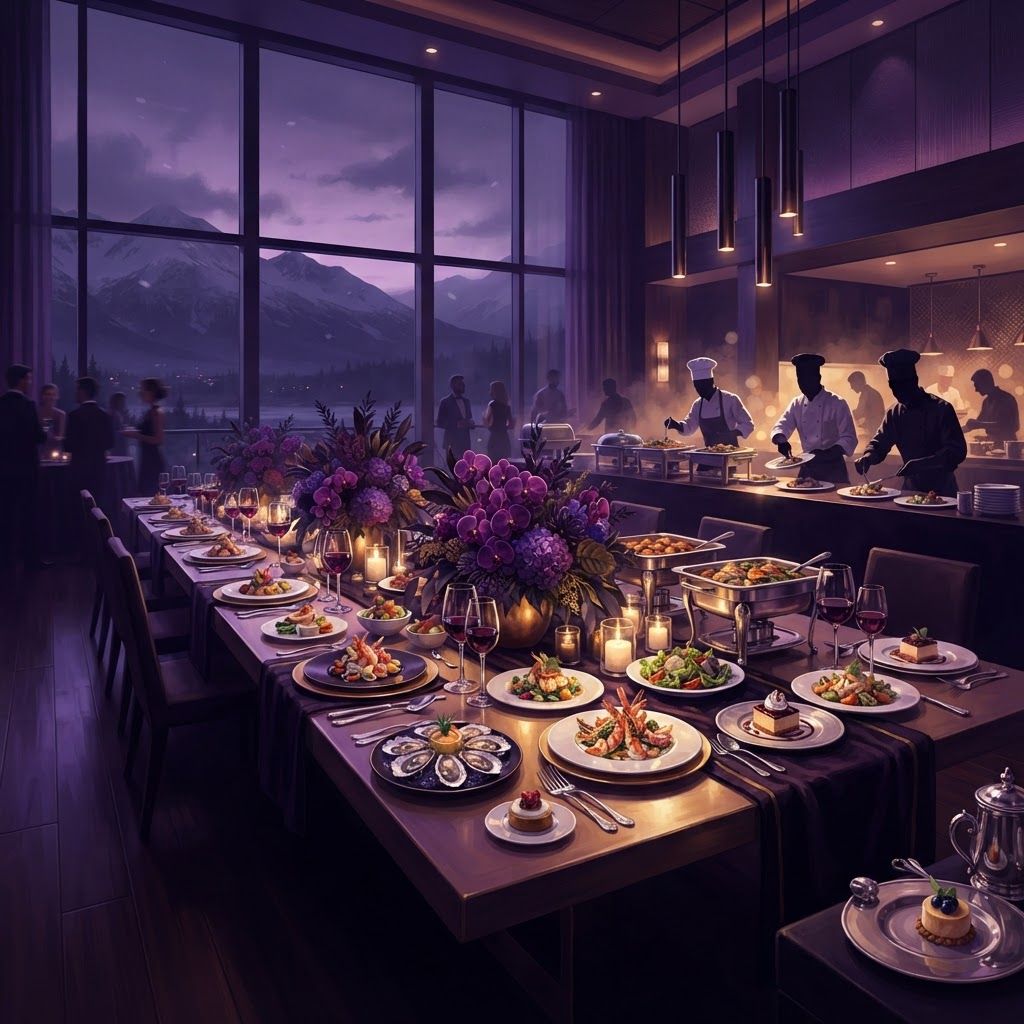
Catering in a Compressed Season
Event catering in Anchorage operates under conditions that would challenge caterers anywhere. The wedding and outdoor event season concentrates into roughly four months of long daylight, corporate conference activity peaks around the same period, and much of the food must be ordered weeks in advance because it arrives by barge or air. A caterer who runs out of an ingredient cannot simply visit a wholesale supplier for more.
Venues add complexity. Anchorage caterers serve downtown hotels and conference centers, but they also deliver to remote lodges, glacier viewpoints, fishing camps, and locations reachable only by float plane or gravel road. Executing a plated dinner for a hundred guests at a site without commercial kitchen facilities is routine work for the best local operators.
Ten Catering Categories and Providers in Anchorage
1. Full Service Wedding Caterers. Anchorage's established wedding caterers manage everything from menu design and tastings through rentals, staffing, and breakdown. Their expertise includes contingency planning for weather, since outdoor Alaskan weddings can encounter rain, wind, or unexpected cold even in July.
2. Hotel and Conference Center Catering Departments. Major Anchorage hotels operate substantial banquet operations serving conventions, government meetings, industry conferences, and galas. Their advantage is integrated venue, kitchen, and service capacity, along with the ability to handle several hundred covers reliably.
3. Alaskan Seafood Specialists. Caterers focused on local seafood build menus around wild salmon, halibut, king crab, spot prawns, and rockfish. For visiting groups, an Alaskan seafood dinner is often the single most memorable element of an event, and quality sourcing separates the serious operators from the rest.
4. Corporate and Business Catering Providers. Serving daily meeting lunches, training sessions, and office events, these providers compete on reliability, timeliness, and consistency. Many Anchorage businesses maintain standing relationships with one or two dependable providers.
5. Remote Site and Camp Catering Operators. A genuinely Alaskan specialty, these companies feed crews at mining camps, construction sites, and resource facilities, sometimes for hundreds of workers across months. The logistics, food safety management, and menu variety required are formidable.
6. Barbecue and Casual Event Caterers. Summer picnics, company gatherings, and community events support caterers offering smoked meats, grilled seafood, and outdoor service. Their equipment and staffing suit informal high volume events.
7. Ethnic and International Caterers. Reflecting Anchorage's substantial diversity, caterers offer Filipino, Korean, Mexican, Thai, Samoan, and other cuisines. These providers serve both community celebrations and clients seeking distinctive event menus.
8. Food Truck and Mobile Catering Services. Anchorage's food truck scene extends into event catering, offering flexible service for casual gatherings, festivals, and outdoor corporate events during the summer months.
9. Boutique and Chef Driven Catering. Small operations led by individual chefs provide personalized menus for intimate events, private dinners, and clients wanting distinctive food rather than banquet standards. Capacity is limited but quality can be exceptional.
10. Restaurant Catering Programs. Many respected Anchorage restaurants offer catering from their existing kitchens, providing their signature cuisine for events. This route often delivers better food per dollar than dedicated banquet operations, with the tradeoff of less event management support.
Sourcing and Menu Design
Alaskan catering menus are strongest when they lean into local ingredients: wild seafood, reindeer sausage, wild berries, birch syrup, and summer garden vegetables that benefit from long daylight. These items give events genuine regional character, particularly valuable for conferences and weddings with out of state guests.
Supply chain planning is essential. Experienced caterers order well ahead, build in substitution flexibility, and design menus that degrade gracefully if a delivery is delayed by weather. Clients should expect a caterer to discuss backup options rather than promise a single fixed menu months out.
Practical Planning Considerations
Book early. The Anchorage summer event calendar fills months in advance, and the best caterers commit their peak Saturdays first. Discuss venue logistics in detail, including power availability, water access, refrigeration, shelter, and vehicle access, since these determine what is possible. Confirm licensing, insurance, and food safety certification, especially for outdoor and remote service.
Clarify what is included. Rentals, linens, staffing ratios, bar service, gratuity, and delivery to remote sites can substantially change a quoted price. Get the full cost in writing, and ask about overtime charges if an event runs long, which happens frequently during endless summer evenings.
Trends in Anchorage Catering
Local sourcing has moved from marketing language to genuine practice, with caterers naming vessels and farms. Dietary accommodation is now standard rather than exceptional, with vegetarian, vegan, gluten free, and allergen conscious options expected. Interactive service formats including chef stations and family style plating have gained popularity over traditional buffets. Sustainability practices covering waste reduction and compostable service ware are increasingly requested by corporate clients.
How to Choose
Insist on a tasting for significant events, and pay attention to how the caterer handles questions and changes, since responsiveness during planning predicts performance on the day. Request references from events comparable to yours in size and venue type. Ask specifically how they have handled weather disruption and supply delays, because in Alaska those situations arise regularly and experience is the only useful qualification.
Anchorage caterers who have built reputations here have done so under difficult conditions. Choosing one with genuine local experience is the most reliable way to ensure an event proceeds smoothly, whatever the weather and wherever the venue.