
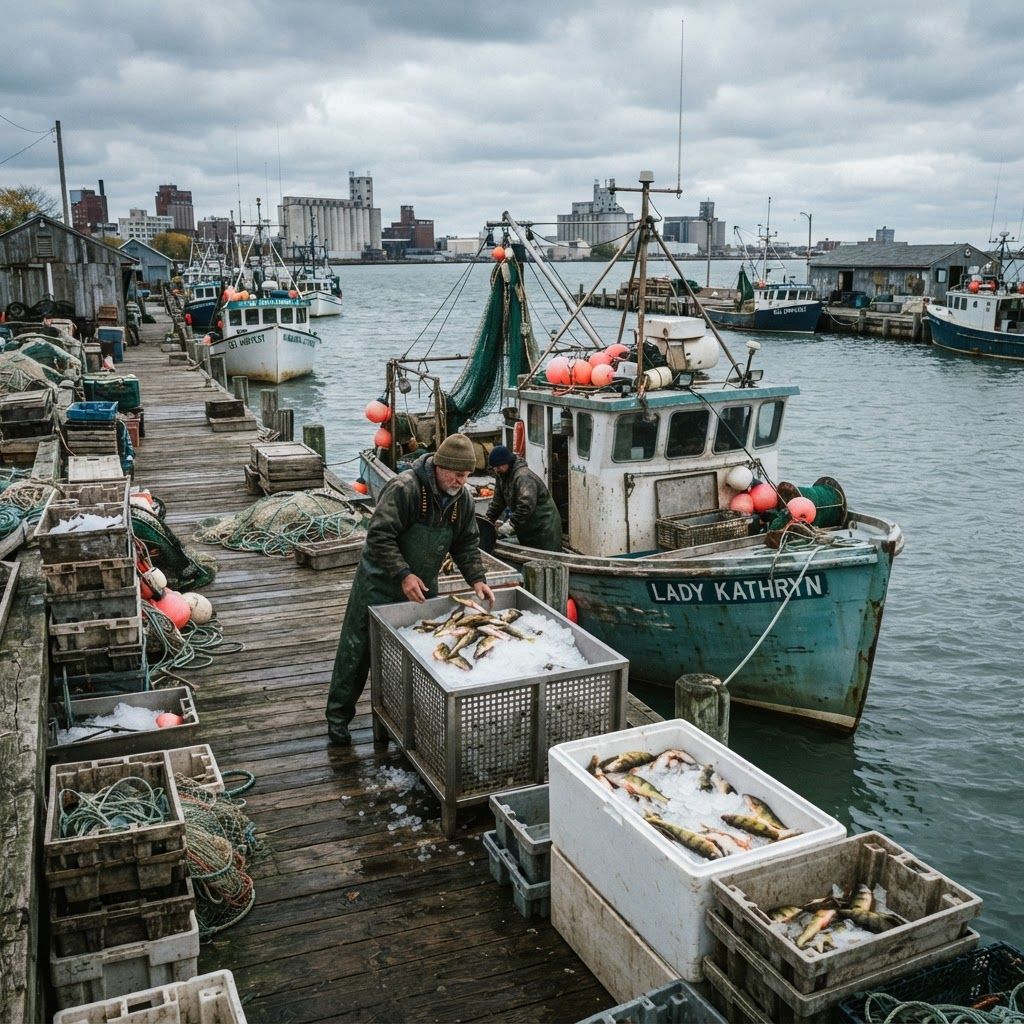
Buffalo's relationship with water is fundamental. The city exists where it does because of the lake and the river, and while grain and steel dominated its industrial story, fishing has been part of the local economy continuously. Lake Erie is among the most productive of the Great Lakes, and the fishery it supports — walleye, yellow perch, whitefish and smelt — feeds both commercial distribution and one of North America's more significant sport fishing economies.
The Great Lakes Fishery Context
Freshwater commercial fishing operates under considerably tighter regulation than most food production. Quotas, licensing, gear restrictions, seasonal closures and binational management between the United States and Canada all govern how much can be harvested and when. This framework exists because the lakes have already demonstrated how quickly a fishery can collapse under pressure, and because invasive species continue to reshape the ecosystem.
For buyers, that regulation is a benefit. It means harvest is documented, stocks are monitored and the seasonality you encounter reflects genuine biological cycles rather than arbitrary supply decisions. Understanding those cycles is essential to sourcing well.
The Top 10 Fishery Companies in the Buffalo Region
1. Queen City Lake Erie Fisheries
A commercial harvesting operation working licensed Lake Erie waters for perch, walleye and whitefish. Same-day landing to processing keeps quality high, and full documentation of harvest area and date supports the traceability restaurants increasingly require.
2. Niagara River Seafood Distributors
A wholesale distributor combining local freshwater catch with sourced marine species for restaurants and retailers. Reliable cold chain management and split-case flexibility allow smaller kitchens to order precisely rather than overbuy perishable stock.
3. Lakeshore Aquaculture Farms
Operates land-based recirculating systems raising trout, tilapia and Arctic char. Controlled conditions mean predictable year-round supply, minimal environmental discharge and consistent sizing that simplifies portion costing for foodservice buyers.
4. Erie Basin Fish Processing Company
Focuses on processing rather than harvest, providing filleting, portioning, freezing, smoking and packaging services. Contract processing lets independent fishers and aquaculture operations reach retail markets without building their own facilities.
5. Buffalo Smoked Fish and Specialty Foods
Produces smoked whitefish, trout, salmon and fish spreads using traditional methods. Strong regional demand for smoked freshwater fish, tied to local culinary tradition, sustains a loyal wholesale and specialty retail customer base.
6. Great Lakes Bait and Sport Fishing Supply
Serves the recreational fishery with live bait, tackle, terminal gear and charter support. Given the substantial economic footprint of sport fishing on Lake Erie and the Niagara River, this segment is commercially significant in its own right.
7. Southtowns Charter Fishing Fleet
Operates guided fishing charters targeting walleye, bass, steelhead and lake trout depending on season. Experienced captains, safety-maintained vessels and knowledge of shifting thermal structure make them a mainstay of the regional tourism economy.
8. Allentown Fresh Market Seafood
A wholesale-to-retail operation supplying neighborhood markets and restaurants with daily fresh selections. Emphasis on rapid turnover, clear species labeling and honest guidance on what is genuinely local versus imported builds real credibility with buyers.
9. Cheektowaga Cold Storage and Seafood Logistics
Provides blast freezing, frozen warehousing and refrigerated transport for the regional seafood trade. Cold chain integrity is the single largest determinant of seafood quality, making this infrastructure quietly essential to everyone else in the sector.
10. Niagara Fish Hatchery and Restocking Services
Focuses on hatchery production and stocking programs supporting fishery management, pond stocking and habitat restoration projects. Their work sustains both recreational fishing quality and long-term ecosystem health across regional waters.
How to Source Quality Freshwater Fish
Learn the seasonality. Yellow perch, walleye and whitefish each have distinct availability patterns shaped by spawning cycles and quota timing. A supplier claiming unlimited year-round local fresh catch deserves scrutiny, since frozen at-sea or previously frozen product is entirely legitimate but should be disclosed.
Evaluate handling rather than just appearance. Ask how quickly fish moved from landing to chilling, whether ice-slurry or dry-ice methods were used, and how many days have elapsed since harvest. For processed product, confirm freezing method, because rapid blast freezing preserves texture far better than slow freezing.
Insist on accurate species labeling. Freshwater species substitution does occur, and serving a customer something other than what the menu states creates both legal and reputational exposure. Reputable wholesalers provide species, harvest area and date without hesitation.
Sustainability and Industry Trends
Invasive species management remains the dominant ecological concern, with zebra and quagga mussels, round goby and sea lamprey continuing to alter food webs and requiring active control. Water quality, particularly nutrient loading and harmful algal blooms in the western lake basin, directly affects fishery health and has driven agricultural nutrient management reform. Aquaculture is expanding as a way to meet demand without additional wild harvest pressure. Consumer interest in local, traceable protein has also lifted the profile of Great Lakes fish, which had long been overshadowed by ocean species in restaurant menus.
Final Thoughts
Buffalo's fishery sector is a genuine regional asset that connects the city's culinary identity to the water that built it. Whether you are a chef sourcing perch for a Friday fish fry, a retailer building a fresh counter, or a resident buying at a market, working with operators who document their harvest and handle product carefully supports both quality on the plate and the long-term health of Lake Erie. Ask questions about season, origin and handling, and you will consistently eat better.