
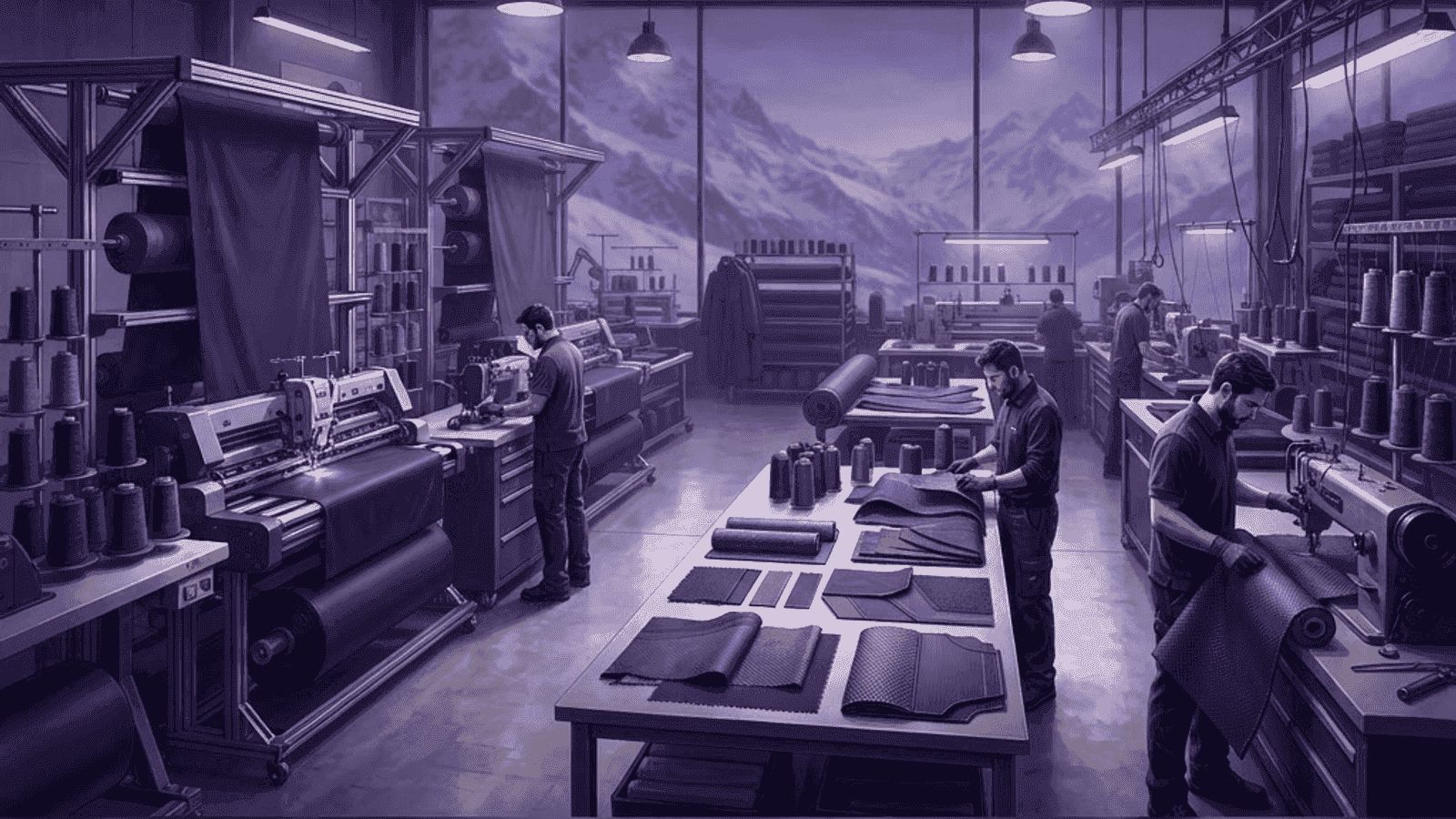
A Small Sector With Serious Requirements
Anchorage will never rival major garment centers on volume, but its textile manufacturers occupy a niche that matters: products designed for extreme cold, wind, saltwater, and abrasion where failure has consequences. Commercial fishing crews, aviation operators, resource workers, mushers, and guides all need equipment that performs beyond consumer specification, and much of it is made or repaired locally because national suppliers do not build for these conditions.
That focus produces a manufacturing sector oriented toward technical performance and durability rather than fashion cycles. Local shops work with laminated waterproof membranes, heavy marine canvas, industrial webbing, insulation systems, and specialty threads, often in short runs with substantial customization. Repair and refurbishment sit alongside new production as a core business line, because customers here expect equipment to be maintained rather than replaced.
Selecting a Textile Manufacturer
Match the shop to the requirement. A canvas fabricator with industrial machines and marine experience is the right choice for boat covers and tarps; a technical apparel maker with laminating and seam-sealing capability is required for waterproof garments. Ask directly what equipment is in the building — walking foot machines, bar tacks, hot air seam sealing, cutting tables — because capability determines what can be produced reliably.
For any performance product, request material specifications rather than descriptions: fabric weight, denier, coating or membrane type, insulation rating, thread type, and seam construction. Then ask for a sample or prototype before committing to a production run. Reputable shops welcome that step, and it prevents the most expensive category of manufacturing mistake.
The Top 10 Textile Manufacturers in Anchorage
1. Aurora Technical Outerwear
Produces waterproof and insulated garments with seam sealing and laminate construction for commercial and expedition use.
2. Cook Inlet Marine Canvas
Fabricates boat covers, enclosures, dodgers, and heavy tarps in UV- and salt-resistant materials.
3. Denali Industrial Sewing
Handles heavy-duty webbing, straps, cargo restraints, and industrial soft goods for logistics and resource clients.
4. Chugach Cold Weather Gear
Specializes in extreme-cold insulation systems, including layered garments, mitts, and camp textiles.
5. Midnight Sun Custom Apparel
Produces branded uniforms, workwear, and decorated garments with embroidery and screen printing in-house.
6. Glacier Upholstery & Interiors
Works on marine, aviation, and vehicle upholstery, including cold-rated foams and abrasion-resistant coverings.
7. Tundra Gear Repair Works
Focuses on refurbishment — zipper replacement, membrane repair, re-insulation, and restitching of technical equipment.
8. Inlet Safety Textiles
Manufactures high-visibility clothing, flame-resistant garments, and compliant industrial safety wear.
9. Northern Frontier Soft Goods
Produces packs, duffels, sleds bags, and equipment cases built for freight handling and field abuse.
10. Sourdough Fiber Studio
A small-batch maker working with wool, qiviut, and natural fibers for knitwear and heritage-style garments.
Trends in Local Textile Production
Repairability has become a selling point rather than an afterthought. Rising material costs and environmental awareness have pushed customers toward products designed for maintenance, and shops that offer lifetime repair services build durable customer relationships. Several local makers now design specifically for field-serviceable construction.
Material technology continues to advance, with better membranes, synthetic insulations that perform when damp, and recycled fabrics reaching acceptable durability thresholds. Digital tooling has also arrived at small scale: computerized cutting, digital pattern grading, and short-run production allow customization that once required volume commitments. Finally, sourcing has become a visible concern, with buyers asking where materials originate and how supply disruptions are managed.
Cost and Ordering Practicalities
Custom textile work is priced on materials, labor time, and setup, so small runs carry high per-unit costs while modest volume increases improve them substantially. Consolidating orders and standardizing specifications across a fleet or crew is the most effective cost lever available to institutional buyers.
Plan lead times around both production and material shipping, which is the usual source of delay in Alaska. For seasonal industries, order well ahead of the season rather than at its start — shops are fully committed by the time demand peaks, and rush work costs considerably more.
Final Thoughts
Anchorage textile manufacturing is small, technical, and unusually capable in its niche. Match the shop's equipment to your product, insist on written material specifications and a prototype, and order early enough that shipping and production schedules do not collide with the season you are preparing for.