
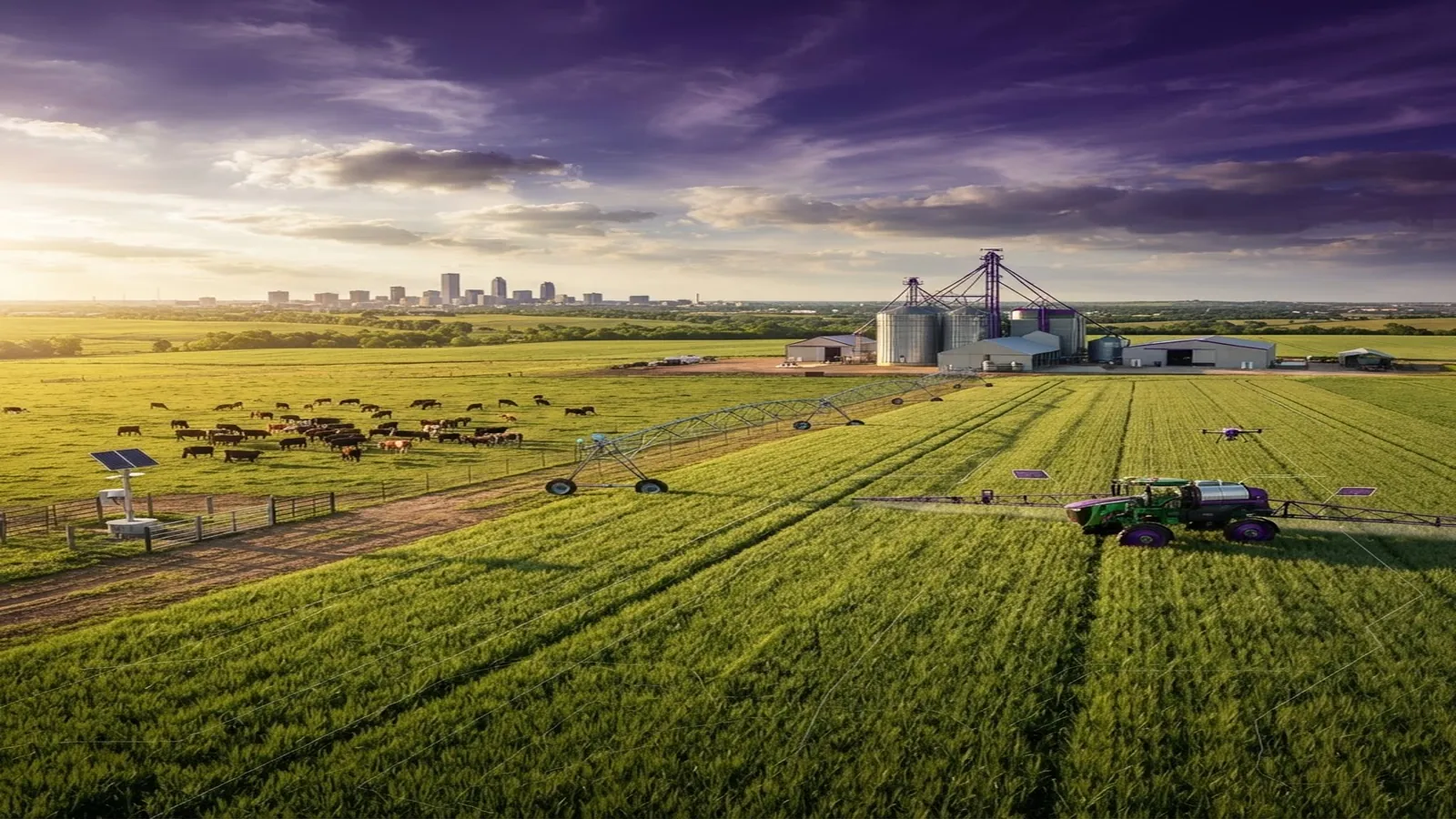
Agriculture's Role in the Oklahoma City Region
Oklahoma City is an urban center surrounded by one of the nation's most diverse agricultural states. Wheat, cattle, hay, cotton, sorghum, poultry, and specialty crops all contribute to the regional economy. The metro is also home to processors, cooperatives, genetics companies, lenders, and service organizations that connect farms to markets. The following businesses represent notable parts of that ecosystem rather than a ranking based on one metric.
1. Wheeler Brothers Grain Company
Wheeler Brothers Grain Company has deep Oklahoma roots in grain merchandising, seed, feed, fertilizer, and agricultural services. Its connection to producers and commodity markets makes it relevant to farms managing both input purchases and crop marketing. Local experience is especially valuable when weather, basis levels, and harvest timing change quickly.
2. American Plant Products and Services
American Plant Products and Services supports commercial growers with greenhouse systems, environmental controls, irrigation, and horticultural supplies. Its expertise is increasingly relevant as Oklahoma growers explore controlled-environment agriculture, nurseries, research facilities, and efficient water management. Project design and technical support distinguish it from a simple product distributor.
3. Lopez Foods
Oklahoma City-based Lopez Foods is a major meat processor serving large foodservice and retail customers. Although processing differs from primary farming, the company is an important part of the livestock value chain. Its operations demonstrate how food safety, traceability, scale, and supplier relationships connect regional agricultural production to national distribution.
4. Livestock Nutrition Center
Livestock Nutrition Center manufactures feed for cattle and other livestock through facilities across the region. Customized formulations can help producers align nutrition with forage quality, growth goals, and production stages. For central Oklahoma ranchers, dependable bulk delivery and practical nutrition knowledge are important advantages.
5. Shawnee Milling Company
Shawnee Milling Company is a longstanding Oklahoma flour and feed producer located east of the metro. It connects regional grain production with consumer flour, mixes, and animal feed. Its longevity reflects the importance of quality control, milling expertise, and trusted relationships across both agricultural and food markets.
6. P&K Equipment
P&K Equipment supports farmers through machinery sales, parts, and service. Equipment uptime is central to modern farming, particularly during narrow planting and harvest windows. Its regional presence gives Oklahoma City-area producers access to precision technology, maintenance resources, and machinery suited to farms, ranches, and property operations.
7. Johnston Enterprises
Johnston Enterprises operates in grain handling, storage, merchandising, and agricultural services in Oklahoma. Efficient elevators and market access help producers manage harvest logistics and price risk. Businesses in this category are essential to moving crops from central Oklahoma fields into food, feed, and export channels.
8. National Livestock Credit Corporation
National Livestock Credit Corporation provides financing designed around livestock production and agricultural cycles. Specialized lenders understand that farm cash flow rarely resembles conventional monthly business revenue. Oklahoma City-area producers may value sector knowledge when financing cattle, operating costs, or growth plans.
9. Ceres Tag
Ceres Tag brings smart identification and data technology to livestock management. Digital traceability, location insight, and animal monitoring are becoming more important as producers seek efficiency and stronger records. Technology companies like this demonstrate how Oklahoma agriculture is combining traditional husbandry with modern data systems.
10. Oklahoma Genetics
Oklahoma Genetics supports crop improvement and the development of varieties suited to regional growing conditions. Genetics influence yield, disease resistance, drought performance, and end-use quality. Collaboration among researchers, seed organizations, and producers helps farms adopt innovations tested for the Southern Plains.
How to Evaluate an Agricultural Partner
Farm businesses should evaluate technical knowledge, financial stability, service territory, product consistency, safety, and responsiveness during peak season. References from producers with similar soil, herd, acreage, or production systems are often more useful than generic claims. Contracts should clearly address delivery timing, quality standards, pricing mechanisms, and remedies for shortages.
Trends Reshaping Central Oklahoma Farming
Water efficiency, soil health, precision application, drought resilience, traceability, and labor-saving equipment are shaping investment. Producers are also exploring direct marketing, renewable energy leases, carbon-related programs, and diversified rotations. Oklahoma City's research institutions, transportation network, and professional services strengthen the surrounding farm economy. Successful partnerships will pair proven local knowledge with measurable innovation, helping producers manage risk without losing sight of long-term land stewardship.