
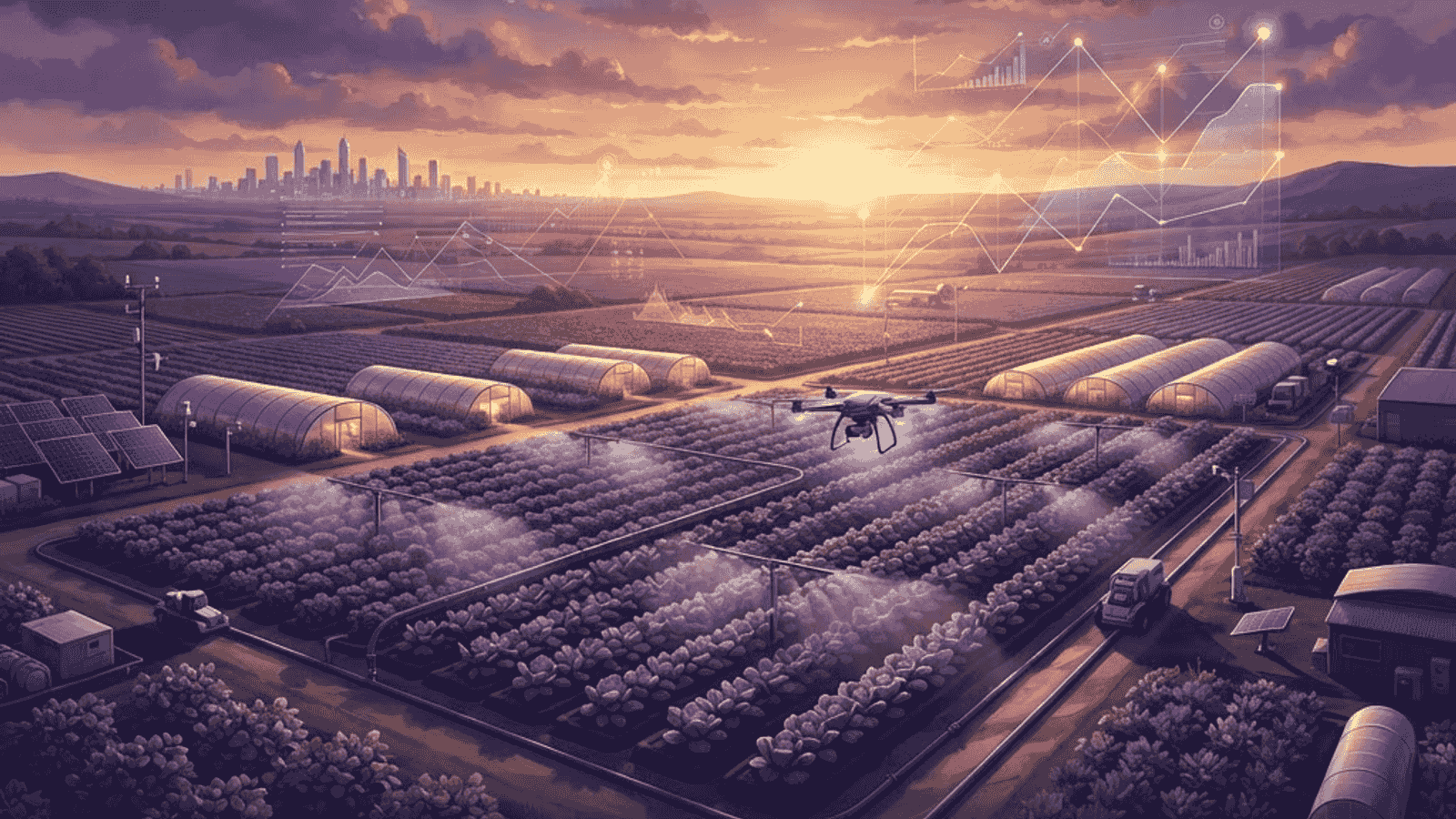
Farming at the Edge of an Urban Region
Newark sits where the East Bay's industrial fabric meets the bay shoreline and the agricultural belt that stretches inland. Farming here does not resemble the vast monoculture operations of the Central Valley. Instead, it is defined by high land values, close proximity to affluent consumers and restaurants, and strict water and environmental regulation. Those pressures have produced a distinctive agricultural economy built on intensity, specialization, and short supply chains.
The result is a landscape of controlled-environment growers, specialty vegetable and herb producers, nursery operations, urban farming enterprises, and agricultural service companies. Many sell directly into farmers markets, community-supported agriculture programs, restaurant kitchens, and regional grocers rather than commodity channels, capturing more value per acre than traditional field production would allow.
The Top 10 Farming Companies in Newark
1. Dumbarton Valley Farms
One of the longer-established diversified growers in the area, Dumbarton Valley produces seasonal vegetables and row crops for regional wholesale and farmers market channels. Its reputation rests on consistent quality grading and dependable weekly volumes, which chefs and produce buyers prize above novelty. Investment in drip irrigation and soil moisture monitoring has substantially reduced water use per unit of output.
2. Bayshore Greens Hydroponics
Operating greenhouse hydroponic systems, Bayshore Greens grows leafy salad crops, herbs, and microgreens year-round independent of weather. Controlled-environment production yields exceptional consistency in leaf size and shelf life, which appeals to restaurants and meal-kit operators. Water recirculation reduces consumption dramatically compared with open-field cultivation, an important advantage in a drought-prone state.
3. Verdant Acres Organic Produce
Certified organic across its operations, Verdant Acres focuses on brassicas, root vegetables, and heirloom tomatoes destined for community-supported agriculture boxes and specialty grocers. Cover cropping, compost application, and careful crop rotation form the backbone of its soil program. Its transparency about growing practices has built durable trust with subscribers who value knowing exactly how their food is produced.
4. Meridian Berry Company
Berries deliver high value per acre and short harvest windows, and Meridian has organized its operation around both realities. It grows strawberries and caneberries under tunnels that extend the season and protect fruit from rain damage. Rapid cooling after harvest preserves quality through distribution, and its labor training program supports careful picking standards that reduce bruising and waste.
5. Newark Urban Farm Collective
Combining production with community purpose, this collective cultivates vacant and underutilized parcels within the city, growing vegetables and herbs for local markets while running education programs for schools and residents. Its model demonstrates how small-scale intensive growing can supply meaningful volumes of fresh food and strengthen neighborhood food access simultaneously.
6. Crestline Nursery and Plant Production
Serving landscapers, garden retailers, and municipal projects, Crestline propagates ornamentals, native plants, and drought-tolerant species suited to Bay Area conditions. Its emphasis on California natives supports water-conscious landscaping and habitat value, and it grows to contract for large planting projects so specifiers receive the right species at the right size on schedule.
7. Harborview Herb and Specialty Crops
Restaurants drive demand for culinary herbs, edible flowers, and unusual varieties that mainstream distributors rarely carry. Harborview grows to chef specification in small successive plantings, harvesting to order for same-day or next-day delivery. Its flexibility in trialing new varieties makes it a valued development partner for menu-driven kitchens.
8. Ironbridge Agricultural Services
Rather than growing crops, Ironbridge supports those who do, providing land preparation, planting, spraying, harvesting assistance, and equipment operation on contract. For smaller growers who cannot justify owning specialized machinery, this service model converts large capital requirements into per-acre costs and provides trained operators familiar with regulatory requirements.
9. Voltline AgTech Solutions
Voltline deploys sensor networks, irrigation automation, and data platforms that help growers manage water, nutrients, and labor precisely. Soil moisture and weather-linked scheduling reduce both water use and disease pressure, while yield mapping supports better planting decisions. Its practical focus on tools growers will actually use daily distinguishes it from more speculative agricultural technology ventures.
10. Greenfield Compost and Soil Solutions
Soil health underpins productivity, and Greenfield processes organic waste streams into compost, mulch, and custom soil blends for farms, nurseries, and landscape projects. Diverting green waste from landfill while returning organic matter to local soils closes a genuine loop, and its blend consultation helps growers correct specific deficiencies rather than applying generic amendments.
Challenges Facing Newark-Area Agriculture
Water allocation remains the defining constraint, driving continuous investment in efficiency. Land pressure is equally significant, as industrial and residential development competes for parcels that once supported farming, pushing operations toward higher-value crops and protected cultivation. Labor availability and cost shape planting decisions, encouraging mechanization and crops with less demanding harvest windows. Regulatory compliance across water quality, pesticide use, and food safety adds administrative weight that small farms feel acutely.
Trends Defining the Future
Controlled-environment agriculture continues expanding because it converts unpredictable weather into a manageable variable. Direct-to-consumer and direct-to-restaurant sales keep growing, letting farms capture retail margin. Regenerative practices such as cover cropping, reduced tillage, and composting are being adopted for practical resilience as much as environmental principle. And precision technology is becoming affordable enough for mid-sized operations rather than remaining a large-farm privilege.
Final Thoughts
Farming near Newark succeeds through intensity and proximity rather than scale. The companies profiled here have adapted to expensive land, constrained water, and demanding customers by growing better rather than merely growing more. For buyers, that means access to genuinely fresh, traceable produce; for the region, it means retaining working agriculture inside one of the country's most competitive real estate markets.