
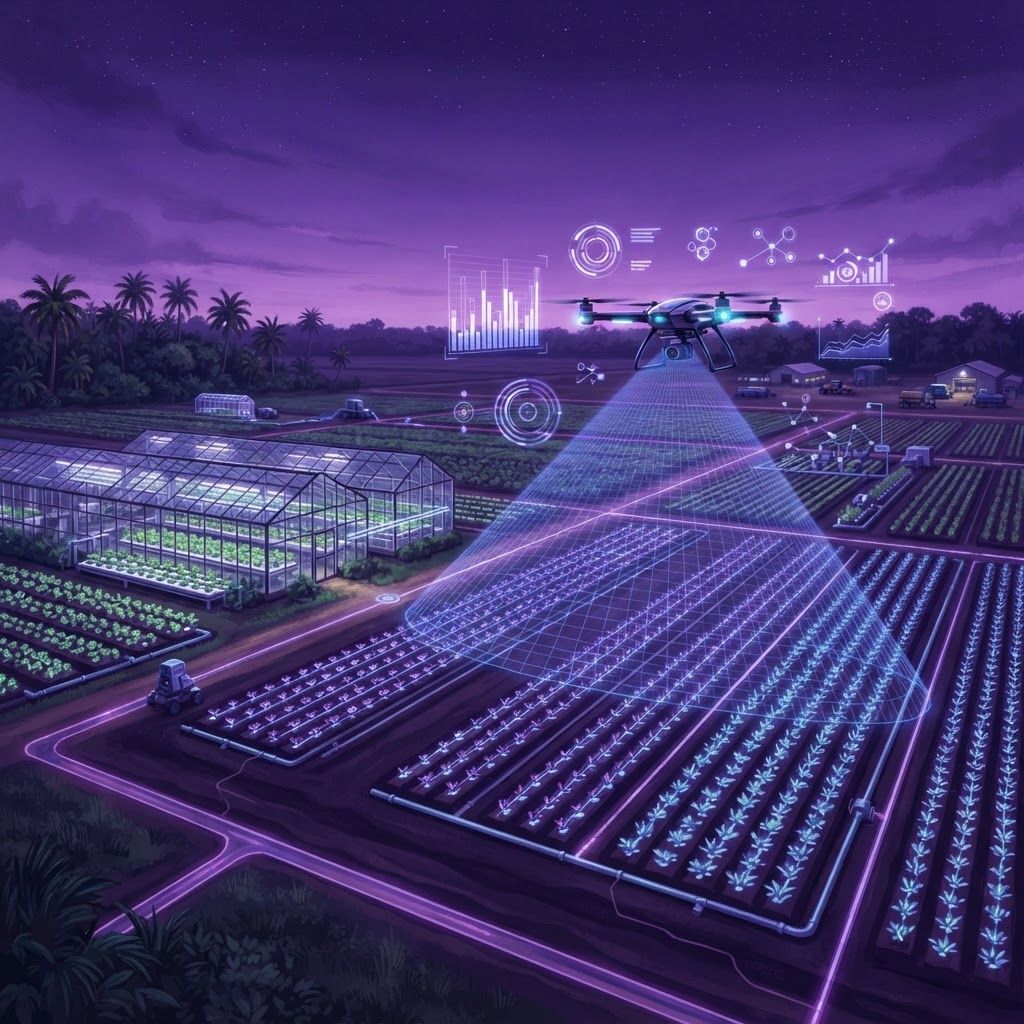
Farming in a Subtropical Coastal Environment
Agriculture in the Cape Coral area operates under conditions that would confound growers from most of the country. The growing calendar is inverted relative to northern norms, with the most productive season running through the cooler, drier winter months while summer heat, torrential rainfall and pest pressure make many crops difficult. Soils tend to be sandy with low organic matter and limited nutrient retention. Water management alternates between managing excess during the wet season and irrigating carefully during the dry one.
Farming operations that succeed here treat these constraints as design parameters. They select heat-tolerant varieties, build raised beds for drainage, invest in shade structures, and increasingly move production into greenhouses and hydroponic systems where the environment can be controlled directly. The companies below represent that mix of traditional field growing and technology-driven cultivation.
The Ten Notable Farming Companies
Cape Coral Family Farms operates diversified vegetable production oriented toward the winter season, growing tomatoes, peppers, squash, beans and leafy greens for local markets, restaurants and community-supported agriculture subscribers. Crop rotation and cover cropping form the backbone of its soil management.
Gulf Coast Hydroponic Growers represents controlled-environment agriculture, producing lettuces, herbs and microgreens in greenhouse systems year-round. By managing nutrients and climate directly, it delivers consistent quality during months when field production is impractical.
Southwest Florida Tropical Fruit Orchards cultivates mangoes, avocados, lychees, guavas, star fruit and citrus varieties suited to the region. Fruit tree cultivation demands patience and long-term investment, and the company also supplies nursery stock to homeowners planting edible landscapes.
Palm Ridge Nursery and Plant Production focuses on ornamental horticulture, growing palms, native shrubs, groundcovers and landscape plants for the region's substantial landscaping industry. Native and drought-tolerant selections have become a significant part of its output.
Coral Apiaries and Honey Company manages beehives for both honey production and pollination services, an essential input for fruit and vegetable growers across the area. Its seasonal honey varieties reflect local bloom cycles closely.
Bayside Aquaponics Farm integrates fish production with plant cultivation in recirculating systems, producing greens and tilapia while using dramatically less water than conventional methods. It has become a frequent destination for agricultural education visits.
Estero Cattle and Livestock Ranch continues Florida's long ranching tradition, raising cattle on improved pasture with rotational grazing practices adapted to summer rainfall and forage cycles.
Cape Organic Vegetable Cooperative brings together several smaller certified growers to aggregate volume, share equipment and reach wholesale buyers who require consistent supply that no single small farm could provide alone.
Coral Coast Herb and Specialty Crop Farm grows culinary herbs, edible flowers and specialty produce for chefs, filling a niche that broadline distributors handle poorly because these items require rapid, delicate handling.
Cape Coral Vertical Farm Systems completes the list with indoor stacked cultivation under controlled lighting, achieving very high yields per square foot and complete independence from weather, storms and seasonal pest cycles.
Trends Reshaping Local Agriculture
Controlled-environment agriculture is the most visible shift. Greenhouses, hydroponics, aquaponics and vertical systems reduce weather risk, cut water consumption substantially and enable year-round production of crops that field conditions cannot support in summer. Capital and energy costs remain the limiting factors.
Water stewardship has moved to the center of farm planning. Drip irrigation, soil moisture sensing, retention ponds and tailwater recovery reduce both consumption and nutrient runoff, which matters enormously in a region where water quality directly affects estuaries and coastal tourism.
Direct-to-consumer sales continue to expand. Farmers markets, subscription boxes and restaurant partnerships allow growers to capture more value per unit than commodity channels, while building relationships that stabilize demand across seasons.
Regenerative practices are gaining adoption as well. Cover cropping, compost application, reduced tillage and integrated pest management improve sandy soils over time, reducing input costs and improving resilience against both drought and heavy rainfall.
Finally, storm resilience planning has become standard. Growers stagger plantings, invest in reinforced structures, maintain crop insurance and prepare harvest contingencies, recognizing that a single hurricane can eliminate a season of work.
Working With Local Farms
Buyers sourcing from local growers should align expectations with the regional calendar. Requesting tomatoes in August or lettuce from open fields in July sets up disappointment, while planning menus and retail programs around the winter peak produces reliable supply.
Communicate volume needs early. Small and mid-size farms plant according to committed demand, and a restaurant that commits in advance often secures better pricing and priority during scarcity.
Understand handling requirements. Field-fresh produce without industrial post-harvest processing has a shorter window and demands prompt refrigeration, but rewards buyers with noticeably better flavor and texture.
Ask about certification and practices directly rather than assuming. Some growers follow organic methods without formal certification, while others hold certifications that support specific marketing claims. Clarity protects both parties.
Final Thoughts
Farming around Cape Coral is a study in adaptation, combining traditional winter vegetable production and tropical orchards with hydroponics, aquaponics and vertical growing. The ten companies above illustrate how varied that landscape has become. For buyers, the opportunity lies in building direct relationships that deliver freshness and story alike. For the region, these operations represent both food security and a meaningful connection to Southwest Florida's agricultural roots.