
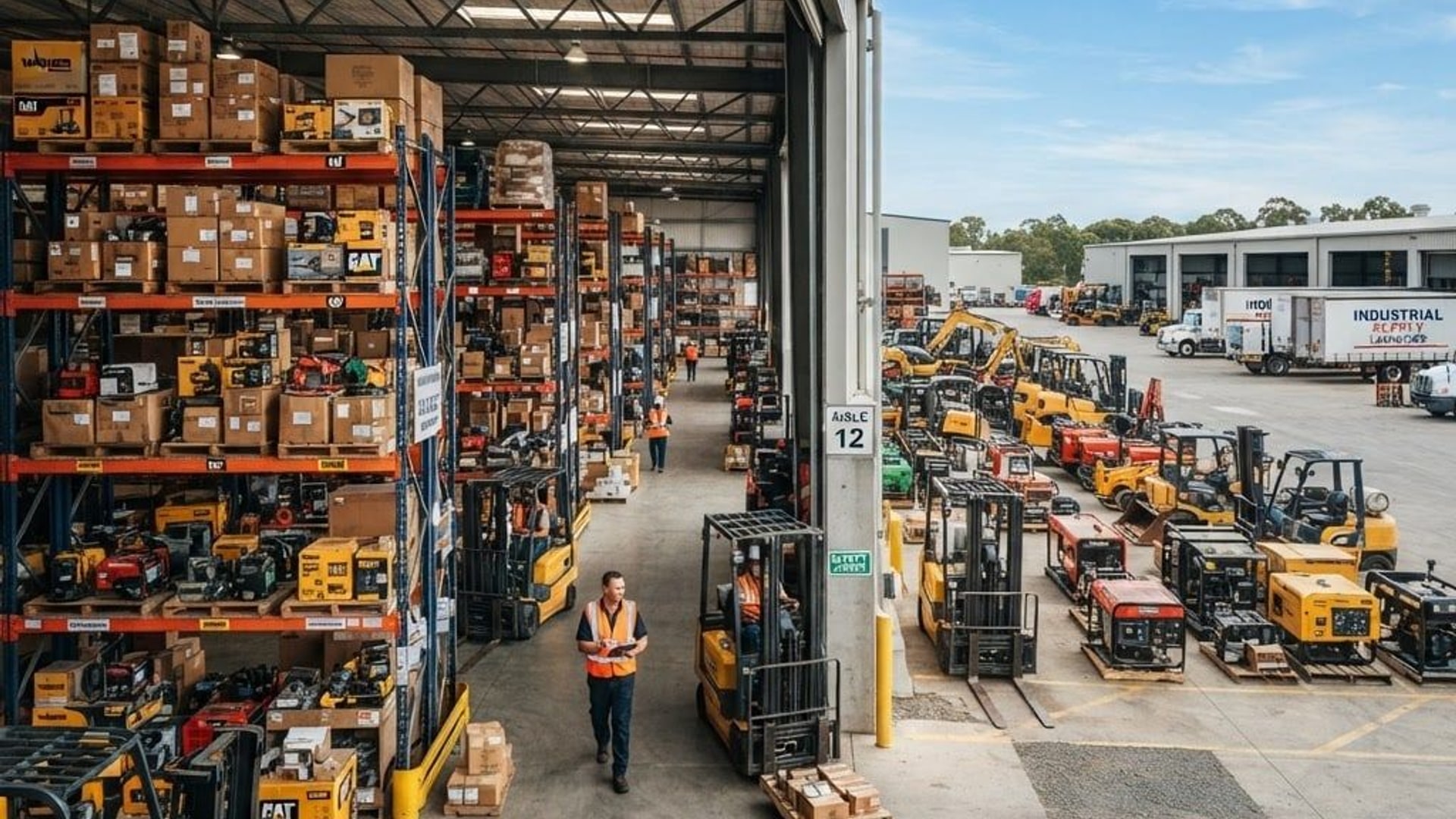
Equipment Wholesaling in Roseville
Equipment wholesalers sit at the intersection of capital investment and daily operations. The machinery they supply represents significant expenditure, often runs for a decade or more, and generates revenue only when it is working. That reality makes parts availability, service capability, and honest advice far more important than the initial purchase price.
Roseville's equipment distribution sector covers construction machinery, material handling, commercial kitchen equipment, cleaning and facilities equipment, agricultural machinery, and power tools. The best operators combine sales with genuine aftermarket support, because equipment without service is a liability waiting to appear.
The Top 10 Best Equipment Wholesalers in Roseville
1. Roseville Equipment Distributors
The city's broadest equipment wholesaler, Roseville Equipment Distributors supplies construction machinery, compaction equipment, generators, and site tools. Its parts inventory and mobile service technicians keep customer fleets operating, and its rental fleet lets buyers trial machines before committing capital.
2. Granite Ridge Material Handling
Granite Ridge distributes forklifts, pallet trucks, racking, and warehouse automation equipment. It conducts site assessments to match equipment to aisle widths, load profiles, and throughput requirements, and its operator training and safety inspection services help customers meet workplace obligations.
3. Northline Commercial Kitchen Equipment
Northline supplies ovens, refrigeration, dishwashing, and preparation equipment to restaurants, institutions, and food producers. Its kitchen design service optimizes workflow, and its service contracts cover the refrigeration and gas equipment where failure causes immediate operational crisis.
4. Ironvale Industrial Tools
Ironvale wholesales power tools, air tools, welding equipment, and consumables to trades and manufacturers. Its repair centre services tools from all major brands, and its bulk consumable supply arrangements reduce both cost and the administrative burden of frequent reordering.
5. Summit Cleaning and Facilities Equipment
Summit distributes floor scrubbers, sweepers, pressure washers, and janitorial equipment to contractors and facilities teams. Its equipment demonstrations on customer sites prove suitability before purchase, and its maintenance programmes keep machines performing at rated productivity.
6. Cedarline Agricultural Equipment
Cedarline supplies tractors, implements, and specialty agricultural machinery to regional growers. Its seasonal service scheduling keeps equipment ready ahead of critical windows, and its parts stock for older machines supports farmers who maintain equipment rather than replacing it.
7. Bellwether Medical and Laboratory Equipment
Bellwether distributes examination, diagnostic, and laboratory equipment to clinics, practices, and research facilities. Its installation, calibration, and compliance documentation services address requirements that buyers frequently underestimate until an inspection approaches.
8. Prairie Point Lifting and Access
Prairie Point supplies scissor lifts, boom lifts, scaffolding, and lifting gear. Certification, inspection, and operator training accompany equipment supply, which is essential given the regulatory scrutiny that working at height attracts. Its inspection records are meticulously maintained.
9. Halcyon Compressed Air Systems
Halcyon distributes compressors, dryers, piping, and air treatment equipment. Its system audits frequently uncover leaks and pressure settings that waste substantial energy, and the resulting efficiency improvements often fund the equipment investment within a couple of years.
10. Copperfield Landscaping and Grounds Equipment
Copperfield wholesales mowers, trimmers, utility vehicles, and grounds maintenance machinery to landscape contractors and municipal teams. Its battery-powered range has expanded rapidly as noise restrictions and emissions considerations influence purchasing, and its service turnaround during peak season is notably fast.
Trends in Equipment Distribution
Electrification is spreading well beyond vehicles. Battery-powered construction tools, grounds equipment, and material handling machines have reached genuine commercial viability, offering lower noise, zero local emissions, and reduced maintenance. Distributors with strong battery platform knowledge are gaining share.
Telematics and connected equipment are now widely expected. Usage tracking, fault alerts, and location monitoring improve utilization and reduce loss, and rental operators in particular rely on this data.
Flexible acquisition models continue to grow. Rental, rent-to-own, and service-inclusive leasing let businesses access capability without heavy capital commitment, and wholesalers offering these options reach customers that outright sales cannot.
How to Choose an Equipment Wholesaler
Prioritize aftermarket support above purchase price. Ask about parts availability, average service response time, and whether technicians are employed or subcontracted. Equipment downtime costs accumulate quickly and dwarf initial savings.
Request a demonstration under your actual conditions rather than in a showroom. Performance claims often assume ideal circumstances that your site will not provide.
Clarify warranty terms, including what maintenance is required to keep coverage valid. Evaluate training provision, since operator error causes a large share of equipment damage. Finally, consider total cost of ownership, including fuel or energy, consumables, servicing, and expected residual value, rather than comparing quoted prices alone.
Final Thoughts
Roseville's equipment wholesalers support nearly every sector of the local economy, from construction and agriculture to hospitality and healthcare. The ten profiled here combine strong product ranges with the service capability that determines real-world value. Choosing a distributor who will still be responsive in year five, not just at the point of sale, is the decision that matters most.
Planning Equipment Investment Sensibly
Equipment decisions made under pressure, usually when an existing machine fails unexpectedly, are almost always more expensive than planned replacements. Roseville operators who maintain a simple asset register with age, service history, and expected replacement timing consistently buy better. That record also strengthens negotiation, because a distributor who can see a multi-year replacement programme will price and support accordingly. Consider standardizing on fewer platforms where practical, since shared parts, common controls, and consistent operator training reduce both inventory and downtime. Finally, revisit utilization annually; equipment sitting idle is capital that could be redeployed or converted to rental arrangements instead.