
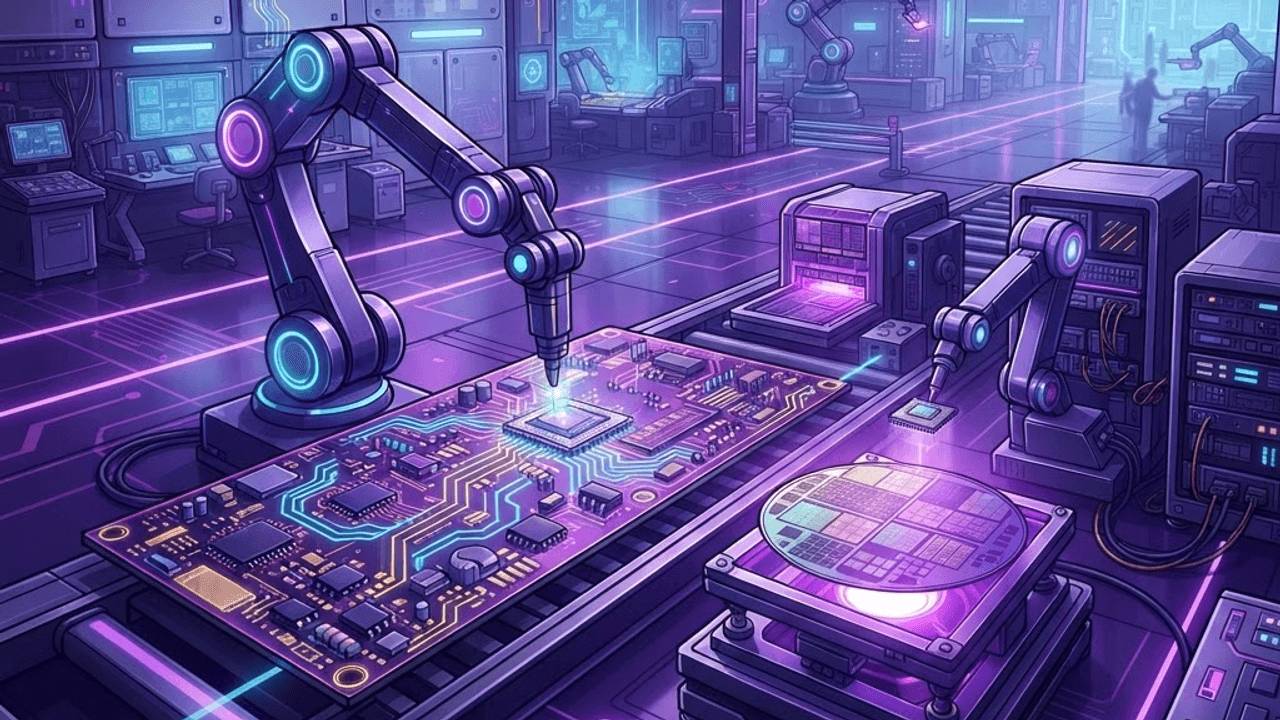
Electronics Manufacturing at the Origin of Silicon Valley
Sunnyvale holds a particular place in the history of electronics. The region's transition from orchards to semiconductors began in these few square miles, and while much high-volume production has moved offshore, the city retains a dense concentration of semiconductor engineering, advanced hardware development, prototyping capability and specialized manufacturing.
The modern electronics ecosystem here operates differently than it did decades ago. Rather than vast assembly floors, the region hosts chip design and process development, advanced packaging, test and measurement, rapid prototyping services and contract manufacturers who bridge the gap between a working prototype and a shippable product. For hardware startups, that local capability is a genuine competitive advantage, allowing design iterations in days rather than weeks.
Electronics Manufacturers and Partners Serving Sunnyvale
Advanced Micro Devices maintains a significant Sunnyvale presence and develops processors and graphics technology used across computing, data center and embedded markets. Intel, headquartered nearby, continues to anchor semiconductor development and manufacturing technology in the region.
Texas Instruments operates design and application engineering in the area supporting analog, embedded processing and power management products used throughout electronics design. Juniper Networks develops networking hardware from its Sunnyvale campus, spanning routing, switching and security platforms.
Jabil provides contract design and manufacturing services with engineering support, helping companies move designs into volume production. Sanmina offers integrated manufacturing services including printed circuit board assembly, enclosures, cable assemblies and complex system integration, with substantial Bay Area operations.
Benchmark Electronics supports regulated and complex product development including medical, aerospace and industrial electronics. Flex delivers design, engineering and manufacturing services across a wide range of product categories at global scale.
Silicon Valley based prototype and quick-turn assembly providers such as Bay Area Circuits and comparable printed circuit board fabricators serve engineers needing boards and assemblies in days, a capability that materially accelerates hardware development cycles.
Rounding out the list, Lam Research and Applied Materials supply the semiconductor equipment that makes chip fabrication possible, with engineering operations concentrated in this region and a role that underpins the entire electronics supply chain.
Manufacturing Capabilities in the Region
Semiconductor design and development remains the highest-value activity, encompassing architecture, logic design, physical implementation, verification and test development for processors, networking silicon, analog components and specialized accelerators.
Printed circuit board design and assembly covers schematic capture, layout, fabrication and surface mount assembly. Quick-turn services deliver functional boards rapidly for validation, while volume assembly handles production quantities.
Advanced packaging has grown in importance as performance gains increasingly come from how chips are integrated rather than transistor scaling alone. Chiplet architectures, silicon interposers and three-dimensional stacking are active areas of development.
System integration combines boards, enclosures, thermal management, power supplies, cabling and firmware into complete products, along with functional testing and burn-in.
Test and measurement services validate performance, reliability, electromagnetic compatibility and environmental tolerance, often required for certification before products can be sold.
Trends in Electronics Manufacturing
Supply chain resilience has become a strategic priority. Component shortages taught the industry the cost of single-source dependencies, and companies now design with alternate parts, maintain buffer inventory and qualify multiple suppliers.
Domestic capacity expansion has accelerated, supported by policy initiatives encouraging semiconductor fabrication and advanced packaging within the United States. This has increased demand for engineering talent concentrated in this region.
Artificial intelligence hardware is reshaping demand. Accelerators, high-bandwidth memory integration, advanced networking and the power and cooling infrastructure supporting them dominate current investment.
Sustainability requirements have expanded, covering restricted substances, energy efficiency, recyclability, conflict minerals reporting and carbon accounting across the supply chain.
Design automation has advanced substantially, with machine learning applied to layout optimization, verification coverage and manufacturing yield analysis.
Selecting a Manufacturing Partner
Match the partner to the production stage. Prototype houses excel at speed and flexibility but are expensive at volume. Contract manufacturers optimized for volume require stable designs and meaningful quantities. Attempting to use one for the other's purpose wastes time and money.
Evaluate engineering support explicitly. Design for manufacturability review, component sourcing advice and test strategy development often contribute more value than assembly cost differences.
Verify certifications relevant to your market, including quality management systems and industry-specific standards for medical, automotive or aerospace applications.
Discuss intellectual property protection, particularly around design files, test procedures and firmware. Confirm contractual terms regarding tooling ownership and design data.
Assess communication and transparency. Manufacturing problems are inevitable, and partners who report issues early rather than concealing them until shipment deadlines are substantially more valuable.
Final Thoughts
Electronics manufacturing connected to Sunnyvale spans the full range from foundational semiconductor technology to rapid prototype assembly. The region's enduring strength lies less in volume production and more in the concentration of engineering expertise, equipment technology and responsive local services that allow hardware ideas to become functional products quickly. Companies that engage manufacturing partners early in design, rather than after the schematic is frozen, consistently reach production faster and with fewer costly revisions.