
Why Irvine Became an Electronics Center
Irvine's electronics industry did not develop by accident. The city grew alongside Southern California's aerospace and defense sector, which created early demand for precision electronics and a workforce trained in rigorous engineering discipline. As that base matured, it seeded semiconductor companies, networking hardware firms, medical device makers, and the contract manufacturers that serve all of them.
Several structural advantages sustain the cluster. The university produces electrical engineering and computer engineering graduates who often stay in the region. Master-planned industrial parks provide facilities suited to cleanroom and controlled-environment operations. Proximity to the ports supports component import and finished goods export. And a dense local network of suppliers, test laboratories, and specialized service providers means a design team can move from concept to production without leaving Orange County.
The Layers of Electronics Manufacturing
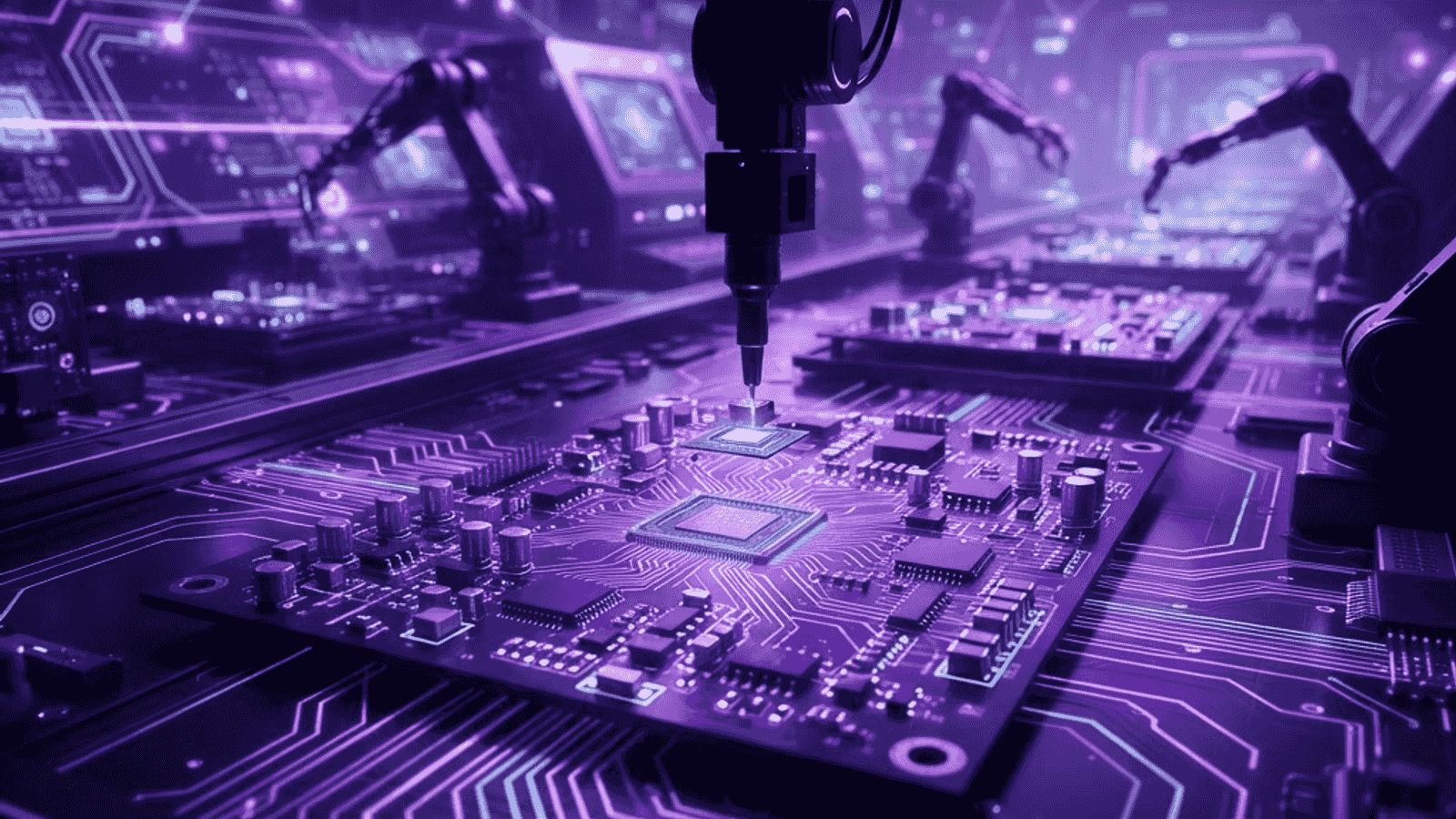
Electronics manufacturing spans several distinct layers. Semiconductor companies design and, in some cases, fabricate integrated circuits. Printed circuit board fabricators produce the substrates that carry components. Assembly operations place and solder components onto boards, using surface-mount and through-hole processes. Box build and systems integration operations assemble finished products including enclosures, cabling, and firmware loading.
Supporting layers include test and inspection services, cable and harness manufacturing, power supply and magnetics production, and design services covering schematic capture, layout, signal integrity analysis, thermal modeling, and regulatory certification. For regulated markets such as medical and aerospace, quality management and documentation capability is itself a specialized competency.
The Top 10 Electronics Manufacturers in Irvine
1. Spectrum Semiconductor Systems. A designer of mixed-signal and radio frequency integrated circuits for communications and sensing applications. The company operates a design center and test facility locally while using external foundries for wafer fabrication, a model common among modern chip companies.
2. Pacific Circuit Assembly. A contract electronics manufacturer providing surface-mount assembly, through-hole soldering, conformal coating, and functional test. It is known for handling high-mix, moderate-volume work with fast changeover, which suits the product development cycles of local technology companies.
3. Meridian Medical Electronics. A manufacturer of electronic assemblies for diagnostic and therapeutic medical devices, operating under quality systems appropriate to regulated production. Traceability, process validation, and controlled documentation are central to its offering.
4. Coastline PCB Technologies. A printed circuit board fabricator producing multilayer, high-density, flexible, and rigid-flex boards. Its capability with tight impedance control and fine feature sizes supports high-speed digital and radio frequency designs.
5. Harbor Point Systems Integration. A box build and systems integration provider assembling complete products including enclosures, wiring, firmware installation, calibration, and packaging. It frequently serves as the final stage for companies that outsource full production.
6. Sierra Power Electronics. A designer and manufacturer of power supplies, converters, magnetics, and battery management systems for industrial, medical, and transportation applications. Efficiency and thermal performance are its principal engineering focus.
7. Newport Cable and Harness. A producer of custom cable assemblies, wire harnesses, and interconnect solutions, including designs for demanding environments with vibration, temperature extremes, or electromagnetic interference concerns.
8. Verdant Test and Inspection Services. A provider of automated optical inspection, X-ray inspection, in-circuit test, environmental stress screening, and failure analysis. Independent verification of this kind is essential where field failures carry high consequences.
9. Foothill Embedded Design Group. An engineering services firm providing schematic design, board layout, embedded firmware development, signal integrity analysis, and regulatory compliance support. It functions as an outsourced engineering department for companies without full in-house capability.
10. Cardinal Microelectronics Packaging. A specialist in advanced packaging, including die attach, wire bonding, flip chip assembly, and system-in-package integration. As performance gains shift from transistor scaling toward packaging innovation, this capability has grown significantly in importance.
Supply Chain Lessons and Regionalization
Recent years taught the electronics industry hard lessons about supply chain concentration. Component shortages disrupted production across every segment, and companies discovered that single-source parts and thin inventory buffers created fragility they had not priced. The response has been substantial and lasting.
Manufacturers now maintain qualified alternate sources for critical components, hold strategic inventory on long-lead parts, and design with substitution in mind from the beginning. Interest in regional manufacturing capacity has grown, both for supply security and for the shorter feedback loops that proximity provides during product introduction. Irvine's contract manufacturers have benefited from this shift, particularly for products where engineering changes are frequent.
Technical Trends Reshaping the Sector
Several trends define current engineering priorities. Advanced packaging techniques including chiplet integration and system-in-package designs are delivering performance improvements that traditional transistor scaling no longer provides economically. Higher data rates demand careful signal integrity work, controlled-impedance fabrication, and materials with stable dielectric properties.
Power density continues to rise, making thermal management a primary design constraint rather than an afterthought. Wide bandgap semiconductors using silicon carbide and gallium nitride are improving efficiency in power conversion. Machine learning inference at the edge is driving demand for specialized processors in compact, power-constrained products. And electrification across transportation and industrial equipment is expanding the market for robust power electronics.
Selecting an Electronics Manufacturing Partner
Companies evaluating these manufacturers should match capability to product requirements precisely. Confirm the equipment set handles the component packages, board complexity, and volumes involved. Review quality certifications relevant to the target market, and for regulated products verify that documentation practices meet applicable requirements.
Ask about engineering support during design for manufacturability review, because catching a layout problem before tooling saves far more than it costs. Discuss component sourcing responsibility, inventory policy, and how shortages are communicated and managed. Request test coverage details, since inspection strategy determines what defects reach customers.
Finally, visit the facility. Cleanliness, organization, equipment condition, and how staff describe their own processes reveal more about manufacturing discipline than any presentation. Irvine's density of capable suppliers makes those visits practical, which is one of the clearest advantages of building electronics in this part of California.