
Electronics Manufacturing in Western New York
Buffalo's electronics sector is a direct descendant of its industrial past. The precision machining, tooling and metrology capabilities built for steel, automotive and aerospace production translated naturally into electromechanical assembly, instrumentation and controls manufacturing. The result is a regional cluster that is modest in headcount but technically sophisticated, oriented toward industrial, medical, defense and aerospace applications rather than consumer devices.
The region's advantages are concrete. Engineering graduates from the University at Buffalo and technical programs at regional community colleges supply skilled labor. Facility and utility costs are low relative to coastal manufacturing centers, and Western New York's inexpensive hydroelectric power is a genuine factor for energy-intensive processes. Proximity to Toronto and the broader Ontario manufacturing corridor extends both the customer base and the supplier network.
What Local Manufacturers Actually Build
The output skews industrial. Printed circuit board assembly for capital equipment, sensor and instrumentation modules, motor controls and drives, power supplies and conversion equipment, wire harnesses and cable assemblies, control panels and enclosures, aerospace avionics components, and medical device electronics are all produced regionally.
These markets share characteristics that suit Buffalo well. Volumes are moderate rather than enormous, engineering content is high, regulatory documentation is demanding, product lifecycles are long, and customers value supplier stability and proximity over marginal unit cost. That is a fundamentally different competitive game than consumer electronics, and it is one North American manufacturers can win.
Ten Electronics Manufacturers and Related Firms
1. Moog Inc. is headquartered in East Aurora just outside Buffalo and is the region's most significant precision motion control and aerospace electronics enterprise. Its work spans flight controls, industrial servo systems, medical devices and space applications, and its engineering culture has trained a substantial portion of the region's technical workforce.
2. Servotronics operates in Elma, producing servo valves, controls and related precision components for aerospace and industrial customers. Companies of this type combine tight-tolerance machining with electronic control design, a combination that is difficult to replicate quickly.
3. Ultra Electronics and defense electronics operations in the region supply subsystems for military and security applications, which requires rigorous quality management, controlled documentation and often facility security clearances.
4. TAYLOR Devices and precision instrumentation firms in North Tonawanda demonstrate the region's strength in engineered products where mechanical and electronic systems integrate, including seismic dampers, testing equipment and specialized measurement systems.
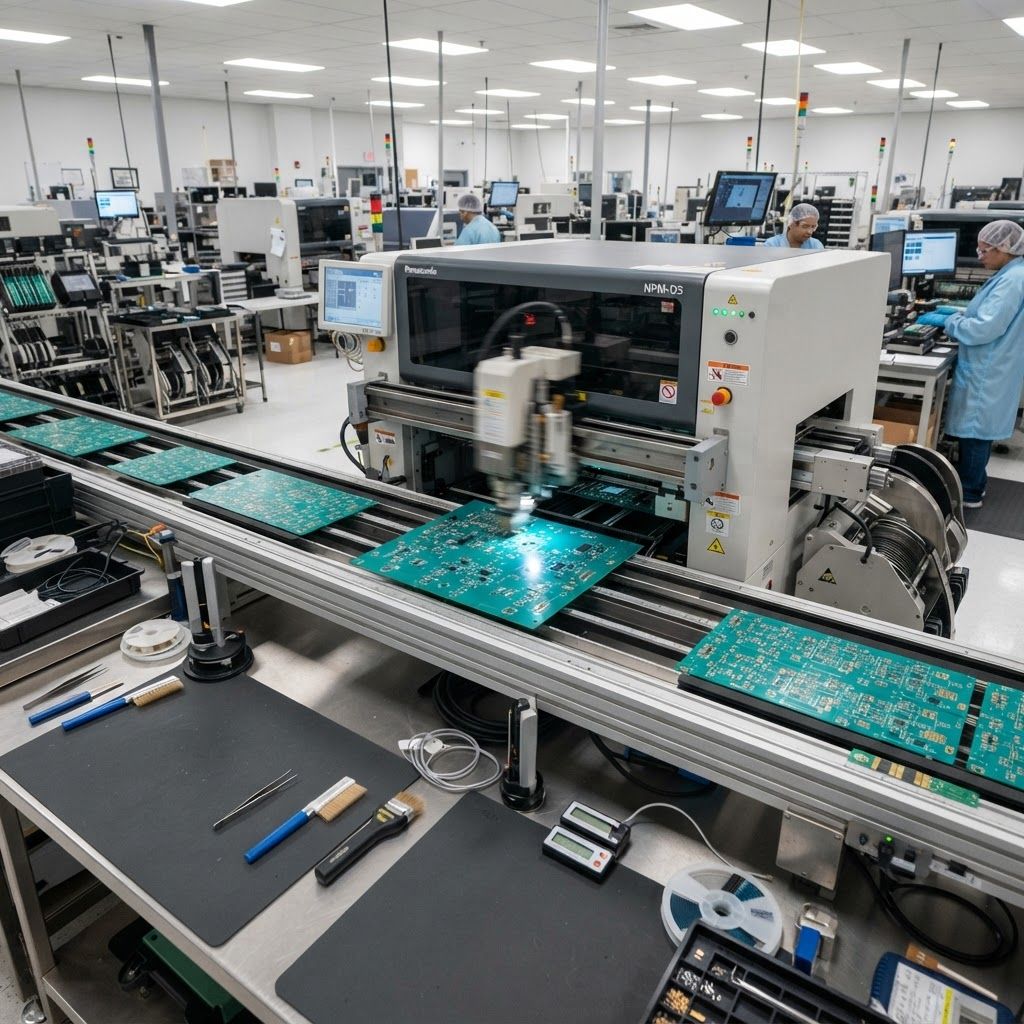
5. Contract electronics manufacturers serving Erie and Niagara counties provide surface-mount and through-hole PCB assembly, testing, box build and functional verification for original equipment manufacturers. Regional contract manufacturers compete on engineering support, prototype speed and low minimums rather than volume pricing.
6. Cobham and communications equipment producers in Western New York build antennas, RF subsystems and related hardware. Radio frequency design remains a specialized discipline where experienced engineering teams are genuinely scarce.
7. Buffalo Manufacturing Works functions as a shared applied technology resource, helping regional manufacturers adopt automation, additive manufacturing, robotics and advanced inspection. For small electronics manufacturers, access to shared capability lowers the barrier to modernization considerably.
8. Wire harness and cable assembly producers across the region serve transportation, industrial equipment and medical customers. Harness manufacturing remains labor-intensive and benefits from close customer collaboration during design, which favors domestic suppliers.
9. Precision machining and enclosure fabricators supporting electronics assembly supply sheet metal enclosures, machined housings, heat sinks and mounting hardware. The strength of this supporting supply chain is one of Buffalo's real structural advantages, since it allows electronics manufacturers to source mechanical components locally with short lead times.
10. Test and calibration laboratories in the Buffalo area provide environmental testing, electromagnetic compatibility evaluation, calibration and failure analysis. Access to accredited local testing significantly compresses product development timelines.
Certifications and Quality Systems
Certification requirements vary sharply by market and are a practical filter when selecting a partner. General manufacturing quality management is typically covered by ISO 9001. Aerospace work requires AS9100. Medical devices call for ISO 13485 and appropriate regulatory registration. Automotive customers may require IATF 16949. Defense work involves ITAR compliance and often facility clearance. Workmanship standards for electronic assemblies follow IPC classes, and the class specified determines inspection rigor and acceptable defect criteria.
Counterfeit component avoidance has become a serious discipline. Reputable manufacturers purchase through authorized distribution, maintain traceability documentation, and can explain their process for handling allocation shortages without resorting to unverified brokers. This is worth asking about directly.
Supply Chain and Cost Realities
Component availability remains the dominant risk in electronics manufacturing. Semiconductor lead times have normalized from crisis levels but remain long and volatile for specialized parts. Sophisticated manufacturers now offer design-for-availability review, suggesting alternate parts during development rather than discovering shortages at production release.
Labor is the second constraint. Skilled assemblers, technicians and test engineers are in demand, and Buffalo manufacturers compete with Toronto, Rochester and remote employers for the same people. Companies investing in apprenticeships and internal training report better retention than those relying on recruitment alone.
Selecting a Manufacturing Partner
Evaluate engineering capability first. A partner who reviews your design and identifies manufacturability issues before production saves far more than a lower quoted assembly price. Ask what design-for-manufacturing feedback they typically provide and request examples.
Understand the volume fit. A shop optimized for prototypes and low volumes will struggle at scale, and a high-volume line will not want your fifty-unit run. Match honestly rather than hoping to grow into or out of a relationship.
Confirm testing scope explicitly. In-circuit test, functional test, burn-in and environmental screening each catch different defects, and assumptions about what is included cause more disputes than any other issue. Finally, discuss intellectual property, tooling ownership and exit terms at the outset, when goodwill is highest.
Conclusion
Buffalo's electronics manufacturing sector is a legitimate technical asset, anchored by significant aerospace and motion control employers and supported by a dense network of machining, fabrication and testing capability. It competes on engineering, quality documentation and responsiveness rather than price, which is exactly the right strategy for the industrial, medical and aerospace markets it serves. For product companies in the Northeast, the region offers a credible alternative to distant contract manufacturing with meaningfully lower coordination risk.