
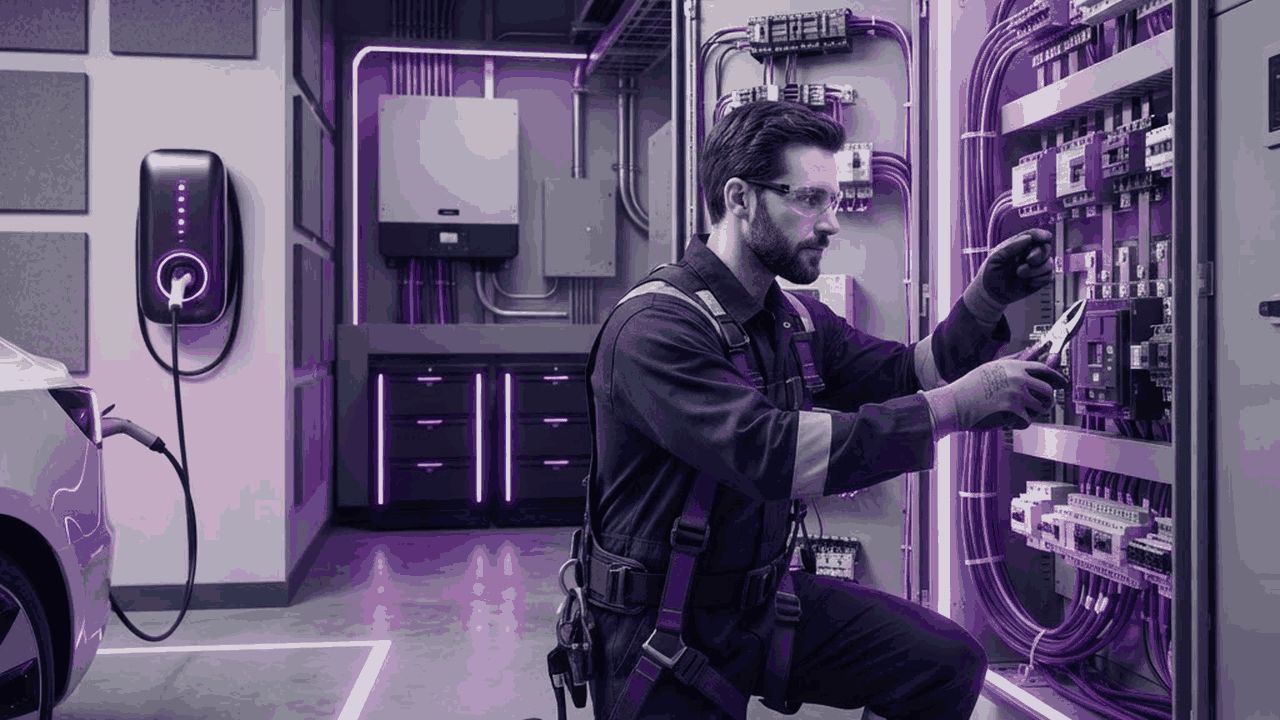
Electrical Work Driving Washington Forward
Washington’s electrical market spans major commercial projects, industrial facilities, data systems, renewable energy, and residential upgrades. Electrification is increasing demand for service changes, heat pumps, induction cooking, battery storage, and vehicle charging. Because electrical work affects life safety and reliability, qualifications, planning, and testing must outweigh price alone.
1. Cochran
Cochran is a major Pacific Northwest electrical and technology contractor headquartered in Washington. Its capabilities include commercial electrical construction, low-voltage systems, service, and complex technology environments. The company is well suited to large projects requiring integrated power and communications coordination.
2. McKinstry
Seattle-based McKinstry combines electrical construction with energy, mechanical, controls, and building-performance services. This systems perspective is valuable for decarbonization and efficiency programs where electrical scope interacts with HVAC, metering, and operations. The firm supports both project delivery and long-term facility goals.
3. Prime Electric
Prime Electric serves commercial, technology, healthcare, industrial, and special-project clients across the region. Its preconstruction and virtual-design capabilities support complex installations. Owners should consider the firm where schedule, prefabrication, and dense coordination are major concerns.
4. Valley Electric
Valley Electric has a longstanding Washington presence and delivers electrical construction in commercial, industrial, healthcare, and institutional settings. The company’s project history reflects the value of experienced field leadership and established trade relationships.
5. VECA Electric and Technologies
VECA provides electrical construction, technologies, service, and maintenance from its Pacific Northwest base. Its integrated offering can support clients from initial buildout through ongoing operations. Technology systems may include communications, security, and related low-voltage infrastructure.
6. Sequoyah Electric
Sequoyah Electric serves commercial and industrial customers with electrical and low-voltage expertise. The Redmond-area company is positioned for Eastside projects and complex workplaces. Early coordination helps align power distribution, lighting controls, and communications pathways.
7. SME Inc. of Seattle
SME Inc. of Seattle performs commercial electrical construction and service across the region. Its local experience supports tenant improvements, new construction, and facility modifications. Service capabilities are important for clients that need responsive support after project completion.
8. Merit Electric
Merit Electric is active in Washington commercial, industrial, and institutional markets. Its work includes electrical construction and specialized systems. Owners should assess direct experience with their facility type, particularly where shutdowns or operational continuity are critical.
9. Artisan Electric
Artisan Electric is known in the Seattle area for solar, storage, and residential electrification work. The company’s renewable-energy focus can benefit homeowners evaluating rooftop generation, batteries, EV charging, or service upgrades as a coordinated system.
10. Kemly Electric
Kemly Electric has served Seattle-area residential and commercial customers for generations. The company handles repairs, remodels, service changes, lighting, and other electrical needs. Familiarity with older Seattle wiring and housing stock is especially useful during renovations.
Major Trends and Services
EV charging projects require more than installing hardware. Contractors must evaluate utility capacity, demand, panel space, load management, accessibility, networking, and future expansion. Commercial owners may benefit from phased infrastructure that avoids repeated trenching. Residential customers should ask whether dynamic load controls can reduce the need for a full service upgrade.
Solar and battery projects require careful equipment compatibility, structural coordination, interconnection, and emergency labeling. Commercial buildings increasingly use smart controls, metering, and fault detection to manage energy. Cybersecurity and commissioning should be included when operational technology connects to wider networks.
How to Evaluate an Electrical Contractor
Verify Washington licensing, insurance, safety performance, permits, and the qualifications of assigned supervisors. For commercial work, review bonding capacity, prefabrication strategy, testing plans, and experience with the serving utility. For homes, request a written scope identifying panel equipment, circuit routes, patching responsibilities, surge protection, and inspection. The right contractor will explain capacity calculations, code requirements, alternatives, and future-readiness without overselling unnecessary work.