
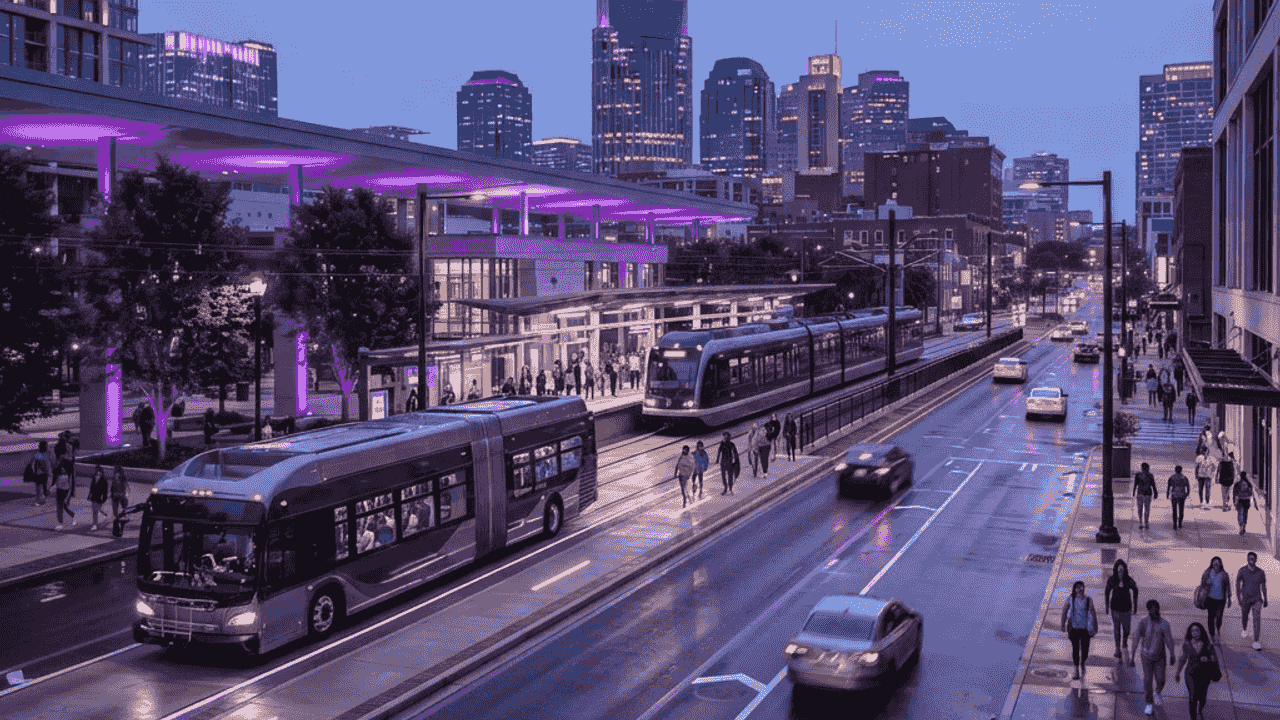
Understanding Nashville Public Transportation
Nashville is widely associated with driving, but public and shared transportation remain important for residents, workers, students, and visitors. The network is centered on WeGo buses, a downtown transit hub, and the WeGo Star commuter rail corridor. Additional services address disability access, university travel, regional commuting, and airport connections. Coverage and frequency vary significantly, making advance planning more important than in rail-heavy cities.
The entries below are services and operating programs rather than ten competing transit agencies. Together they form Nashville's practical public-transportation landscape. Schedules, fares, eligibility rules, and stops can change, especially during construction and major events. Riders should consult current official information before departure and allow extra time for transfers. Real-time information is useful, but a backup route remains wise.
1. WeGo Local Bus
WeGo Public Transit operates the primary fixed-route bus network across Nashville and Davidson County. Routes radiate from downtown and connect many neighborhoods with employment, shopping, healthcare, and education. The system offers the broadest public transit coverage in the city. Riders should pay close attention to service frequency and final departure times, because evening and weekend schedules may differ from weekday peaks.
2. WeGo Star
WeGo Star provides commuter rail between downtown Nashville and stations in eastern communities such as Donelson, Hermitage, Mt. Juliet, Martha, and Lebanon. It is useful for passengers whose work hours and destinations align with the timetable. The train can offer a relaxed alternative to congested roads. Service is focused rather than all-day, so return-trip planning is essential.
3. WeGo Access
WeGo Access provides paratransit for eligible riders whose disabilities prevent use of fixed-route service under applicable conditions. It is a reservation-based shared-ride service, not an immediate taxi. Eligibility requires an application and assessment process. Riders should understand booking windows, pickup readiness, personal assistance boundaries, mobility-device rules, and cancellation expectations to use the service successfully.
4. WeGo Link
WeGo Link programs connect riders to or from designated transit points through participating on-demand transportation in supported zones. This approach addresses the first-and-last-mile challenge where a fixed bus route is not within practical walking distance. Availability is geographically limited and program rules apply. Riders should confirm eligible locations, operating times, booking steps, and any fare responsibility before relying on a trip.
5. Regional Transportation Authority Services
The Regional Transportation Authority of Middle Tennessee coordinates regional mobility initiatives and selected commuter services beyond the core county network. Regional connections matter as housing and employment expand across county lines. Commuters should evaluate park-and-ride access, limited schedules, and transfer needs. These services are most effective for regular peak travel rather than spontaneous trips at every hour.
6. Music City Central
Music City Central is downtown Nashville's principal bus transit center and a major transfer point for WeGo routes. Its central location makes it useful for moving between radial lines. Riders can improve transfers by identifying the correct bay in advance and allowing enough time between buses. During events or street closures, nearby routing and pedestrian access may temporarily change.
7. Nashville International Airport Bus Service
WeGo service to Nashville International Airport offers a low-cost alternative to driving, parking, or app-based rides. It is especially useful for travelers with manageable luggage and schedules that fit the route. Airport passengers should account for walking, terminal changes, traffic, and security queues. Returning visitors need to locate the correct ground-transportation pickup area and verify the final bus of the day.
8. Vanderbilt University Transit
Vanderbilt University supports campus transportation through shuttle programs and connections with Nashville transit. These services help students, staff, patients, and affiliates move among campus areas while reducing parking demand. Some vehicles or routes may have eligibility limits, so they are not a universal public network. Campus users should consult current maps and accessibility information for their specific destination.
9. University and Institutional Shuttles
Belmont University, Tennessee State University, medical campuses, senior communities, and other institutions may operate shuttles for eligible riders. These systems can fill gaps between buildings, parking areas, residences, and transit stops. They are valuable but purpose-specific. Visitors should not assume access; verify identification requirements, service dates, boarding points, and whether operations pause during academic breaks or holidays.
10. Special-Event Transit Services
Nashville occasionally offers enhanced buses, special train trips, or event-oriented transportation for major downtown gatherings. These services can reduce parking pressure around stadiums and entertainment districts. They should be treated as event-specific rather than permanent. Riders must review the return schedule, ticket requirements, service alerts, and walking route from the event because normal streets may be closed.
Planning a Successful Transit Trip
Begin with both the outbound and return journeys. Identify transfers, walking distance, stop direction, accessibility, fare method, and the last available departure. Arrive several minutes early and stand where the operator can see you. Nashville's summer heat and sudden storms make shade, water, and weather protection sensible. At night, select well-lit waiting locations and remain aware of surroundings.
Wheelchair users and riders with mobility needs should review vehicle and stop accessibility, especially where sidewalks are incomplete. Bicycle racks can extend the reach of some routes, but capacity may be limited. Visitors staying downtown can combine walking with buses for selected attractions. Those visiting dispersed destinations should compare a hybrid plan that uses transit for the main corridor and another mode for the final segment.
Benefits and Limitations
Public transit can reduce household transportation costs, downtown parking demand, emissions, and the stress of driving. It also provides essential mobility to people who cannot operate a car. Nashville's challenge is that low-density development and irregular street connectivity make frequent coverage expensive. Current services work best on established corridors and scheduled commute patterns, while cross-town and late-night journeys may require more patience.
Looking Ahead
Nashville continues to invest in transit priority, improved stops, higher-frequency corridors, and more connected mobility. Successful expansion depends on dependable operations, safe pedestrian access, useful frequency, and coordination with land use. For today's rider, WeGo remains the foundation, supported by commuter, accessibility, regional, institutional, and first-mile services. Understanding how these pieces fit together makes car-light travel considerably easier.