
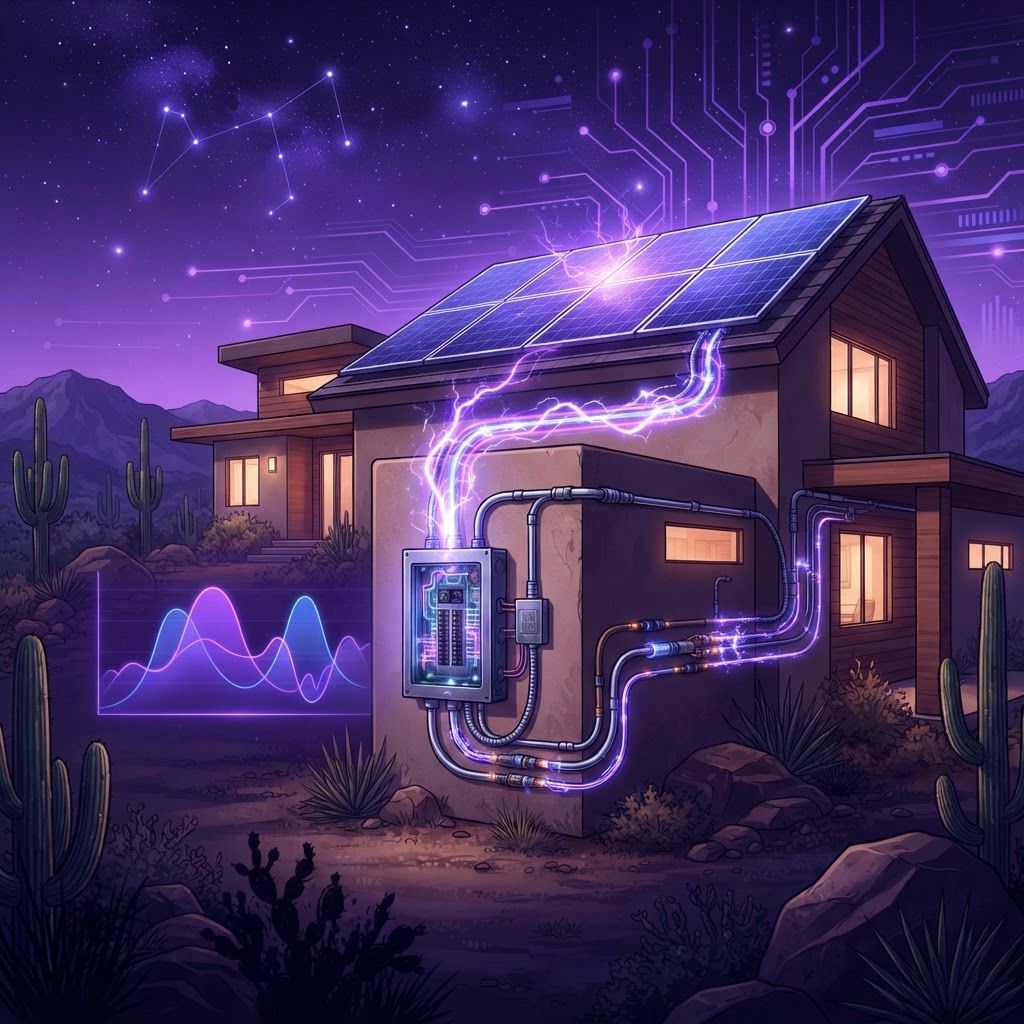
Electrical Work in a High-Demand Climate
Electrical systems in Surprise operate under conditions that few other regions impose. Air conditioning runs nearly continuously for months, creating sustained high loads rather than the intermittent peaks typical elsewhere. Attic temperatures where much residential wiring runs can exceed 150 degrees, accelerating insulation aging. And solar generation, electric vehicle charging and battery storage are being added to service panels that were designed decades before those loads existed.
The result is an electrical market where capacity planning matters as much as installation skill. A homeowner adding a vehicle charger, a pool pump and a solar system to a dated panel is making a decision with real safety implications, and qualified electrical contractors spend as much time evaluating existing infrastructure as they do installing new equipment.
Core Electrical Services in the Local Market
Panel upgrades and service changes form a large share of residential work. Older homes with limited service capacity or obsolete panel brands require replacement to support modern loads safely and to satisfy insurers, some of whom decline coverage on certain legacy equipment.
Solar photovoltaic installation and interconnection has become mainstream in Arizona, where solar resources are exceptional. Contractors handle array design, inverter selection, panel integration, utility interconnection applications and increasingly battery storage that shifts consumption away from peak utility rates.
Electric vehicle charger installation continues to grow rapidly, requiring dedicated circuits, appropriate conductor sizing for continuous loads, and often panel capacity evaluation or load management devices.
Lighting design and retrofit work replaces older fixtures with light emitting diode technology, adds landscape and security lighting, and installs controls including dimmers, timers and occupancy sensors. Outdoor lighting is especially popular given how much evening time residents spend outside during cooler months.
Generator and backup power installation has gained attention as residents consider summer outage risk, with whole-home standby generators and battery systems both finding demand.
Electrical troubleshooting and repair addresses failing circuits, tripping breakers, faulty outlets, aluminum wiring remediation and code corrections identified during home inspections.
Commercial electrical work covers tenant improvements, lighting retrofits, equipment feeds, three-phase power, emergency systems and data infrastructure.
Leading Electrical Contractors Serving Surprise
Full-service residential electrical companies operating across the West Valley handle the complete range of homeowner needs, from ceiling fan installation to full service upgrades. The strongest among them maintain scheduled appointment windows and stocked trucks that allow single-visit completion.
Solar installation specialists with electrical licensing design and install photovoltaic systems, and the best of them model production realistically, explain net billing arrangements clearly and avoid the inflated savings projections that have damaged trust in parts of the industry.
Electric vehicle infrastructure specialists focus on residential and commercial charging, including multi-unit installations for apartments and workplaces, and understand load management solutions that avoid costly service upgrades.
Commercial and industrial electrical contractors serve the Loop 303 corridor and commercial centers, handling switchgear, motor controls, three-phase distribution and large lighting projects.
Generator and backup power specialists provide sizing, installation, transfer switch integration and ongoing maintenance for standby systems.
Low-voltage and smart home integrators install structured wiring, networking, security systems, cameras and home automation, increasingly overlapping with traditional electrical work as homes become more connected.
Landscape and outdoor lighting contractors design low-voltage systems that enhance desert landscaping, pathways and architectural features while managing heat and moisture exposure.
Pool and spa electrical specialists handle bonding, grounding, pump circuits and lighting to the specific safety standards those installations require, an area where code compliance is genuinely life-critical.
New construction electrical contractors work with the homebuilders active throughout Surprise, roughing in and trimming out homes at production pace.
Finally, electrical inspection and safety assessment providers serve buyers, sellers and insurers with documented evaluations of existing systems.
Evaluating an Electrical Contractor
Licensing is non-negotiable. Verify the contractor's registration and classification with the Arizona Registrar of Contractors, and confirm that the individuals performing work are qualified. Electrical mistakes cause fires, and the cost difference between a licensed contractor and an unlicensed one is trivial compared with the risk.
Confirm that permits will be pulled for work requiring them, including panel changes, service upgrades, solar installations and new circuits. Permitted work receives inspection, creates a record for future sale and satisfies insurance requirements.
Ask about load calculations for any significant addition. A contractor who proposes adding a vehicle charger without evaluating existing demand is skipping a required step. Proper calculation determines whether a service upgrade, a load management device or a simple circuit addition is appropriate.
Request detailed written proposals specifying materials, breaker and conductor sizes, and scope. Compare on substance rather than headline price, since materially different approaches can produce very different numbers.
Safety and Efficiency Considerations for Local Properties
Several practices meaningfully improve safety and reduce cost in this climate. Ground fault circuit interrupter and arc fault protection in required locations prevents shock and fire hazards, and older homes often lack both. Surge protection at the panel guards sensitive electronics against monsoon-season lightning and utility switching events.
Efficiency improvements pay well here. Converting to light emitting diode lighting reduces both electricity use and heat generation inside conditioned space. Variable speed pool pumps dramatically cut consumption compared with single speed units. Smart thermostats and load monitoring help households shift usage away from expensive peak periods under time-of-use rate plans.
Finally, periodic inspection matters. Thermal imaging of panels and connections identifies loose terminations that generate heat long before they fail, a simple preventive step that experienced electrical contractors in Surprise increasingly offer as part of maintenance programs.