
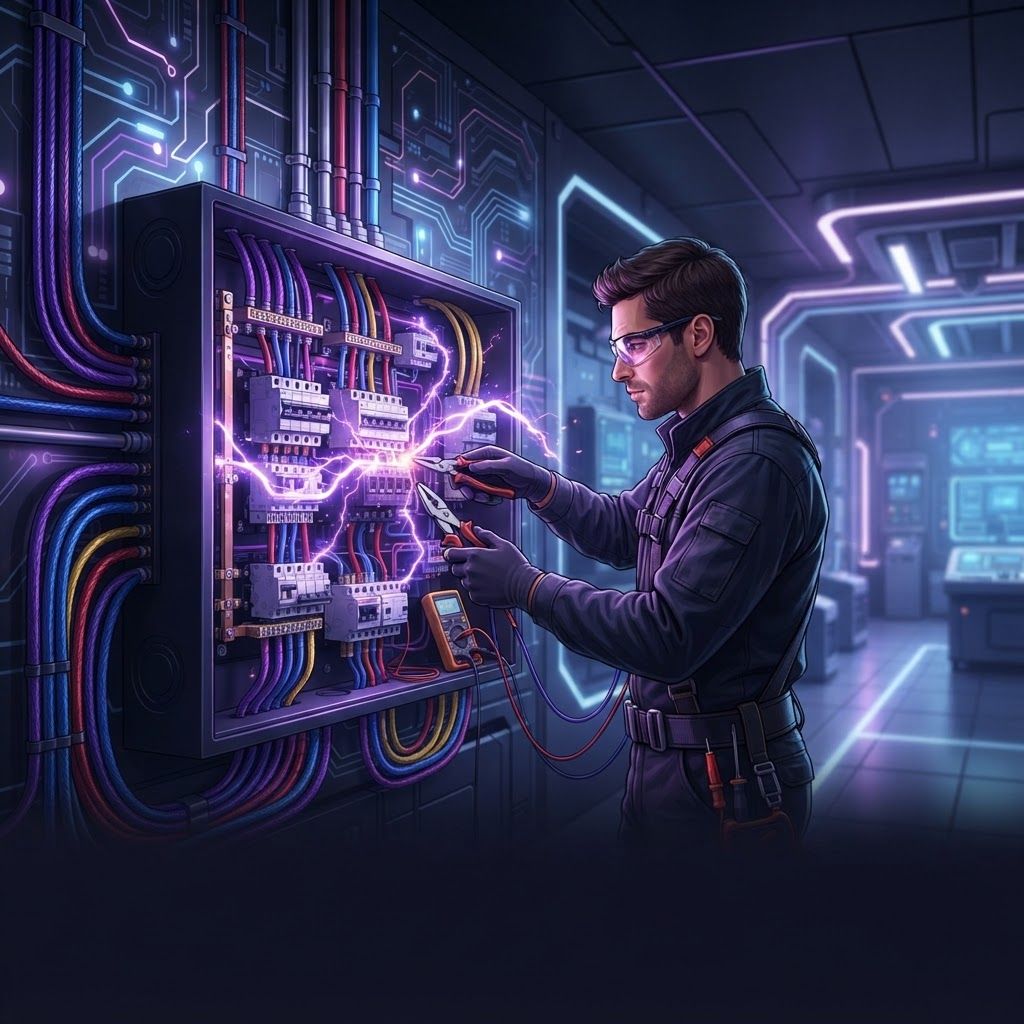
Electrical Demand Is Rising Sharply
Electrical systems in San Bernardino are being asked to do far more than they were designed for. A home built in the 1960s with a 100-amp service was planned around lighting, a refrigerator, a television, and perhaps a window air conditioner. Today the same house may need to support central air conditioning, an electric vehicle charger, a heat pump water heater, an induction range, a solar inverter, and battery storage. The result is a steady stream of service upgrade work across the city.
California policy is accelerating this shift. Building standards increasingly favor electric heat pump space and water heating, new residential construction generally includes solar photovoltaic systems, and electric vehicle adoption continues to grow throughout the Inland Empire. Each of these changes concentrates load on the electrical service, making capacity analysis a routine part of home improvement rather than a specialist concern.
Electrical Contractors Serving the City
The market includes broad-service residential companies, commercial and industrial specialists, and solar-focused firms. Mister Sparky and Rosendin Electric represent two ends of the spectrum, the former focused on residential service and the latter one of the largest electrical contractors in the country handling major commercial and industrial installations, including data centers and distribution facilities of the kind common across the region.
Inland Empire Electric and Pacific Coast Electric style contractors handle residential service upgrades, rewiring, lighting, and troubleshooting. Baker Electric and Helix Electric style firms serve commercial construction, tenant improvements, and solar installations at scale. Morrow-Meadows Corporation and Neal Electric style contractors are established in institutional and public works electrical construction, including school and municipal projects.
Solar and storage specialists form a distinct category, with firms handling photovoltaic array design, inverter selection, battery storage integration, and utility interconnection paperwork. Electric vehicle charging specialists install Level 2 residential chargers and commercial charging infrastructure, increasingly with load management systems that allow charging without a full service upgrade. Low-voltage contractors cover structured cabling, security and camera systems, access control, and audiovisual installation, which frequently overlaps with electrical work on commercial projects.
Panels, Service Capacity, and Load Calculations
A service upgrade is more involved than swapping a panel. The contractor must perform a load calculation under National Electrical Code methodology, coordinate with the utility for a service change, potentially upgrade the service conductors, meter socket, and grounding system, and obtain permits and inspection. Where the existing panel is a known problematic type, replacement becomes a safety priority rather than a capacity question, since certain older panel and breaker combinations have documented failure-to-trip histories and are frequently flagged by home inspectors and insurers.
Smart panels and load management devices have created an important alternative. Rather than upgrading from 100 to 200 amps, which may require costly utility and conduit work, a load management system can prioritize and shed loads dynamically, allowing an electric vehicle charger to operate without exceeding service capacity. For many San Bernardino homes, this is the more economical path to electrification.
Aluminum branch wiring, common in homes built during a specific period in the 1960s and 1970s, requires particular attention. It is not inherently unsafe, but connections between aluminum and copper components can loosen and overheat over time. Proper remediation using approved connectors at every device is the accepted correction, and any contractor proposing to simply ignore it is not serving the homeowner well.
Code Requirements Homeowners Encounter
Modern electrical code includes protections that older homes lack, and altering a circuit generally triggers compliance. Ground-fault circuit interrupter protection is required in kitchens, bathrooms, laundry areas, garages, and outdoor locations. Arc-fault circuit interrupter protection is required across most living-area circuits and specifically addresses the kind of damaged-conductor arcing that causes electrical fires. Tamper-resistant receptacles are required in dwelling units, and dedicated circuits are mandated for kitchen small appliances, laundry, bathrooms, and major fixed equipment.
Grounding and bonding upgrades are common during service work, since many older installations lack adequate grounding electrode systems. Smoke and carbon monoxide alarm requirements also frequently apply during permitted electrical work, including interconnection and specific placement rules.
Permitting matters more in electrical work than in almost any other trade. Unpermitted electrical work is a significant liability at resale, can void insurance coverage after a fire, and may need to be exposed and redone. A licensed contractor pulls permits as a matter of course; resistance to doing so is a decisive warning sign.
Solar, Storage, and Grid Considerations
Solar installation in San Bernardino benefits from excellent irradiance, and the economics have been reshaped by changes to net metering rules that reduce the value of exported energy. This has made battery storage substantially more attractive, since storing midday production for evening use captures more value than exporting it. Batteries also provide backup during outages, which matters during heat events and wildfire-related power shutoffs.
A competent installer will model production based on roof orientation, tilt, and shading rather than offering generic estimates, will verify roof condition and remaining life before mounting an array, will size the inverter and any battery to actual consumption patterns, and will handle utility interconnection and permitting completely. Combining solar with envelope and HVAC improvements produces better outcomes than solar alone, because reducing consumption is generally cheaper per kilowatt-hour than generating it.
Selecting an Electrical Contractor
Verify the C-10 electrical license classification, general liability insurance, and workers compensation coverage, and confirm that the individuals performing work are certified electricians as California requires for licensed contractors' employees. Ask for a written scope specifying panel and breaker manufacturer, conductor sizing, circuit quantities, permit responsibility, and drywall and finish restoration.
For diagnostic work, expect the electrician to test rather than guess, and to explain findings clearly. For larger projects, obtain multiple bids and compare on specified equipment rather than headline price, since panel quality, conductor sizing, and the inclusion of grounding upgrades vary widely between proposals.
Given that electrical faults are a leading cause of structure fires, this is a trade where paying for demonstrated competence is straightforwardly rational. San Bernardino has capable licensed contractors across residential, commercial, and solar specialties, and verifying credentials before work begins is the simplest protection a property owner has.