
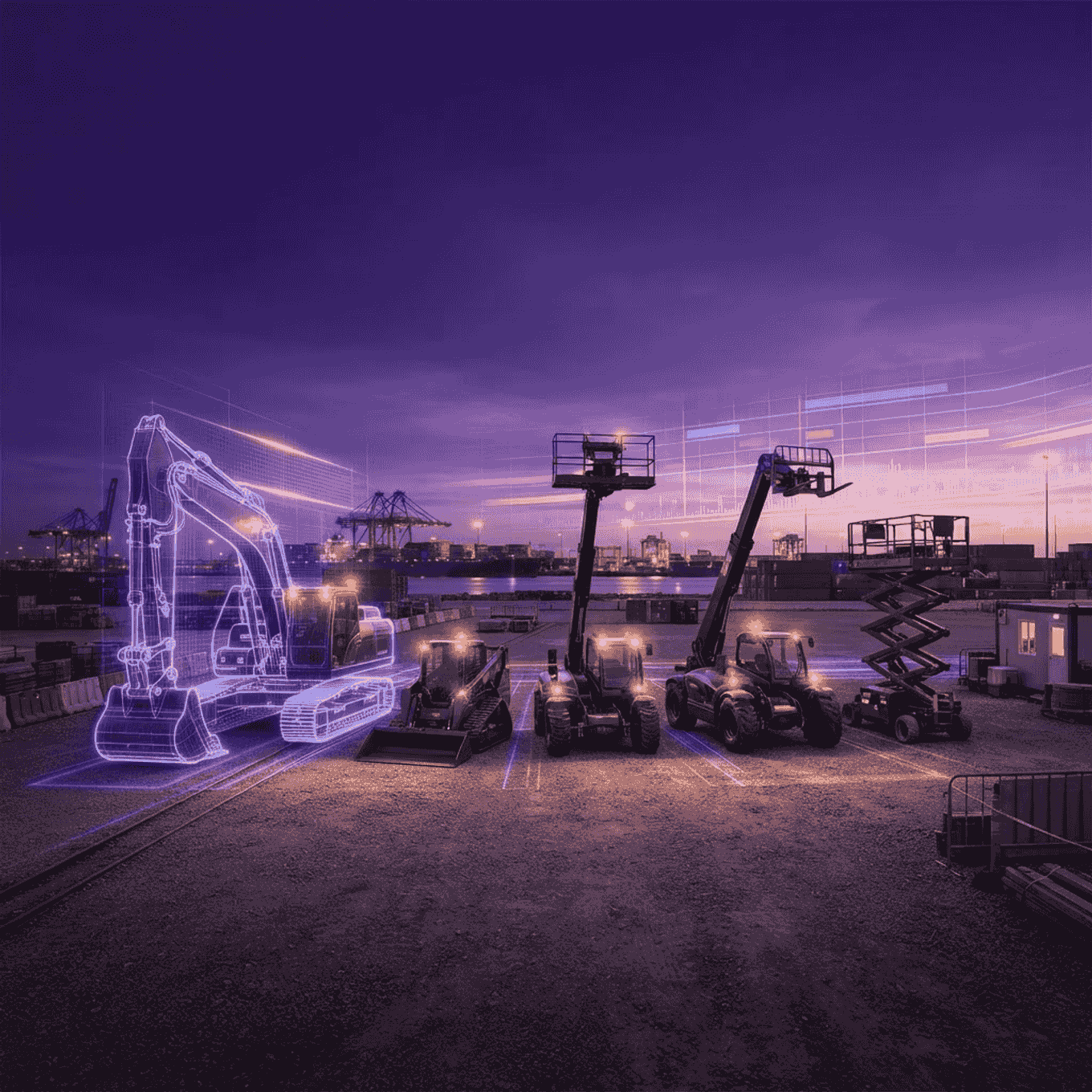
The Rental Market in Corpus Christi
Equipment rental is a cornerstone of the Coastal Bend construction economy. The reasons are straightforward: machinery is expensive to buy, depreciates steadily, requires maintenance and storage, and often sits idle between projects. In a coastal environment, idle equipment also corrodes, which makes ownership even less attractive for machines used occasionally. Renting converts a capital expense into a project cost and transfers maintenance responsibility to the rental company.
Local demand comes from several directions at once: residential and commercial construction, refinery turnarounds and industrial maintenance, port and marine infrastructure work, agriculture in surrounding counties, storm recovery, and a large do-it-yourself homeowner segment. That diversity supports an unusually complete rental inventory. The ten categories below cover what is available and when each makes sense.
1. Earthmoving and Excavation Equipment Rentals
Excavators, skid steers, compact track loaders, backhoes, and dozers form the core of most rental fleets. Compact machines are especially popular locally for residential work, utility trenching, foundation preparation, and landscaping, because they fit through gates and work in tight lots. Rental companies typically offer a range of attachments including augers, breakers, grapples, and trenchers, which effectively multiplies what a single machine can do on a project.
2. Aerial Lift and Access Equipment Rentals
Scissor lifts, boom lifts, telehandlers, and material lifts serve construction, maintenance, roofing, signage, and industrial work. Rough-terrain models matter here because many sites are sandy or soft. Rental providers should supply current annual inspection documentation and operating manuals, and reputable companies verify that the renter has operator training, since aerial work carries significant regulatory and safety obligation.
3. Compaction and Paving Equipment Rentals
Plate compactors, rammers, walk-behind and ride-on rollers, asphalt equipment, and concrete saws support site preparation and paving. Proper compaction is genuinely important on the Coastal Bend, where sandy fill and expansive clay both require correct moisture and density to avoid future settlement. Rental yards often provide guidance on machine selection for the specific soil type, which is useful expertise for smaller contractors.
4. Concrete Equipment and Tool Rentals
Mixers, power buggies, screeds, vibrators, trowels, grinders, and core drills serve everything from residential slabs to commercial pours. Concrete finishing equipment sees heavy use locally because slab-on-grade construction dominates. Surface preparation equipment including grinders and shot blasters is also in steady demand for coating projects, where profile and cleanliness determine whether an epoxy floor system bonds properly.
5. Crane, Hoisting, and Rigging Equipment Rentals
Rough-terrain and truck-mounted cranes, along with rigging hardware, serve steel erection, equipment setting, and marine and industrial work. Many providers offer operated and maintained rentals, supplying a certified operator with the machine, which resolves the licensing and liability questions smaller contractors face. Around the port and refineries, crane availability is a significant scheduling factor during turnaround seasons.
6. Pump, Dewatering, and Water Management Equipment
This category is disproportionately important in a low-lying coastal city. Trash pumps, submersible pumps, well-point systems, and hose packages handle excavation dewatering, storm response, and flood recovery. Given how quickly heavy rainfall accumulates on flat terrain, contractors here plan dewatering into project schedules rather than treating it as an exception, and rental yards maintain deep pump inventory for that reason.
7. Generator and Temporary Power Rentals
Portable and towable generators, distribution panels, cable, and temporary lighting serve construction sites, industrial projects, events, and post-hurricane recovery. Demand spikes dramatically after major storms, so contractors with established rental relationships have a real advantage in securing equipment. Correct sizing matters: undersized generators trip repeatedly under motor starting loads, while properly sized units with adequate fuel capacity keep work moving.
8. Trench Safety, Shoring, and Support Equipment
Trench boxes, hydraulic shoring, and shielding equipment are safety-critical rentals governed by strict federal excavation requirements. Local soil conditions, including sandy soils that collapse readily and high water tables near the bay, make protective systems mandatory rather than optional on most excavations. Quality rental providers assist with correct selection based on trench depth and soil classification and supply the required tabulated data.
9. Tool, Compressor, and Small Equipment Rentals
Air compressors, pneumatic tools, welders, saws, tile equipment, drain machines, floor sanders, and specialty hand tools serve both contractors and homeowners. This segment is where do-it-yourself renters interact most with the industry, and the better yards provide genuine instruction on safe operation rather than simply handing over a machine. Daily and weekend rates make occasional projects economical for homeowners.
10. Site Services, Fencing, and Temporary Facility Rentals
Rounding out the market are the support items every jobsite needs: portable toilets and hand-wash stations, storage containers, mobile office trailers, temporary fencing and barricades, traffic control devices, and waste containers. Wind rating on temporary fencing and proper anchoring of trailers and containers deserve real attention here, since unsecured site facilities become hazards during tropical weather.
Renting Efficiently
Confirm exactly what the rate includes: delivery and pickup, fuel policy, damage protection, environmental fees, and whether the rate is based on an eight-hour day or a twenty-four hour period, since exceeding meter hours triggers additional charges. Inspect equipment at delivery, document existing damage with photographs, and verify that safety devices and manuals are present. Ask about maintenance response time, because a breakdown on a rented machine should be the rental company's problem to solve quickly. For coastal projects, rinse salt and sand off equipment before return to avoid cleaning charges and to keep the fleet in good condition.
Final Thoughts
Corpus Christi's rental market is well developed because the local economy demands it, from refinery turnarounds to hurricane recovery to residential construction. Renting the right machine, correctly sized and properly supported, is usually faster and cheaper than improvising with inadequate equipment. Establishing an account with a reliable local provider before peak season or storm response pays off precisely when equipment becomes hardest to find.