
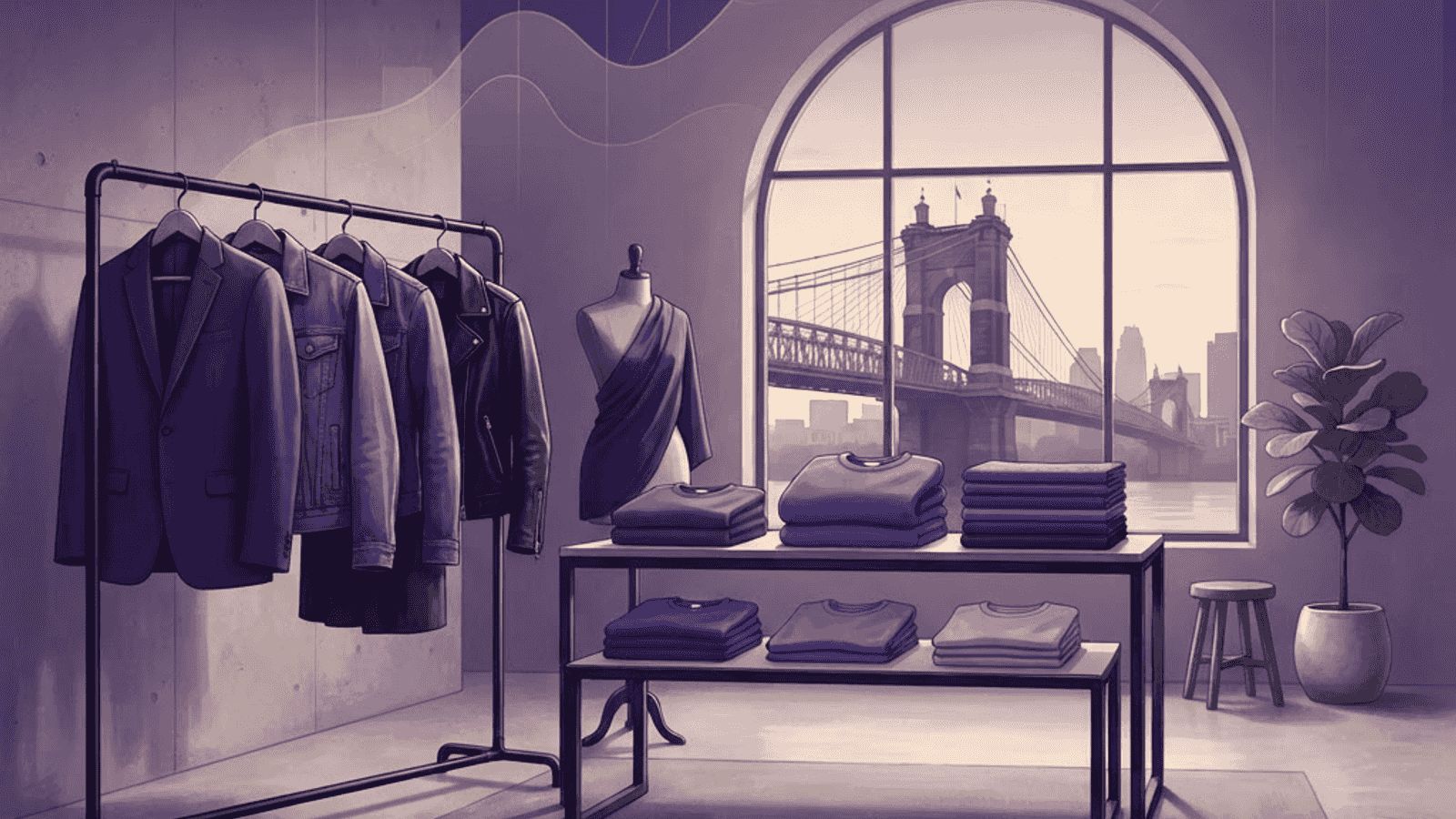
Cincinnati's Apparel Identity
Cincinnati's relationship with clothing runs deeper than most people outside Ohio realize. The city was a nineteenth century manufacturing center, and that industrial heritage left behind a culture of making things well. Add a strong regional design school pipeline, a corporate consumer goods presence that draws marketing and design talent, and neighborhoods like Over-the-Rhine and Northside that support independent retail, and the conditions for a real apparel scene exist.
What emerged is distinctive. Cincinnati brands tend toward durable construction over fast trends, city and regional pride expressed with genuine wit rather than generic slogans, and a growing sustainability focus. Local labels also benefit from an unusually loyal customer base, since Cincinnatians support hometown businesses with real consistency.
The Top 10 Clothing Brands in Cincinnati
1. Cincinnati Heritage Apparel
Built around the city's history and neighborhoods, this brand produces tees, sweatshirts and outerwear referencing local landmarks, breweries, bridges and vintage typography. Its appeal is authenticity: designs reference specific local knowledge rather than generic city names. Garment quality has improved steadily as the brand moved toward heavier cotton and better printing methods.
2. Over the Rhine Design Studio
Operating from the city's historic district, this label produces small-batch contemporary clothing with an emphasis on tailoring and considered fabric selection. Limited production runs create genuine scarcity that customers value. Their pieces tend toward versatile neutrals designed to work across seasons rather than statement items.
3. Queen City Streetwear
This brand channels Cincinnati's music, skate and sports culture into graphic-driven streetwear with drop-based releases. Heavyweight fleece, boxy silhouettes and screen-printed graphics define the aesthetic. Collaborations with local artists and musicians strengthen its cultural credibility considerably.
4. Ohio River Workwear
Drawing on the region's industrial and river trade heritage, this brand makes durable workwear-inspired clothing including canvas jackets, reinforced pants and heavy flannel. Construction quality is the selling point, with attention to stitching, hardware and fabric weight. Customers buying these garments expect years of use rather than a season.
5. Cincinnati Sustainable Clothing Company
Focused on environmental impact, this brand uses organic and recycled fibers, low-impact dyeing and domestic production where possible. Transparency about supply chain and material sourcing is central to its identity. Its customer base skews toward buyers willing to pay more for fewer, better garments.
6. Findlay Market Makers Collective
Anchored around the city's historic public market culture, this collective represents independent designers producing clothing in very small quantities. Shoppers get access to genuinely unique pieces and direct contact with makers. The model also lowers barriers for emerging designers who cannot support standalone retail.
7. Bengal Pride Sportswear
Sports identity is inseparable from Cincinnati culture, and this brand produces fan apparel and athletic-inspired casualwear referencing local team colors and traditions. Design quality distinguishes it from generic licensed merchandise. Seasonal demand spikes are pronounced, which the brand manages through limited releases.
8. Mount Adams Contemporary
This label produces elevated casual clothing aimed at professionals wanting quality without formality, including knitwear, refined basics and light outerwear. Fit consistency and fabric hand are its priorities. The brand appeals to customers who have moved past logo-driven purchasing toward material quality.
9. Northside Vintage Reworked
Operating in the reworked and upcycled space, this brand sources vintage garments and reconstructs them into new pieces. Every item is effectively one of a kind, which appeals to buyers seeking individuality and reduced consumption. The practice also diverts textiles from waste streams meaningfully.
10. Cincinnati Custom Screen Print and Embroidery Brands
Serving businesses, teams, schools and events, these brands produce custom apparel with local production and quick turnaround. Print quality, garment selection and design assistance separate the strong shops from commodity printers. Many local labels started here before developing independent lines.
Where to Shop Locally
Over-the-Rhine remains the center of independent retail, with boutiques concentrated along its main commercial corridors. Northside offers vintage and alternative shopping with a distinctly independent character. Findlay Market and seasonal maker markets provide direct access to small producers. Hyde Park and Kenwood cover more traditional retail. Increasingly, local brands operate hybrid models with limited physical presence supported by online sales, so following individual brands directly is often the best way to catch releases.
How to Judge Garment Quality
Fabric weight tells you a great deal immediately. Heavier cotton in tees and fleece resists stretching, holds shape and survives repeated washing far better than lightweight alternatives. Check the seams: straight, dense stitching with no puckering indicates careful construction, and reinforced stress points at shoulders, pockets and crotch seams predict longevity.
Examine finishing details that manufacturers skip when cutting costs. Ribbed collars should recover their shape when stretched gently. Buttons should be securely attached with clean thread work. Zippers should run smoothly without catching. On printed garments, the print should feel integrated rather than sitting as a thick plastic layer that will crack. Finally, read fiber content honestly: natural fibers breathe better, synthetics offer durability and stretch, and thoughtful blends can outperform either alone.
Trends Shaping Independent Apparel
Durability has become a genuine selling point as buyers grow skeptical of disposable clothing, favoring heavier constructions and repairable garments. Local production narratives carry real weight, particularly with younger buyers who ask where and how something was made. Size inclusivity has expanded meaningfully among independent brands that can adjust patterns without massive tooling costs. Limited drop models continue to work well for smaller labels because they align production with demand and reduce dead inventory. And secondhand and reworked apparel keeps growing, no longer a budget compromise but a style choice.
Final Thoughts
Cincinnati's clothing brands reflect a city that values craftsmanship, local identity and practicality over trend chasing. Buy for fabric weight and construction rather than graphics alone, explore Over-the-Rhine and Northside for independent retail, and consider that fewer better garments usually cost less over time. Supporting local labels here also keeps design and production talent in the region, which sustains the scene for everyone.