
Why Rental Dominates Equipment Access
Construction equipment is expensive to buy, expensive to maintain, and expensive to store. For most contractors in Corona, particularly small and mid-sized firms, renting is the rational choice for anything not used continuously. Rental converts a large capital expense into a project cost that can be billed directly, eliminates maintenance and repair obligations, and provides access to newer, more efficient machines than most firms could justify owning.
The Inland Empire's sustained construction activity supports a deep rental market. Contractors working on residential builds, tenant improvements, industrial projects, and site development all draw from the same pool of yards, and homeowners tackling landscaping or demolition projects increasingly rent as well.
Rental Providers Serving Corona
The market includes general rental yards, heavy equipment specialists, and aerial and lift-focused suppliers. Companies such as Circle City Equipment Rentals and Corona Tool and Equipment typically carry the broad general fleet: compact excavators, skid steers, trenchers, compactors, generators, compressors, concrete tools, and hand equipment.
Heavy equipment specialists including Inland Empire Heavy Equipment Rental and Temescal Earthmoving Rentals focus on larger machines such as full-size excavators, dozers, loaders, and water trucks, typically serving grading and site development contractors.
Aerial and specialty suppliers such as Foothill Aerial Lift Rentals and Grand Boulevard Lift Services concentrate on boom lifts, scissor lifts, telehandlers, and material handling equipment used heavily in warehouse and tenant improvement work. Additional providers including Green River Rental Yard, Arlington Construction Rentals, Chase Drive Equipment Services, and Norco Hills Rental Supply round out the market with mixed fleets and homeowner-friendly options.
Equipment Categories in Demand
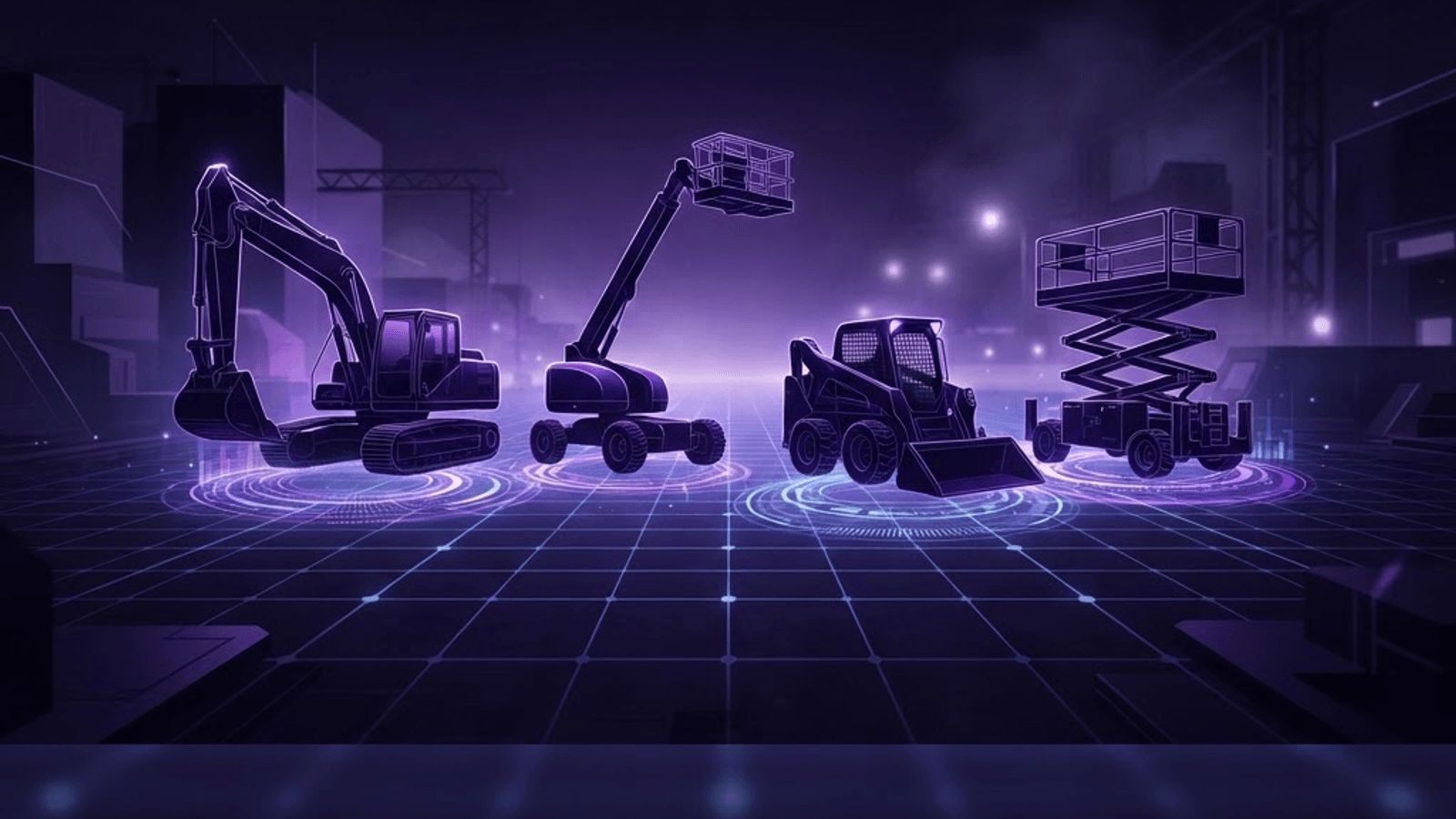
Compact earthmoving equipment leads residential and small commercial demand. Mini excavators in the two to five ton range, compact track loaders, and skid steers handle footings, utility trenches, pool excavation, landscape grading, and demolition in tight sites.
Aerial work platforms are essential for warehouse construction, high-bay lighting, ceiling work, and exterior building maintenance. Selection depends on working height, reach, floor loading capacity, and whether the surface is smooth concrete or rough terrain.
Compaction equipment including plate compactors, rammers, and ride-on rollers is critical in a region where soil preparation determines whether slabs and pavement perform. Concrete equipment such as mixers, power trowels, saws, and core drills supports flatwork and modification projects.
Support equipment rounds out most orders: portable generators, light towers for night work, temporary fencing, water trucks for dust control, and portable sanitation. Dust control is a regulatory requirement on many Inland Empire sites, not merely a courtesy.
Pricing Structures and Cost Control
Rental pricing typically follows daily, weekly, and monthly rates, with weekly rates usually equal to roughly three to four daily rates and monthly rates equal to roughly three weekly rates. Projects extending beyond a few days should almost always be structured around weekly or monthly terms.
Additional costs commonly include delivery and pickup, fuel, damage waiver, environmental fees, and attachment charges. Hour meters matter on larger machines: most rentals include a set number of operating hours per period, with overage billed separately. Contractors running double shifts need to account for this explicitly.
Experienced renters reduce cost by scheduling deliveries to minimize idle days, returning equipment clean and fueled to avoid service charges, documenting condition with photographs at pickup and return, and consolidating orders with a single yard to negotiate better terms.
Safety and Operator Requirements
Aerial lifts and powered industrial equipment carry specific operator training requirements under workplace safety regulations. Rental companies may verify training, but ultimately the employer is responsible for ensuring operators are qualified and that fall protection is used where required.
Underground utility location is mandatory before any excavation. Contacting the regional notification service and marking the area is a legal requirement, and striking a utility line can cause injury, service outages, and substantial financial liability.
Reputable rental yards support safety through documented maintenance records, pre-delivery inspection, operator manuals with every machine, and staff who can walk a customer through controls and limitations before the equipment leaves the yard.
Evaluating a Rental Company
Fleet age is the first consideration. Newer equipment breaks down less, meets current emissions standards, and often includes better operator ergonomics and fuel efficiency. Ask the average age of the machines in the category you need.
Service response is second. A machine failure mid-project stops production. Ask what the guaranteed response time is for field service and whether replacement equipment is provided if repair will take longer. Yards with mobile service trucks and healthy parts inventories resolve problems far faster.
Availability and logistics matter as well. Confirm delivery windows, whether the yard can accommodate early morning drop-offs, and how flexible they are with schedule changes, since construction schedules move constantly.
Finally, review the rental agreement carefully, particularly the damage waiver terms, what constitutes normal wear versus chargeable damage, and insurance requirements. Many contractors carry their own equipment coverage, which may make the waiver unnecessary.
Conclusion
Corona's rental market gives contractors and property owners access to a wide range of modern equipment without ownership burden. The strongest providers compete on fleet condition, service responsiveness, and transparent terms rather than headline rates. Renters who plan schedules carefully, understand the full cost structure, and prioritize safety compliance get the most value from every rental day.