
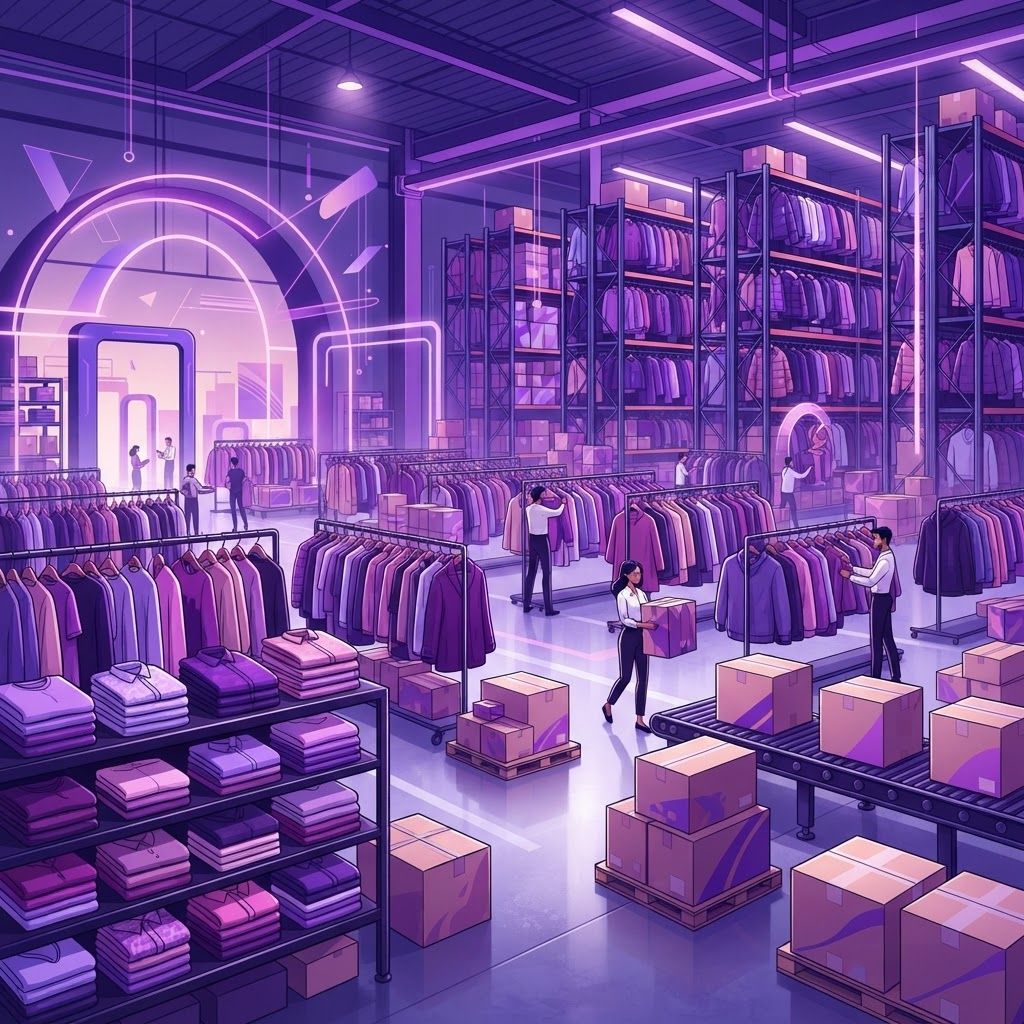
Apparel Wholesale in the Dallas Fort Worth Market
North Texas has been an apparel trading centre for far longer than most people realise. The region hosts one of the largest wholesale apparel markets in the country, drawing boutique owners, online sellers, and chain buyers from across the southern United States several times a year. Irving benefits directly from that gravity. Its position between Dallas and Fort Worth, with airport access and abundant warehouse space, makes it a practical base for importers, blank apparel distributors, uniform suppliers, and fashion wholesalers serving both showroom and ecommerce customers.
For a buyer, this concentration means you can inspect fabric, check fit and construction, and negotiate face to face rather than gambling on photographs from a distant supplier. In a category where returns are driven overwhelmingly by fit and fabric disappointment, that access is worth real money.
Know Which Wholesale Model Fits Your Business
Apparel wholesale operates through several distinct models. Fashion wholesalers and importers carry trend driven assortments in packs, usually with short buying windows and limited repeat availability. Blank apparel distributors stock plain garments in consistent colours and sizes for decoration, which suits print shops, promotional companies, and brands building their own labels. Uniform and workwear suppliers focus on durability, compliance, and long term programme continuity for hospitality, healthcare, and industrial customers. Private label manufacturers and sourcing agents produce garments to your specification, which offers margin and differentiation at the cost of higher minimums and longer lead times. Closeout and overstock wholesalers move branded surplus at low cost with mixed condition and no reorder path.
Choosing correctly starts with your customer. A boutique needs newness and exclusivity. A print shop needs consistency and depth. A hotel group needs a supplier that will still stock the same shirt in three years.
Ten Clothing Wholesalers Worth Knowing
1. Metroplex Apparel Wholesale carries women's contemporary and casual assortments in prepacks with weekly new arrivals, serving boutiques and online sellers with low minimums.
2. Trinity Blanks and Basics distributes blank tees, fleece, headwear, and activewear across major mill brands with consistent colour lots for decoration businesses.
3. Las Colinas Uniform Company supplies hospitality, healthcare, and corporate uniform programmes with fitting services, embroidery, and managed reordering portals.
4. Northgate Workwear and Safety Apparel focuses on flame resistant, high visibility, and heavy duty industrial clothing with documented compliance to the relevant standards.
5. Valley Ranch Kids and Family Wholesale covers children's and family apparel in size run packs, with an emphasis on durable basics and seasonal essentials.
6. DFW Private Label Apparel Group manages private label development including tech packs, sampling, and production coordination for brands ready to own their product.
7. Freeport Activewear Distribution supplies performance and athleisure categories with fabric specification detail and consistent sizing across repeat production.
8. Riverside Accessories and Footwear Wholesale complements clothing assortments with bags, belts, jewellery, and footwear to raise average basket value.
9. Grapevine Creek Closeout Apparel moves branded overstock, cancelled orders, and seasonal surplus in lot quantities with clearly stated grading and no reorder expectation.
10. Irving Sustainable Textile Wholesale concentrates on organic cotton, recycled fibre, and certified supply chain apparel for brands with documented sustainability commitments.
How to Buy Without Burying Cash in Dead Stock
Inventory is where apparel businesses fail. The discipline that prevents it is unglamorous. Buy narrow and deep on proven sellers rather than broad and shallow across everything that looked appealing in a showroom. Track sell through by style weekly and reorder winners rather than chasing new items to fill gaps. Reserve a defined portion of your open to buy budget for in season reordering instead of committing it all upfront.
Understand pack structures before ordering. A prepack that includes sizes your customer base rarely buys guarantees markdown on part of every order. Ask whether size ratios can be adjusted, and calculate margin on the sellable portion of the pack rather than the whole.
Quality Checks That Prevent Returns
Order samples and handle them. Check fabric weight, stretch recovery, seam construction, stitch density, colourfastness after washing, and label accuracy including fibre content and care instructions. Measure garments against the stated size chart, because inconsistent grading across a size run creates a return rate no marketing effort can offset. For decorated apparel, test the print or embroidery on the actual garment, since fabric blend and surface texture change results significantly.
Confirm labelling compliance too. Country of origin, fibre content, and care labelling are legal requirements in the United States, and responsibility sits with the seller, not the overseas factory.
Terms, Costs, and Practical Expectations
Expect minimums stated per style or per pack, with better pricing at higher tiers. Domestic wholesale orders often ship within days, while private label production typically runs sixty to one hundred and twenty days including sampling. Factor in duty, freight, decoration, and expected markdown when calculating true landed cost, then compare that figure against your realistic retail price rather than an aspirational one.
Final Thoughts
The clothing wholesalers around Irving give buyers something increasingly rare, which is the ability to touch product and build a relationship before committing capital. Use it. Match the wholesale model to your business type, sample rigorously, buy tightly on proven demand, and keep budget in reserve for reorders. Margin in apparel is created at the buying desk far more often than at the point of sale.