
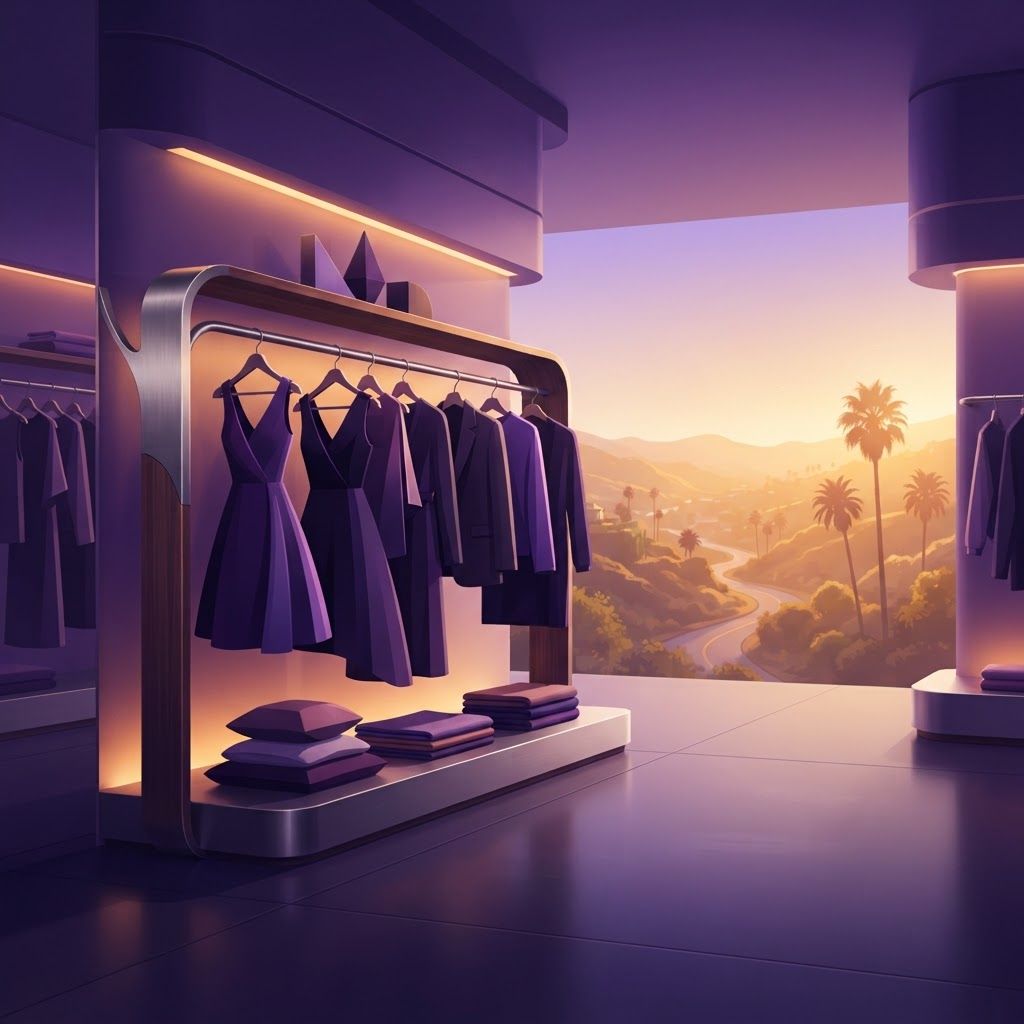
Understanding How Santa Clarita Dresses
Santa Clarita occupies an interesting position in Southern California retail. It is close enough to Los Angeles to absorb trends quickly, but its lifestyle is fundamentally suburban: commuting, youth sports, hiking in the surrounding hills, outdoor dining and a climate that runs hot for a large portion of the year. The result is a clothing market that rewards versatility over statement dressing. Local shoppers gravitate toward pieces that transition from a school run to a casual dinner without a change of outfit.
Heat is the defining practical constraint. Summer temperatures in the Santa Clarita Valley routinely exceed what coastal Los Angeles experiences, which pushes demand toward breathable natural fibers, lighter constructions and layering pieces for cool evenings. Brands that understand this succeed locally even when their national positioning is built around different climates.
The Ten Clothing Brands Leading Local Wardrobes
Lululemon functions in Santa Clarita as everyday apparel rather than strictly athletic wear. Its technical fabrics handle heat well, the construction survives repeated washing, and the aesthetic is neutral enough to read as casual daywear. The brand's fit consistency across seasons is a significant part of its retention, since customers can reorder a known size with confidence.
Madewell has become the reference point for elevated casual basics, particularly denim. Its strength is a coherent design language, so pieces bought years apart still work together. Local shoppers value the brand's mid-weight cottons and relaxed silhouettes, which suit the valley's climate better than heavier structured pieces.
Everlane appeals to the segment that cares about supply-chain transparency and cost breakdowns. Its minimalist essentials, tees, chinos, knitwear and lightweight outerwear, are designed for longevity rather than seasonal turnover, which aligns well with a household-focused market less interested in disposable trend purchases.
Vuori has grown rapidly in Southern California by building genuinely comfortable performance clothing that does not look like gym gear. Its joggers, shorts and lightweight tops are staples for the valley's active suburban routine, and the brand's fabric development gives it a real technical advantage over lifestyle imitators.
Free People serves the market's bohemian side with flowing silhouettes, textured fabrics and layered styling. Its pieces work well in Santa Clarita's warm, dry conditions, and the brand's willingness to commit fully to an aesthetic gives customers something with actual personality in a market crowded with neutral basics.
Levi's remains the denim foundation. Its enduring appeal locally rests on fit range, durability and price accessibility, plus a vintage-aware design catalog that lets shoppers choose between contemporary and heritage silhouettes. Lightweight and stretch-blend denim options have made the brand more wearable in a hot climate.
Patagonia earns its place through the valley's proximity to trails and open space. Beyond technical performance, the brand's repair programs, material sourcing standards and environmental commitments resonate with customers who want their spending to reflect their values. Its pieces are frequently worn casually rather than only on the trail.
Zara covers the fast-fashion and occasion-dressing end of the market. Its advantage is speed: runway-adjacent designs reach the floor quickly at accessible prices, which suits shoppers who want something current for an event without a significant investment. Locally it is often used as a supplement to a more durable core wardrobe.
Uniqlo competes on engineered basics. Its heat-managing and moisture-wicking fabric technologies are genuinely useful in Santa Clarita summers, and the brand's straightforward pricing on tees, linen shirts and lightweight layers makes it a practical wardrobe base for entire households.
Brandy Melville holds strong influence with the valley's teen and young-adult demographic. Its relaxed cropped silhouettes and California-casual identity have made it a fixture, though its limited sizing remains a legitimate criticism. Its cultural pull among younger shoppers is nonetheless difficult to overstate.
Trends Reshaping Local Apparel Buying
The most visible shift is toward fewer, better pieces. Rising costs and growing awareness of textile waste have pushed shoppers to evaluate cost per wear rather than sticker price, favoring brands with reliable construction and repair or resale pathways. Secondhand and consignment shopping has become normalized rather than niche across all income levels.
Comfort-forward design has also permanently altered expectations. Structured tailoring has not disappeared, but it now competes with softer constructions, elastic waistbands and technical knits that offer similar polish. Brands that failed to adapt have lost ground quickly.
Finally, omnichannel convenience matters more than store aesthetics. Shoppers expect to check local inventory online, reserve items, return in store and receive accurate fit guidance digitally. Brands with weak digital execution lose sales even when their product is strong.
Building a Practical Santa Clarita Wardrobe
Start with breathable foundations: quality tees, lightweight button-downs, versatile denim and shorts that hold their shape. Add two or three layering pieces for evening temperature drops, which can be substantial in the valley. Choose one or two brands as your fit anchors so repeat purchases are predictable, then use trend-driven retailers only for occasional pieces where longevity matters less.
Pay attention to fabric composition rather than brand prestige. A well-made cotton or linen blend from a mid-tier label will outperform a premium synthetic in local conditions. Check seam finishing, button attachment and fabric recovery before committing to a piece you expect to wear for years.
Final Thoughts
Santa Clarita's clothing market rewards practicality executed with taste. The ten brands here span technical performance, elevated basics, denim heritage, bohemian styling and fast fashion, which means most shoppers can build a complete wardrobe without leaving the valley or compromising on climate suitability. Buy for how you actually live, and the wardrobe becomes easier to maintain.