
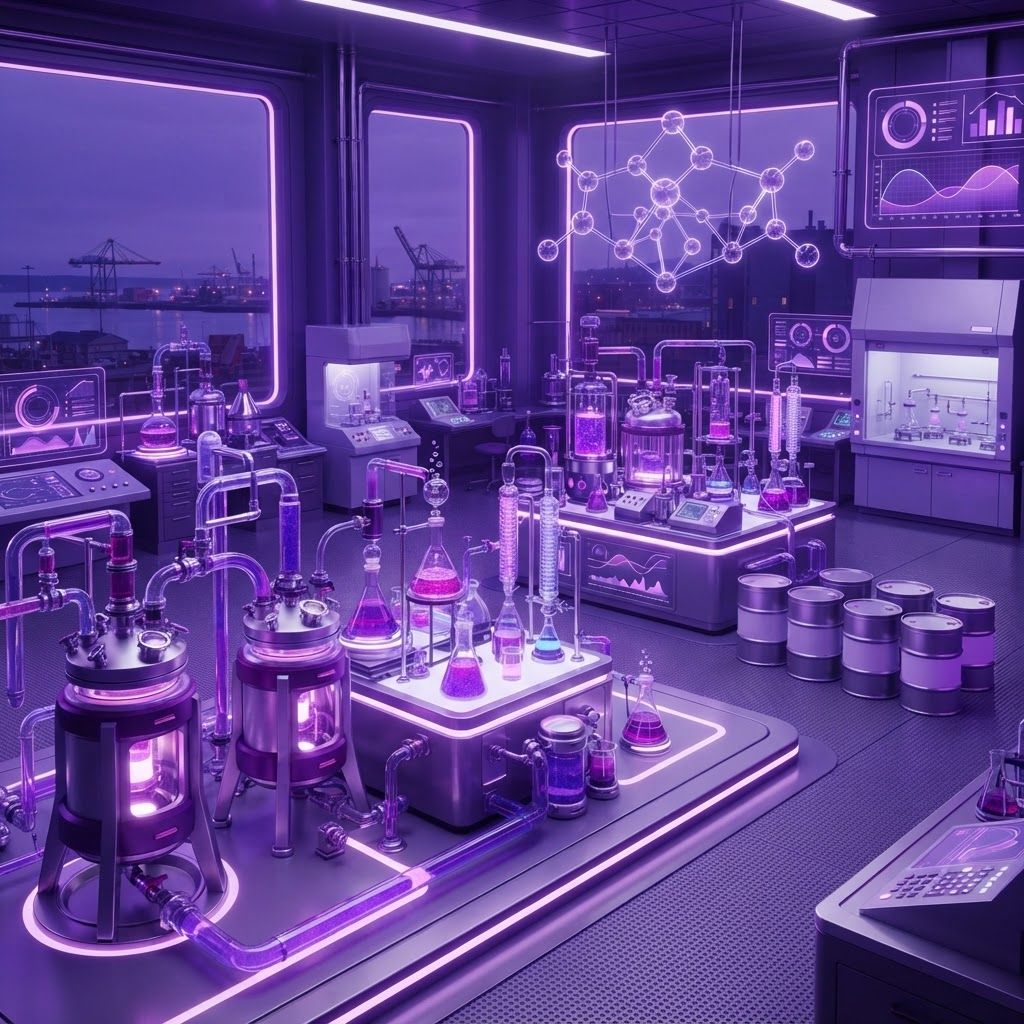
The Shape of Tacoma's Chemical Industry
Chemical activity in Tacoma is concentrated in specialty production, blending, distribution, and technical services rather than large-scale petrochemical synthesis. The tideflats industrial district provides deepwater access, rail connections, bulk storage, and industrially zoned land, which together support companies that receive raw materials in volume, process or blend them, and distribute finished products across the Pacific Northwest and Alaska.
Demand comes from a diverse customer base. Pulp, paper, and packaging operations need process chemicals. Municipal and industrial water treatment facilities need coagulants, disinfectants, and pH adjustment products. Food processors need sanitation chemistry. Metal fabricators need cleaners, pickling agents, and surface treatments. Construction and infrastructure projects need admixtures, sealants, and coatings. Marine operators need specialized cleaners, corrosion inhibitors, and fuel treatments. Laboratories and environmental consultants need analytical reagents and testing services.
Segments to Understand Before Sourcing
The category divides usefully into several business models. Specialty chemical manufacturing produces formulated products under proprietary recipes. Blending and toll processing mixes and packages chemistry to customer specification, often under contract. Industrial distribution stocks and delivers commodity and specialty chemicals with technical support. Water treatment services combine product supply with monitoring, dosing equipment, and compliance reporting. Coatings and adhesives manufacture paints, protective coatings, and bonding products suited to a wet climate. Environmental and laboratory services perform analysis, waste characterization, and remediation support. Industrial and specialty gases supply welding, medical, and process gases along with cylinder and bulk delivery.
Ten Chemical Company Profiles Serving Tacoma
1. Commencement Bay Specialty Chemicals. Formulates and blends industrial cleaners, degreasers, and process chemistry for manufacturing and marine customers.
2. Rainier Water Treatment Solutions. Supplies coagulants, polymers, and disinfection chemistry alongside dosing equipment, monitoring, and regulatory reporting support.
3. Tideflats Chemical Distribution. Operates bulk storage and packaging for regional distribution, with tank truck and tote delivery across the Pacific Northwest.
4. Puget Coatings Manufacturing. Produces protective and industrial coatings engineered for marine exposure, high humidity, and corrosion resistance.
5. Harborline Toll Blending. Provides contract mixing, filling, and private label packaging under documented quality and safety procedures.
6. Northwest Environmental Laboratories. Performs analytical testing for water, soil, and industrial samples, supporting permit compliance and remediation projects.
7. South Sound Industrial Gases. Distributes welding, medical, and process gases with cylinder management and bulk tank installations.
8. Foss Adhesives and Sealants. Manufactures bonding and sealing products for construction, marine, and manufacturing applications.
9. Stadium Food Sanitation Chemistry. Supplies cleaning and sanitizing programs for food processors and commercial kitchens, including training and verification.
10. Pierce Hazardous Waste Services. Handles waste characterization, transport, treatment coordination, and spill response for industrial generators.
Regulation and Community Responsibility
Chemical operations in Tacoma work under close scrutiny, and for understandable reasons. The tideflats sit beside Commencement Bay, a waterway with a documented industrial contamination history and extensive remediation efforts, adjacent to tribal treaty resources and residential neighborhoods. Operators must manage air permits, stormwater discharge, spill prevention planning, secondary containment, hazardous materials reporting, transportation requirements, and emergency response coordination with local agencies.
For buyers, supplier compliance is not an abstraction. Purchasing chemistry means accepting delivery, storage, handling, and disposal responsibilities at your own site. A supplier who provides accurate safety data sheets, correct labeling, appropriate packaging, driver training, and technical guidance on storage compatibility materially reduces your risk. One who cuts corners transfers that risk to you.
How to Evaluate a Chemical Supplier
Begin with technical support. The differentiating factor in this industry is rarely the molecule; it is whether the supplier's representatives understand your process. Ask whether they will conduct a site survey, review your application, test water or product samples, and recommend dosing rather than simply quoting a drum price. Suppliers who reduce your consumption by improving application are worth more than those who sell you more volume.
Evaluate logistics and inventory reliability. Ask about stocking locations, delivery frequency, emergency supply capability, and container options including totes, drums, and bulk. Confirm container return and cleaning programs, which affect both cost and waste handling.
Review documentation quality. Current safety data sheets, certificates of analysis, batch traceability, and regulatory compliance letters should be readily available. For food, potable water, or medical applications, verify the appropriate certifications and approvals for intended use.
Finally, discuss safety culture directly. Ask about incident history, driver and warehouse training programs, and how the company handles a spill or off-specification delivery. Willingness to answer plainly is itself informative.
Sustainability and Substitution
Pressure to reduce hazardous chemistry is reshaping the market. Customers are substituting safer alternatives, reducing volatile organic compound content in coatings, converting to concentrate formats to cut packaging and freight, and adopting closed-loop dispensing to limit exposure and waste. Suppliers who lead these conversations, quantify the tradeoffs honestly, and help validate substitutions in real conditions are gaining share over those defending legacy formulations.
Final Thoughts
Tacoma's chemical companies operate at the intersection of industrial necessity and environmental accountability. The strongest suppliers pair genuine application expertise with disciplined compliance and transparent documentation. For facilities across Pierce County, choosing on that basis rather than on unit price protects operations, employees, and the surrounding waters that the region has spent decades working to restore.