
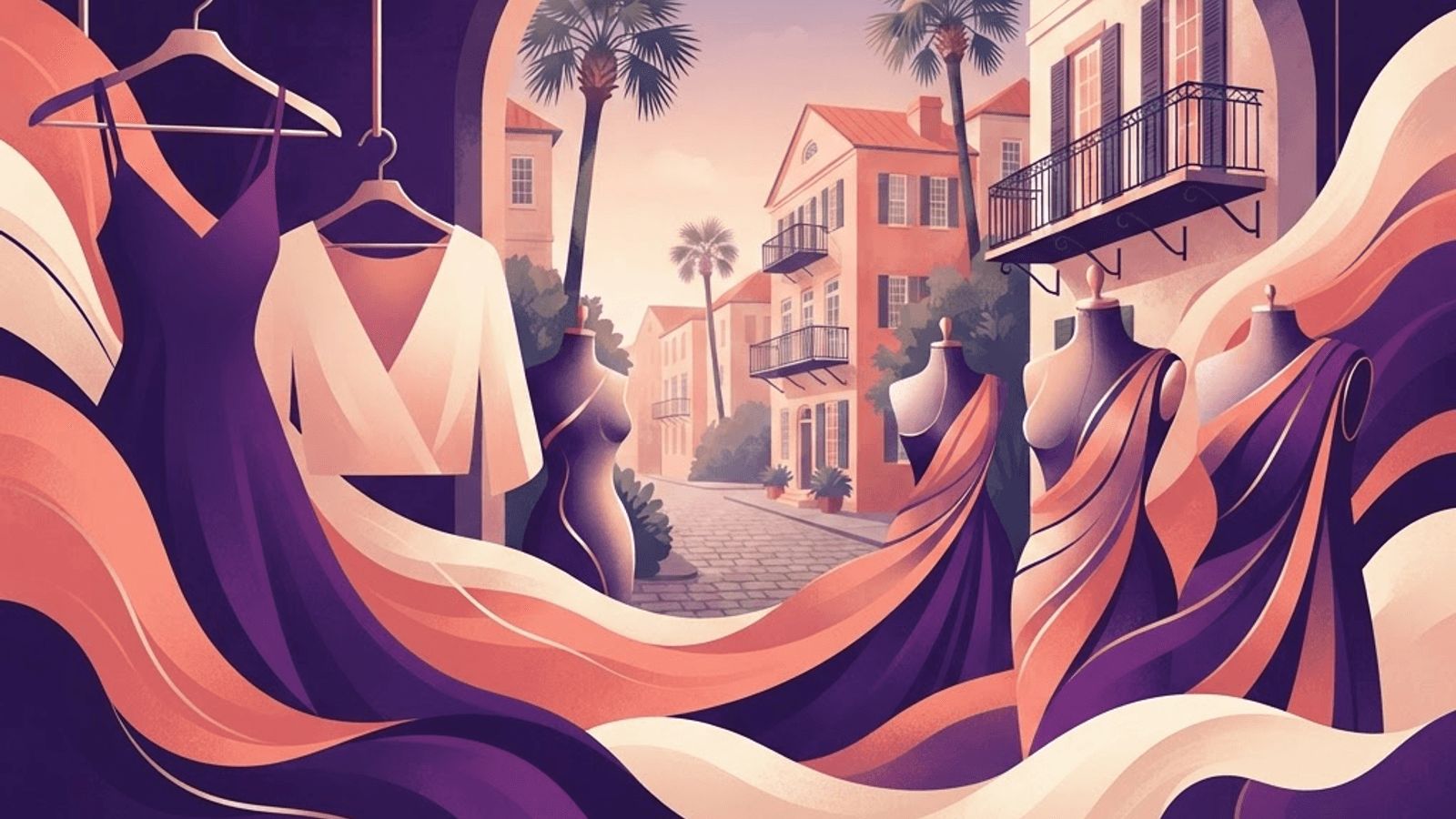
Charleston occupies an unusual position in American fashion. The city's historic character, its social calendar, and above all its climate have shaped a distinctive regional style that is recognizable well beyond South Carolina. Lightweight natural fabrics, relaxed tailoring, soft coastal colors, and clothing designed to look appropriate at a garden party and a waterfront dinner on the same day define what people mean by Charleston style.
Behind that aesthetic is a real design and retail community. King Street and the surrounding districts host boutiques and homegrown labels that range from resort wear specialists to made-to-measure tailors. Many of these brands began as single storefronts and grew through reputation rather than marketing spend, which tends to produce businesses genuinely accountable to their customers.
What Defines Charleston Style
The climate drives everything. Summers are long, humid, and demanding, so fabric performance matters more here than almost anywhere. Linen, cotton poplin, seersucker, lightweight merino, and technical blends that breathe and dry quickly dominate. Heavy synthetics that trap heat simply do not survive in this market regardless of how they look on a hanger.
Color follows the landscape. Soft blues, faded corals, sand and oyster neutrals, and botanical greens reflect the marshes, beaches, and gardens surrounding the peninsula. The overall effect is polished but unforced, which is precisely the balance Charleston brands aim for.
The Top 10 Clothing Brands in Charleston
1. Harbor Row Apparel
A contemporary label specializing in warm-weather menswear and womenswear built around linen and cotton. Harbor Row is known for garment construction quality, with reinforced seams and natural fiber content that ages well rather than deteriorating after a season.
2. Palmetto Thread Company
Focused on elevated basics, Palmetto Thread produces tees, polos, and knitwear with careful attention to fit and fabric weight. Its customers value the consistency, knowing that a replacement purchase will match what they bought two years earlier.
3. Battery Lane Tailors
A made-to-measure and bespoke operation producing suits, blazers, and shirting. Battery Lane specializes in unstructured and half-lined tailoring suited to the southern climate, an approach that keeps formal wear genuinely wearable in August.
4. Marsh and Meridian
A womenswear label known for flowing silhouettes, botanical prints, and pieces designed to move between daytime and evening. Its collections lean on natural fibers and prints developed in house rather than sourced from generic pattern libraries.
5. Rainbow Row Resort Wear
Built for vacation and waterfront living, this brand produces swim cover-ups, breezy dresses, camp shirts, and accessories. Its vivid palette references the city's famous painted facades without becoming a souvenir cliché.
6. Lowcountry Linen Works
A specialist producing almost exclusively in linen, from shirts and trousers to dresses and jackets. The company's expertise in handling a notoriously difficult fabric shows in garments that drape correctly and resist the shapelessness cheap linen develops.
7. Cooper River Outfitters
A performance-oriented brand making technical shirts, fishing apparel, and sun protective clothing for the region's active outdoor culture. Its garments emphasize ultraviolet protection, moisture management, and quick drying.
8. Ashley Street Denim
Focused on premium denim and durable casual wear, this brand offers a range of fits with attention to fabric weight appropriate for a warm climate. Its in-house alteration service addresses the fit issues that make denim shopping frustrating.
9. Charleston Heritage Knitwear
Producing lightweight sweaters, cardigans, and layering pieces in fine cotton and merino, this brand fills the gap between summer and the region's mild winter. Its pieces are designed for indoor air conditioning as much as outdoor cool.
10. Tidewater Sustainable Clothing
A newer brand built around organic fibers, low-impact dyeing, and transparent manufacturing. It publishes information about material sourcing and production, appealing to shoppers who evaluate clothing on more than appearance.
Trends in Charleston Fashion
Natural fiber demand continues to grow as shoppers prioritize comfort and breathability over wrinkle resistance. Linen in particular has shed its reputation as difficult and is now embraced precisely because it looks lived in.
Made-to-measure has become far more accessible. What was once reserved for formal tailoring now extends to casual shirting and trousers, with local brands offering custom fit at prices that compete with premium ready-to-wear.
Longevity is the third theme. Shoppers increasingly evaluate cost per wear rather than purchase price, favoring fewer, better garments. Brands that build durable products and offer repair or alteration services benefit directly from this shift.
How to Shop Smarter for Clothing
Read the fabric content label before anything else. In Charleston's climate, a high natural fiber percentage will affect your comfort far more than brand name or styling details.
Inspect construction quality. Check seam finishing, button attachment, pattern matching at seams, and whether the garment holds its shape when handled. These details separate clothing that lasts from clothing that does not.
Prioritize fit and plan for alterations. A moderately priced garment tailored properly will always look better than an expensive one that fits poorly, and most Charleston boutiques either offer alterations or can recommend a local tailor.
Final Thoughts
Charleston's clothing brands succeed because they solve a specific problem: dressing well in a demanding climate without sacrificing comfort or character. Whether you need custom tailoring, technical outdoor wear, refined everyday basics, or resort pieces for the coast, the labels profiled here offer genuine quality. Shop for fabric and fit first, and the rest of the wardrobe follows naturally.