
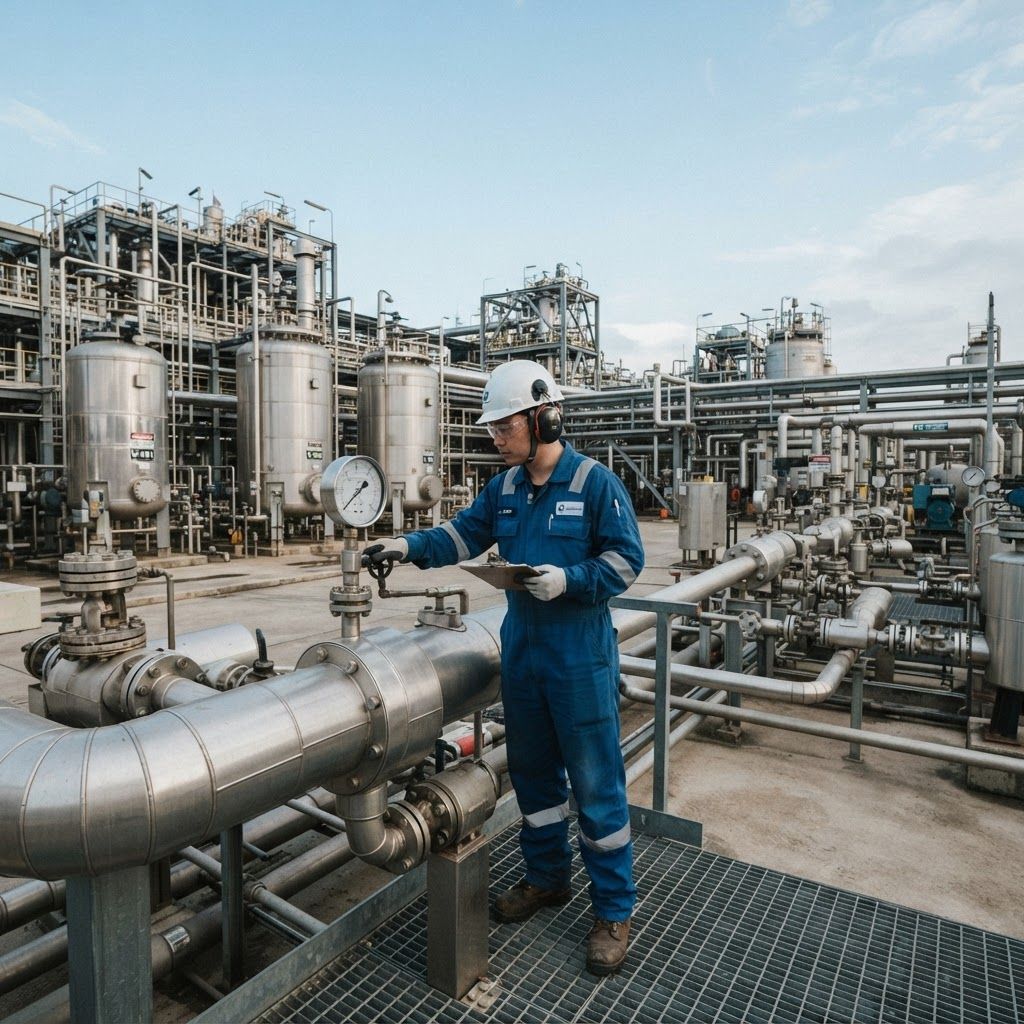
Chemistry at the Center of a Regional Economy
Chemical companies rarely appear in a city's public image, yet they underpin most of what a regional economy produces. In Lubbock, that means crop protection products and fertilizers for millions of acres of farmland, water treatment chemistry for municipal and industrial systems, sanitation programs for food processors, specialty fluids for oilfield operations, and coatings and adhesives for manufacturers. The city's central location on the South Plains makes it a logical distribution and blending point, while its research institutions support agricultural chemistry and soil science work.
What distinguishes the local sector is its applied focus. Companies here are less about inventing molecules and more about formulating, blending, packaging, distributing and advising, which means technical service is often the product. A good chemical partner in this market brings agronomists, water treatment specialists or sanitation experts to your site, not just drums to your dock.
The Top 10 Best Chemical Companies in Lubbock
1. Caprock Agricultural Chemicals
A formulator and distributor of crop protection products, adjuvants and micronutrient packages. Their field agronomists build region-specific programs and emphasize resistance management, application timing and drift reduction, which matters greatly in a windy climate.
2. Llano Fertilizer and Soil Solutions
Producers of dry and liquid fertilizer blends with custom prescription mixing based on soil test results. They also provide soil sampling services and variable-rate application recommendations to reduce input waste.
3. Hub City Water Treatment Chemistry
Specialists in boiler, cooling tower and process water treatment for industrial and institutional facilities. Programs include scale and corrosion inhibition, biological control and routine testing with documented results, helping clients protect expensive equipment.
4. South Plains Industrial Chemicals
A broad-line distributor supplying solvents, acids, caustics, surfactants and cleaning chemistry to manufacturers. Their value lies in inventory depth, safe handling expertise and repackaging into practical container sizes for smaller operations.
5. Red Raider Laboratory Services
An analytical laboratory performing soil, water, feed and product testing. Independent analysis supports regulatory compliance, quality control and troubleshooting, and their turnaround times are a frequent point of praise among local manufacturers.
6. Panhandle Oilfield Chemistry
Producers of production chemicals including corrosion inhibitors, scale treatments, biocides, demulsifiers and friction reducers. They emphasize field trials and measurable results rather than blanket treatment programs.
7. Yellowhouse Food Safety and Sanitation
Sanitation chemistry and program design for food processors, dairies and commercial kitchens. Services include cleaning-in-place formulation, sanitizer selection, staff training and verification swabbing to support audit readiness.
8. Texas Plains Coatings and Adhesives
Manufacturers of industrial coatings, sealants and adhesives engineered for the region's ultraviolet exposure and temperature cycling. Products serve construction, agricultural equipment and metal fabrication customers.
9. Monarch Environmental Chemistry
Providers of remediation chemistry, dust suppression products and wastewater treatment solutions. They combine product supply with regulatory guidance, which simplifies compliance for smaller operators without in-house environmental staff.
10. Cotton Belt Specialty Blending
A contract blending and packaging operation that produces custom formulations under private label. Capabilities include liquid blending, filling into multiple container sizes, labeling and safety documentation, serving companies that market chemistry without owning plants.
Trends in the Chemical Industry
Regulatory and stewardship expectations continue to rise. Product registration, worker safety documentation, container recycling and transportation compliance all require more rigor than a decade ago, which favors companies with strong quality and regulatory functions. Sustainability is reshaping formulations as well, with demand growing for lower-toxicity actives, biological alternatives, reduced volatile organic compound content and concentrated products that cut shipping weight.
Precision application is the other major shift. In agriculture especially, better data allows targeted rather than blanket treatment, reducing volumes while maintaining efficacy. Chemical suppliers are responding by selling programs and analytics alongside products.
How to Choose a Chemical Supplier
Safety and technical service should outweigh price per gallon. A supplier who helps you use less product correctly often costs less overall than one offering the cheapest drum.
- Verify licensing, safety data sheet quality and hazmat transportation compliance.
- Ask what technical support is included and how often a specialist will visit.
- Request documented trial results relevant to your application.
- Confirm supply continuity plans for critical inputs during peak season.
- Review container handling, return and disposal programs.
Final Thoughts
Lubbock's chemical companies operate at the intersection of agriculture, energy, food production and manufacturing, and their technical service capability is often what separates a good supplier from an ordinary one. Whether you need prescription fertilizer blends, water treatment programs, sanitation chemistry or contract blending, the firms above show what is available locally. Prioritize safety credentials and applied expertise, insist on measurable results, and build relationships with suppliers who understand your process rather than simply filling orders.