
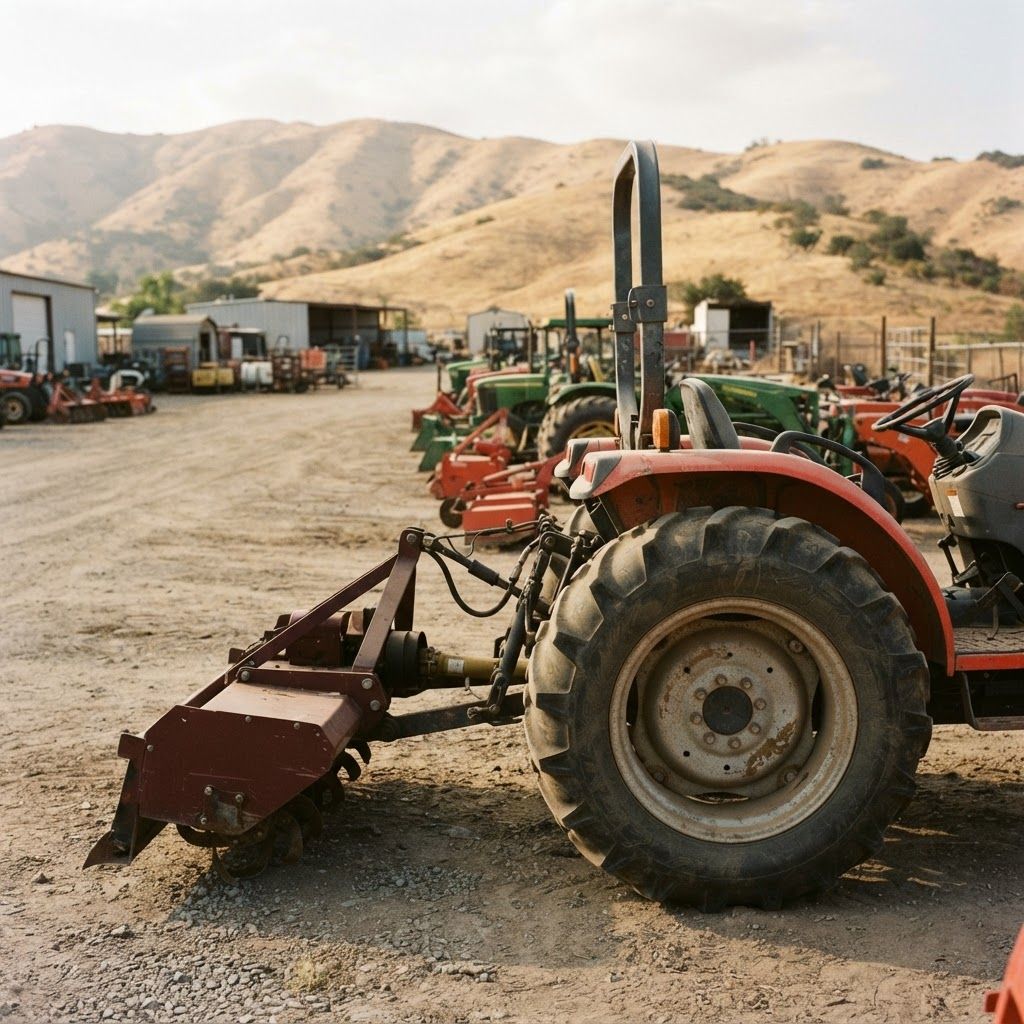
Equipment for a Different Kind of Agriculture
Agricultural equipment selection in Chula Vista follows a different logic than in the Central Valley. Here, parcels are smaller, crops are higher in value, terrain is often sloped, and water efficiency is not an aspiration but an economic necessity. A grower does not need a four hundred horsepower tractor. They need a compact machine that can navigate greenhouse aisles, a precision irrigation system that pays for itself in a season, and equipment supported by a dealer who can answer a service call the same day.
The region also blends true agriculture with ornamental horticulture and landscape maintenance. Nurseries, greenhouse operations, and commercial landscape companies buy from the same brands as vegetable growers, which shapes what local dealers stock and how they support it.
How to Evaluate Agricultural Equipment
Match the machine to the row spacing and the crop before considering anything else. Undersized equipment struggles and fails early. Oversized equipment compacts soil, damages plants, and wastes fuel. Next, evaluate attachment ecosystems, because a compact tractor with a wide range of implements often replaces three specialized machines.
Then look hard at dealer support. In agriculture, equipment failure during a narrow planting or harvest window causes losses far exceeding the value of the machine. Local parts inventory and technician availability matter more than a modest price advantage. Finally, consider emissions compliance, which in California is more stringent than federal standards and affects both new purchases and older equipment.
1. John Deere
John Deere is the most widely supported agricultural brand in the region and the strongest all around choice. Its compact and specialty utility tractors suit small acreage and nursery work, its precision agriculture systems are the most mature in the industry, and its dealer network provides reliable parts and service. Resale value remains the best in the category, which materially lowers true cost of ownership.
2. Kubota
Kubota has become the default choice for many small and mid sized operations in Southern California. Its compact tractors, utility vehicles, and mini excavators are known for maneuverability, fuel efficiency, and reasonable purchase pricing. For greenhouse operators and nurseries working in tight quarters, Kubota narrow profile models are frequently the right answer.
3. New Holland Agriculture
New Holland offers strong specialty crop equipment, including narrow tractors designed for vineyard and orchard rows. Its hay and forage lines are respected, and its focus on alternative fuel and methane powered concepts signals a serious approach to the emissions requirements that California growers face earlier than most.
4. Massey Ferguson
Massey Ferguson delivers durable, mechanically straightforward tractors that appeal to operators who value serviceability. For growers who prefer equipment they can maintain themselves without proprietary diagnostic tools, this brand remains a practical and cost effective option across compact and utility classes.
5. Netafim
Netafim pioneered modern drip irrigation, and in a water constrained market that makes it foundational rather than optional. Its drip lines, emitters, filtration, and control systems deliver water directly to root zones with minimal evaporative loss. Growers converting from sprinkler to drip routinely report water savings between thirty and fifty percent alongside yield improvements.
6. Toro
Toro spans agricultural irrigation, turf equipment, and landscape maintenance machinery, which makes it unusually relevant across the local customer base. Its micro irrigation products serve row crops and nurseries, while its commercial mowers and controllers dominate parks, sports fields, and homeowner association landscapes throughout Chula Vista.
7. Rain Bird
Rain Bird is a cornerstone of irrigation infrastructure across California. Its rotors, valves, controllers, and smart scheduling systems serve agricultural, nursery, and landscape applications. Weather based and sensor driven controllers have become particularly important as water agencies tighten allocations and pricing.
8. Stihl
Stihl handheld equipment is ubiquitous among growers, nurseries, and landscape crews. Chainsaws, trimmers, pruners, and blowers built for daily professional use define this brand, and its expanding battery powered lineup addresses both emissions regulation and noise ordinances that increasingly restrict gasoline equipment in residential areas.
9. Husqvarna
Husqvarna competes closely with Stihl in handheld power equipment while offering a broader range of commercial mowers and robotic mowing systems. Its automated mowers have found genuine adoption in grounds maintenance, reducing labor requirements on large turf areas, which addresses one of the sharpest constraints in the industry.
10. Greenhouse Systems and Environmental Control Manufacturers
Controlled environment agriculture depends on structures and climate control rather than tractors. Manufacturers supplying greenhouse framing, glazing, ventilation, shade systems, heating, and automated climate controllers are essential partners for the growers achieving the highest yields per square foot in the region. Integration between irrigation, fertigation, and climate control is where the real performance gains occur.
Technology Trends Worth Following
Electrification is arriving fastest in handheld and compact equipment, where battery systems now match gasoline performance for most tasks. Autonomous and semi autonomous machines are being tested for weeding, spraying, and harvesting, driven primarily by labor scarcity rather than novelty. Sensor networks measuring soil moisture, canopy temperature, and nutrient levels are becoming affordable enough for small operations. And precision application of both water and inputs continues to deliver the clearest return on investment available to any grower.
Buying Strategy for Small Operations
Prioritize irrigation efficiency first, because that investment returns immediately and permanently. Buy one versatile compact tractor with a well chosen implement set rather than several single purpose machines. Consider quality used equipment from dealer fleet rotation for tasks that do not demand the latest technology. And build the relationship with your dealer before you need it, because the value of that relationship becomes obvious only when something breaks at the worst possible time.