
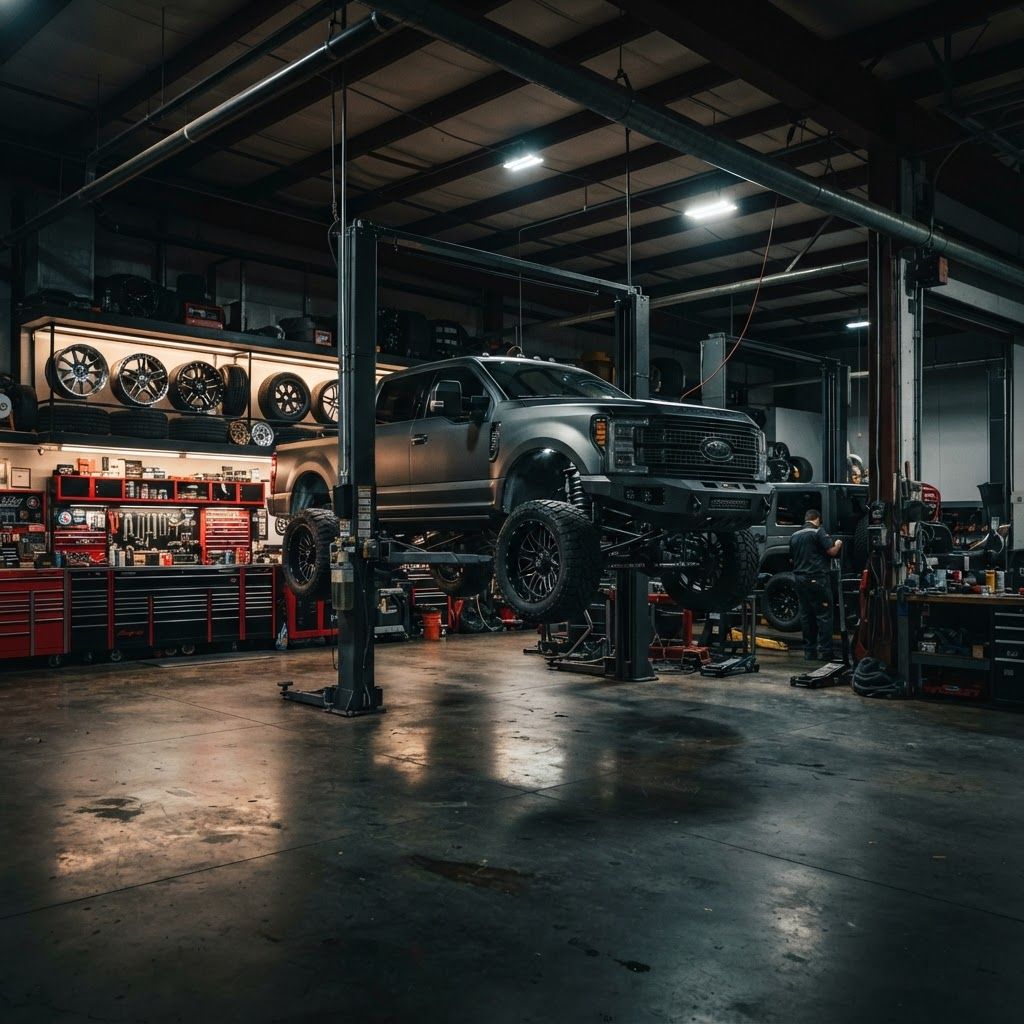
Car Culture on the South Plains
Vehicle personalisation is woven into life in Lubbock. Lifted pickups are everyday transport rather than novelties, classic American iron survives well in the dry climate, and the student population at Texas Tech keeps a steady stream of enthusiasts building cars on modest budgets. The result is a customization sector that covers everything from a set of aftermarket wheels to full frame-off restorations and forced-induction engine builds.
Because the work spans such a wide range of disciplines, choosing a shop is less about finding the single best business in town and more about matching your project to a shop that genuinely specialises in that discipline. A brilliant audio installer is not necessarily the right choice for a suspension lift, and a superb paint booth does not imply competence with engine management calibration.
The Main Categories of Customization Work
Suspension and lift or lowering work is the largest segment locally. Truck owners fit levelling kits, full suspension lifts, long-travel setups and upgraded shocks; car owners fit coilovers, air suspension and lowering springs. Quality here is about geometry rather than height. A well-executed lift includes corrected steering geometry, appropriate brake line and ABS harness extensions, driveshaft and carrier bearing considerations, recalibrated speedometer output and a proper alignment afterwards. Shops that skip these steps deliver vehicles that wander, wear tyres unevenly and eventually break parts.
Wheels and tyres sit alongside suspension work. Good shops measure offset and backspacing carefully, check clearance at full lock and full compression, use hub-centric rings where required, torque to specification in the correct pattern and rebalance with proper road force equipment. On heavy trucks they will also advise on load range, which matters enormously on hot West Texas highways.
Performance and tuning covers intake and exhaust systems, superchargers and turbo kits, camshafts, cylinder head work, transmission upgrades and electronic calibration. Diesel performance is a particularly strong local niche given the agricultural and oilfield economy. The critical capability is data-driven tuning: shops with a chassis dynamometer and wideband monitoring can verify results and protect the engine, while shops loading generic files onto a controller are gambling with a customer's engine.
Car audio and electronics ranges from a straightforward head unit and speaker upgrade to competition-level multi-amplifier builds with custom subwoofer enclosures, sound deadening and dedicated electrical systems. Excellent installers hide wiring properly, fuse every power run correctly, treat panels for resonance and tune the system with measurement rather than by ear alone.
Wraps, paint protection and window film have grown rapidly. Vinyl wrapping allows colour change without altering factory paint, paint protection film shields high-impact areas from the gravel and insects that West Texas driving guarantees, and quality ceramic window film significantly reduces cabin heat. Precision here comes down to surface preparation, careful inlaid edges rather than visible seams and patient post-heating of the material.
Bodywork, paint and restoration represents the most demanding end of the trade. Panel alignment, correct primer and sealer selection, colour matching under multiple light sources, and a dust-controlled downdraft booth all determine whether a finish looks factory or amateur. Lubbock's dry climate means rust-free project vehicles are relatively plentiful, which supports a healthy restoration community.
Off-road and utility fabrication includes bumpers, rock sliders, roll cages, winch mounts, headache racks, toolboxes, flatbed conversions and trailer modifications. This is welding-intensive work where certification and material knowledge matter.
Interior and upholstery work covers custom seat covers, leather retrims, headliners, carpet, dashboard restoration and console fabrication. Stitch consistency, pattern symmetry and correct foam support separate professional trim work from a rushed cover job.
How to Evaluate a Customization Shop
Start with a portfolio of completed work in the exact category you need, ideally on vehicles similar to yours. Ask to see a build in progress rather than only finished photographs, because progress shots reveal wiring discipline, weld quality and bracket fabrication that a final glamour shot conceals.
Ask how the shop handles warranty interaction. Reputable builders explain honestly which modifications may affect a factory powertrain warranty, and will document their own workmanship warranty in writing along with the manufacturer warranty on the parts they install.
Insist on a written estimate that separates parts from labour, lists specific brands and part numbers, and states an expected timeline. Custom work legitimately encounters surprises, so also ask how change orders are communicated and approved before extra money is spent.
Confirm insurance coverage on customer vehicles and secure overnight storage. A vehicle may sit at the shop for weeks during a build, and garage keepers coverage protects you if something happens on their property.
Finally, pay attention to how the shop talks about legality and safety. Professional builders will tell you when a modification affects emissions compliance, lighting regulations, bumper height rules or vehicle inspection outcomes. A shop that dismisses those questions is a shop that will happily hand you a problem.
Trends Shaping Custom Vehicle Work
Electronic integration is now the defining challenge. Modern vehicles route almost everything through networked modules, so even a wheel and tyre change can trigger sensor recalibration, and a suspension change may affect adaptive damping or driver assistance camera aim. Shops with factory-level diagnostic tools and calibration equipment increasingly have an advantage over purely mechanical builders.
Electric vehicle customization is emerging, focused so far on wheels, suspension, wraps, sound deadening and audio rather than powertrain modification, with high-voltage safety training becoming a genuine credential.
Restomod builds, where a classic body keeps its character but receives modern brakes, suspension, air conditioning, fuel injection and infotainment, continue to grow. They demand a rare blend of traditional fabrication skill and contemporary electronics knowledge.
Overlanding has also influenced truck and SUV builds, shifting emphasis from maximum lift height toward payload management, suspension quality, dual battery systems, roof platforms and long-distance comfort.
Final Thoughts
The customization scene in Lubbock rewards owners who plan. Define the goal for your vehicle before you spend anything, whether that is a daily driver with better stance and sound, a genuine off-road capable truck, a track-focused car or a show-quality restoration. Then choose a shop whose demonstrated speciality matches that goal, agree the scope in writing, and resist the temptation to change direction mid-build. Executed that way, custom work in Lubbock delivers vehicles that look and drive far better than the sum of their parts.