
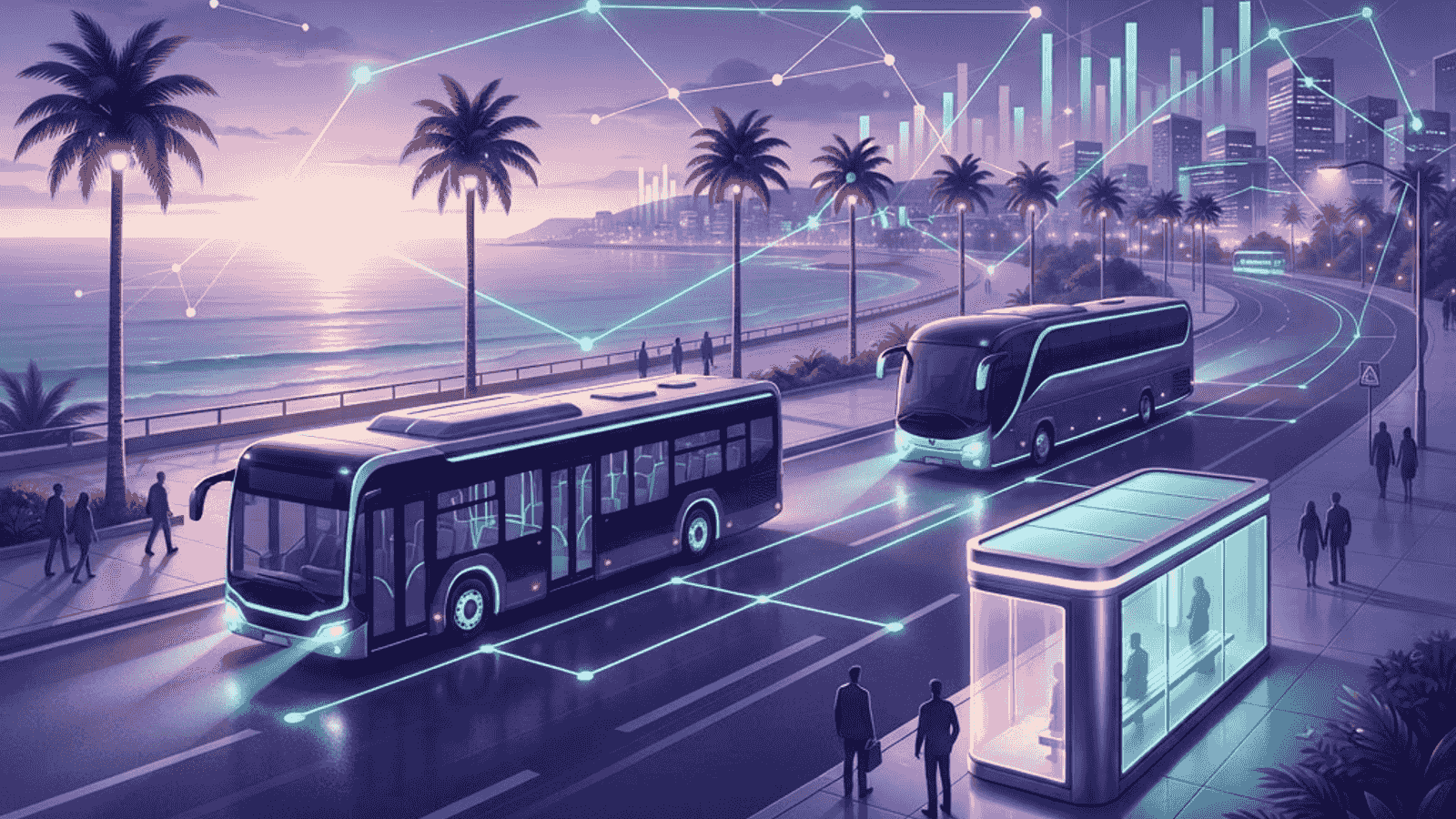
Why Buses Matter in Long Beach
Long Beach is unusually well served by buses for a California city of its size. A dense local network links neighborhoods to downtown, the airport, universities and the waterfront, while intercity coach operators connect the city to San Diego, Las Vegas, Phoenix, the Central Valley and destinations across the Mexican border. For residents without cars, students, and visitors avoiding parking costs, buses are not a fallback but a primary mode of transport.
The economics are compelling. Local fares cost a fraction of parking downtown, and intercity coach tickets frequently undercut both flights and driving once fuel, tolls and parking are counted. Modern coaches with reclining seats, power outlets, onboard internet and restrooms have also narrowed the comfort gap considerably.
The Ten Best Bus Companies Serving Long Beach
1. Long Beach Transit
The city's primary local operator runs an extensive route network covering downtown, the airport, coastal neighborhoods, universities and shopping districts. Its differentiators include a modern low emission and battery electric fleet, integrated mobile ticketing, a free downtown circulator service and seasonal water transport across the harbor. Frequency on core corridors makes car free living genuinely practical.
2. Los Angeles Metro Bus Services
Metro connects Long Beach to the wider county with local, rapid and express routes, complementing the light rail line that runs from downtown Long Beach into central Los Angeles. Fare capping, unified payment cards and coordinated transfers make regional journeys straightforward, and rapid routes reduce travel time significantly on major boulevards.
3. Greyhound Lines
The most established intercity operator in the country provides long distance service linking the Long Beach area to destinations across California and beyond. Strengths are network breadth, frequent departures on major corridors and the ability to build multi leg journeys on a single ticket.
4. FlixBus
FlixBus has expanded aggressively in California with low introductory fares, modern coaches, onboard internet, power sockets and app based ticketing with live tracking. It is often the cheapest option to Las Vegas, San Diego and San Francisco, and its curbside stop model keeps costs down.
5. Megabus
Operating a similar low cost model, Megabus focuses on high demand intercity corridors with double deck coaches offering panoramic upper deck seating. Booking early produces the lowest fares, and reserved seating is available on most services.
6. Tufesa and Cross Border Coach Operators
Serving the substantial travel demand between Southern California and northern Mexico, these operators run long distance coaches with reclining seats, onboard entertainment and multilingual staff. Their strength is direct service to destinations that mainstream carriers do not reach, along with familiarity with border crossing procedures.
7. Amtrak Thruway Connecting Bus Services
Coach services coordinated with rail schedules extend the reach of train travel to destinations without direct rail access. For travelers heading to central California or coastal destinations, combining rail comfort with a connecting coach is often faster and more pleasant than driving.
8. Airport Shuttle and Scheduled Van Operators
Scheduled shuttle services link Long Beach with regional airports at per passenger fares well below private car costs. Reliability during early morning departure windows and luggage capacity are their main advantages.
9. Private Charter and Motorcoach Companies
A cluster of charter operators serves conventions, corporate events, weddings, school groups and sports teams with vehicles ranging from small shuttles to full size motorcoaches. Professional drivers, insurance coverage, wheelchair accessible options and route planning are standard from established firms.
10. Campus, Hotel and Employer Shuttle Programs
Universities, large employers and hotels operate their own shuttle services connecting to transit hubs, the airport and the waterfront. These programs are free or heavily subsidized for eligible riders and often provide the most convenient first and last mile connection available.
Fares, Tickets and Passes
Local bus travel is cheapest with a stored value transit card or mobile pass, and day passes typically pay for themselves within three rides. Regional fare capping means frequent riders stop paying once a daily or weekly threshold is reached. For intercity coaches, prices rise as departure approaches, so booking two to four weeks ahead delivers the best fares. Watch baggage allowances on low cost operators, since extra bags carry fees.
Comfort and Practical Tips
On long distance routes, choose seats forward of the rear axle for a smoother ride and away from the restroom. Bring a layer, since coach air conditioning runs cold, and download entertainment in advance because onboard internet can be inconsistent in rural stretches. For curbside operators, arrive at least twenty minutes early and identify the stop location precisely, as these services do not always use terminals.
Trends in Bus Travel
Three developments stand out locally. Fleet electrification is advancing rapidly, with Long Beach among the more aggressive adopters of battery electric buses in the country, which reduces both emissions and noise. Digital fare payment has largely replaced cash, speeding boarding. Real time tracking through apps has improved reliability perception significantly, since riders can now time arrivals rather than wait blindly at stops.
How to Choose
For travel inside the city, the local operator is almost always the right answer, supplemented by the free downtown circulator. For regional trips into Los Angeles, combine Metro bus with light rail. For intercity travel, compare low cost operators against established networks on total cost including bags, and weigh departure times against comfort. For groups, a private charter frequently costs less per person than multiple rideshare vehicles while keeping everyone together.
Final Thoughts
Bus travel in Long Beach is efficient, affordable and improving. Between a modern electrifying local fleet, strong regional rail and bus integration, and competitive intercity operators, the city offers a realistic alternative to driving for both daily trips and longer journeys.