
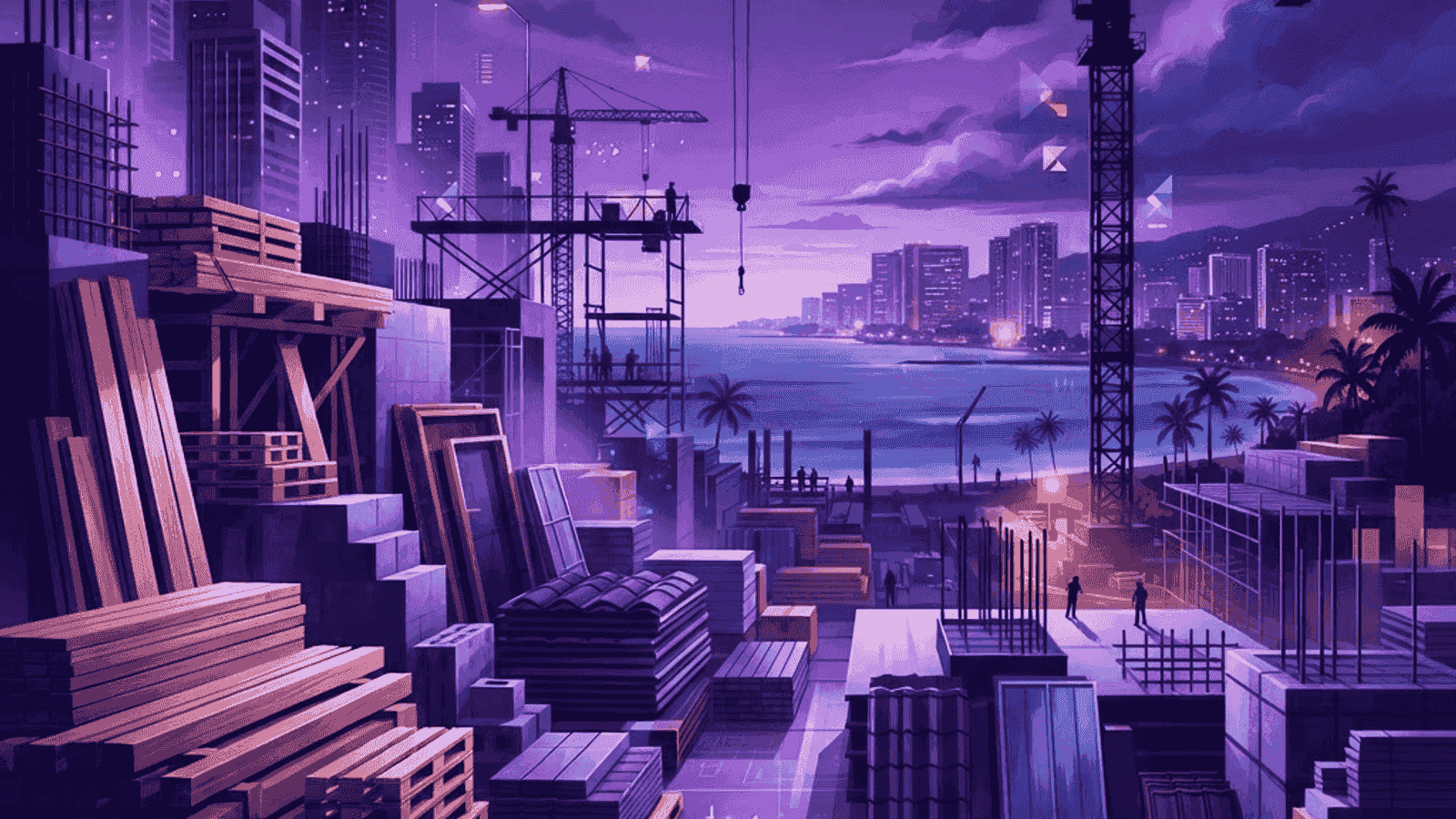
Construction in Honolulu operates under a distinctive set of constraints. Building codes account for hurricane wind loads, seismic activity, and termite pressure that few mainland jurisdictions face simultaneously. Salt air corrodes fasteners and reinforcement. Humidity encourages mold and rot. Land is scarce and expensive, pushing projects taller and tighter. And every material that is not made locally arrives by ship, which means procurement planning is as important as design.
Building material companies on Oahu have adapted by combining local manufacturing, deep inventory, and technical knowledge of what actually survives in the islands. For contractors, architects, developers, and homeowners, choosing the right supplier affects schedule, cost, and the long-term durability of the finished building.
How the Building Materials Sector Works in Honolulu
The industry splits between local manufacturing and import distribution. Concrete, aggregate, masonry block, precast elements, and some roofing and metal products are produced on the island because shipping them is prohibitively expensive relative to their value. Lumber, engineered wood, gypsum, insulation, tile, plumbing, and finish materials are largely imported and held in local warehouses.
That structure makes inventory depth a defining competitive factor. A supplier with strong local stock can keep a project moving; one relying on just-in-time mainland shipments exposes contractors to costly delays. Experienced buyers therefore evaluate suppliers on warehouse capacity and reorder discipline as much as on price.
Technical support is the other differentiator. Selecting the right fastener coating, the correct treated lumber grade for termite resistance, or an appropriate roofing assembly for high wind uplift requires genuine expertise. The best suppliers employ staff who know local code requirements and can document product approvals.
Trends Shaping Construction Materials
Resilience is the leading trend. Demand has grown for impact-rated windows, enhanced roof-to-wall connectors, reinforced masonry systems, and assemblies tested for high wind uplift. Insurers and lenders increasingly reward documented resilience, which pulls specification upward.
Energy performance is close behind. Given Hawaii's electricity costs, cool roofing, radiant barriers, improved insulation, high-performance glazing, and passive ventilation strategies deliver strong returns. Photovoltaic-ready roofing details and integrated mounting systems are now routine requests.
Sustainability and circularity are advancing as well, with growing use of supplementary cementitious materials to reduce concrete carbon intensity, recycled aggregate, reclaimed lumber, and low-emission finishes. Construction and demolition waste diversion is a serious focus because landfill capacity on Oahu is limited.
Finally, prefabrication and modular components are gaining ground. Prefabricated wall panels, precast elements, and factory-assembled bathroom pods reduce on-site labor demand, compress schedules, and improve quality control, all valuable where skilled labor is scarce and sites are congested.
Top 10 Best Building Material Companies in Honolulu
1. Pacific Building Materials
Pacific Building Materials is one of the island's broadest suppliers, carrying lumber, engineered wood, fasteners, concrete accessories, and finish materials. Its reputation is built on inventory depth, jobsite delivery reliability, and knowledgeable staff who can navigate local code requirements with contractors.
2. Island Concrete & Aggregates
Island Concrete & Aggregates produces ready-mix concrete, aggregate, and masonry products from local operations. The company is respected for consistent mix quality, technical support on specialty mixes including high-strength and low-carbon blends, and dispatch coordination that keeps large pours on schedule.
3. Oahu Lumber & Millwork
Oahu Lumber & Millwork supplies dimensional lumber, treated wood, plywood, trim, and custom millwork. Its expertise in termite-resistant and moisture-appropriate wood products is particularly valuable, and its millwork shop produces architectural details matched to local design traditions.
4. Aloha Roofing Products
Aloha Roofing Products manufactures and distributes roofing systems including metal panels, tile, membranes, and underlayments engineered for high wind uplift and intense sun exposure. The company's assembly-level guidance, covering fasteners, flashings, and ventilation, helps contractors achieve documented performance.
5. Diamond Head Masonry Supply
Diamond Head Masonry Supply provides block, brick, stone, mortar, and reinforcement products for structural and landscape masonry. Its knowledge of reinforced masonry detailing for seismic and wind loads makes it a frequent resource for engineers and masonry contractors.
6. Kalihi Steel & Structural Supply
Kalihi Steel & Structural Supply distributes and fabricates structural steel, rebar, joists, and metal framing. Local cutting, bending, and detailing services shorten schedules considerably compared with importing fabricated steel, and the company's coating options address coastal corrosion.
7. TradeWinds Windows & Doors
TradeWinds Windows & Doors supplies impact-rated and hurricane-resistant glazing, entry systems, and sliding door assemblies. Its focus on tested assemblies, corrosion-resistant hardware, and proper installation detailing addresses two of the island's biggest building envelope challenges at once.
8. Waipahu Precast & Panel Systems
Waipahu Precast & Panel Systems manufactures precast concrete elements, wall panels, and site components. Factory production improves consistency and reduces on-site labor, and the company's engineering coordination with project teams streamlines complex installations.
9. Hawaii Insulation & Envelope Products
Hawaii Insulation & Envelope Products specializes in insulation, air and water barriers, radiant products, and sealants suited to tropical climates. Because incorrect vapor strategy causes serious moisture problems in humid conditions, its technical guidance on assembly design is especially useful.
10. Coral Coast Tile & Finishes
Coral Coast Tile & Finishes completes the list with tile, stone, flooring, and interior finish materials, plus setting materials appropriate for humid environments. Designers value its selection breadth and its practical advice on slip resistance, maintenance, and mildew resistance.
How to Evaluate a Building Material Supplier
Confirm code compliance documentation. Ask for product approvals, test reports, and evaluation reports relevant to Hawaii's wind, seismic, and termite requirements. A supplier who can produce this paperwork quickly will save you time during permitting and inspection.
Assess inventory and logistics honestly. Ask what is stocked locally, what requires ocean freight, typical lead times, and how the supplier handles shortages. For scheduled construction, request written commitments on delivery windows and ask about jobsite delivery capability, including access constraints in dense urban areas.
Interrogate corrosion and durability details. Fastener and connector coatings, dissimilar metal separation, reinforcement cover, treated wood retention levels, and coating systems all determine whether a building performs for decades. Suppliers with real coastal experience will raise these issues before you do.
Finally, weigh technical support and total cost. A supplier who helps you value-engineer an assembly, prevents a moisture design error, or coordinates delivery sequencing to reduce site congestion provides value that unit pricing does not capture. Ask about warranty administration and post-installation support as well.
Final Thoughts
Building material companies in Honolulu do far more than sell products; they help projects satisfy demanding codes, resist a corrosive climate, and stay on schedule despite ocean freight realities. Whether you are pouring a foundation, replacing a roof, framing a coastal home, or delivering a high-rise, prioritize suppliers with documented compliance, deep local inventory, and genuine technical knowledge. That combination protects both your schedule and the durability of what you build.