
Rail on Oahu: Newer and Older Than People Assume
Rail in Honolulu carries a double history. Long before the current elevated metro opened, Oahu had an extensive network of plantation and common-carrier railways moving sugarcane, pineapple, freight, and passengers around the island. Much of that infrastructure was dismantled in the mid-twentieth century as trucking took over, but fragments survive as heritage operations that are genuinely worth a visit.
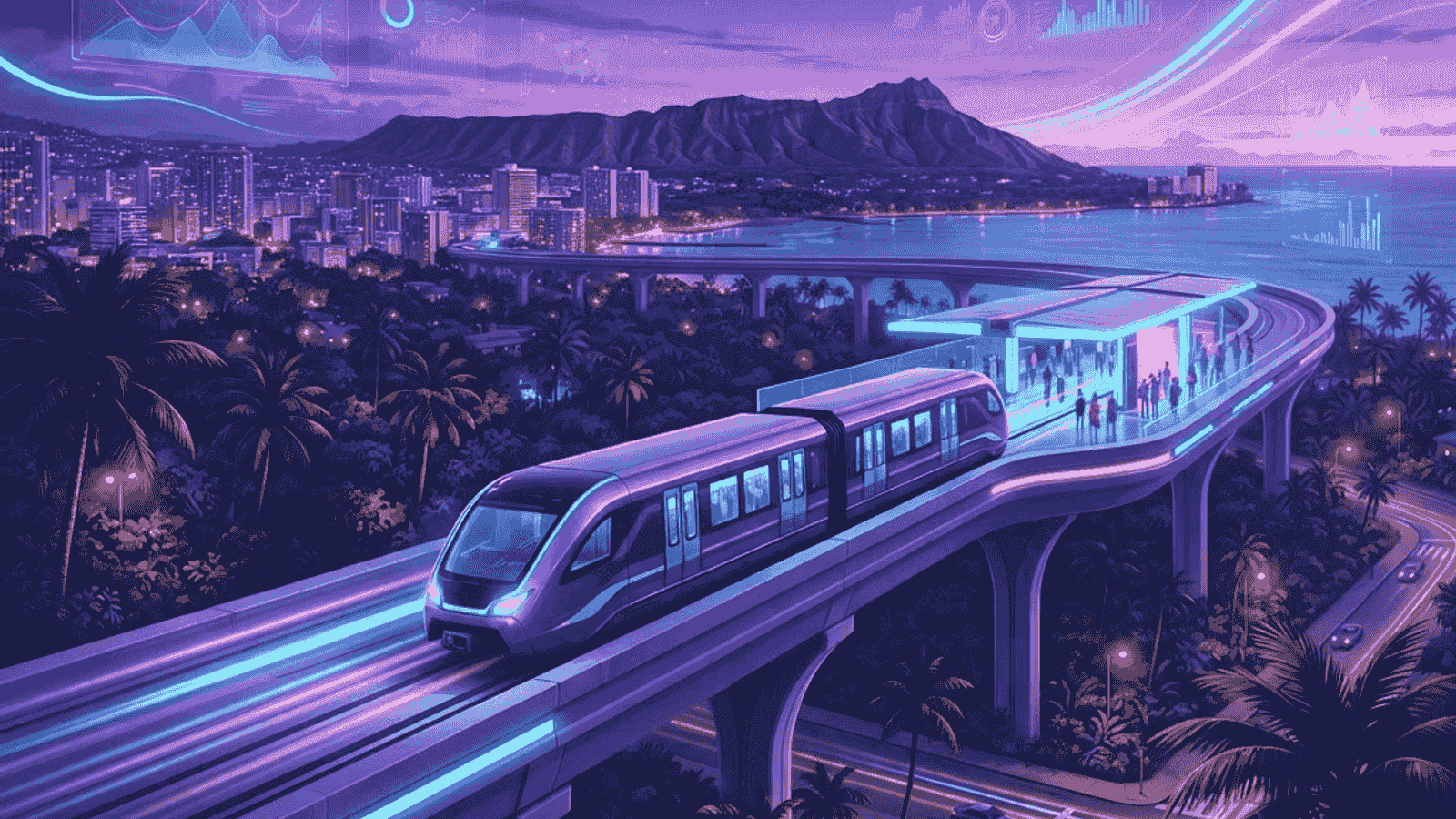
The modern chapter is Skyline, the driverless elevated rapid transit system serving the corridor from the Leeward side toward central Honolulu. It represents the largest public infrastructure undertaking in Hawaii's history and is reshaping how residents move between the fast-growing Kapolei and Ewa areas and the urban core. Understanding rail in Honolulu means looking at both threads: the working transit system and the preserved historic lines.
Ten Rail Operators and Organisations
1. Skyline is Honolulu's flagship rail system, operated under the city's transit framework as a fully automated, driverless elevated metro. Its differentiators are grade separation, which keeps trains entirely clear of road traffic, high service frequency, and fully accessible stations with platform screen protection. For commuters on the Leeward side, it converts an unpredictable highway journey into a fixed-duration trip.
2. Honolulu Authority for Rapid Transportation is the public agency responsible for planning, building, and delivering the rail project. While not a day-to-day train operator in the conventional sense, it is the organisation that defines alignment, station design, and phased extension toward the city centre.
3. Honolulu Department of Transportation Services manages the integration between rail and the island's bus network, restructuring bus routes to feed stations and administering unified fare arrangements. Its work is what makes rail useful as part of a complete journey rather than an isolated line.
4. Hitachi Rail Honolulu supplies and maintains the driverless train technology and core systems underpinning Skyline. Its involvement brings international automated-metro experience, including signalling, vehicle maintenance, and control systems that allow safe operation without onboard drivers.
5. Hawaiian Railway Society preserves a segment of the historic Oahu Railway and Land Company line on the Leeward coast and runs heritage passenger excursions using restored equipment. It is a volunteer-driven organisation and one of the best places in the state to understand what island rail once looked like.
6. Oahu Railway and Land Company legacy deserves mention as the historical operator whose network once stretched from Honolulu around the western and northern coasts. Its right-of-way, structures, and rolling stock underpin most surviving rail heritage on the island.
7. Pineapple Express at Dole Plantation operates a narrated plantation railway in central Oahu, using rail as an interpretive tool to explain agricultural history and crop cultivation. It is family-oriented and consistently popular with visitors travelling toward the North Shore.
8. Kauai Plantation Railway and similar neighbour island heritage operations are relevant context for Honolulu-based rail enthusiasts, since Hawaii's plantation railway story is a statewide narrative and comparing surviving operations illuminates the Oahu lines.
9. Nan Inc. and local heavy civil contractors have played a substantial role in delivering guideway, station, and utility work for the rail corridor. Their involvement matters because island construction requires managing material shipping, limited laydown space, and work adjacent to live traffic.
10. AECOM and consulting engineering partners provide the design, programme management, and systems engineering capability behind the rail project. On a scheme of this scale, engineering advisory work is as decisive to the outcome as construction itself.
Riding Skyline in Practice
Skyline operates from elevated stations with step-free access, and fare payment uses the same reloadable card system as the bus network, so transfers between modes are straightforward. Trains run at short intervals during peak periods, which means timetable checking is largely unnecessary. Because the line is fully grade-separated, journey times are consistent regardless of road congestion, which is the system's central benefit.
Visitors should note the current alignment serves the Leeward corridor rather than Waikiki, with extension toward the airport and downtown progressing in phases. For tourists, the practical use case today is reaching destinations along the western corridor and connecting to bus routes at station interchanges, rather than as a primary Waikiki circulation tool.
What Rail Means for Honolulu
The strategic case rests on three points. First, Oahu cannot widen its way out of congestion because land is finite and the population corridor is narrow. Second, concentrating development around stations allows housing growth without proportional traffic growth, which matters enormously in a market with severe affordability pressure. Third, electrified rail reduces transport emissions and exposure to imported fuel prices, both of which are acute concerns in an island economy.
Heritage Rail as a Cultural Asset
The preserved lines do something the metro cannot: they explain how Oahu's economy was built. Plantation railways were the arteries of the sugar and pineapple industries, and riding a restored train along the Leeward coast makes that history tangible in a way museum displays rarely achieve. These operations run on limited schedules and depend heavily on volunteers, so checking operating days in advance is essential.
Looking Ahead
The defining questions for Honolulu rail concern extension, integration, and ridership growth. Completing the alignment into the dense downtown core is what will transform the system from a useful corridor service into a genuine backbone. Continued bus network restructuring around stations, improved first-and-last-mile options including secure cycle parking, and transit-oriented development at station sites will determine how much of the potential is realised.
Whether your interest is a daily commute, a professional stake in infrastructure delivery, or the plantation-era history of the islands, the operators and organisations above represent the full picture of rail in Honolulu today.