
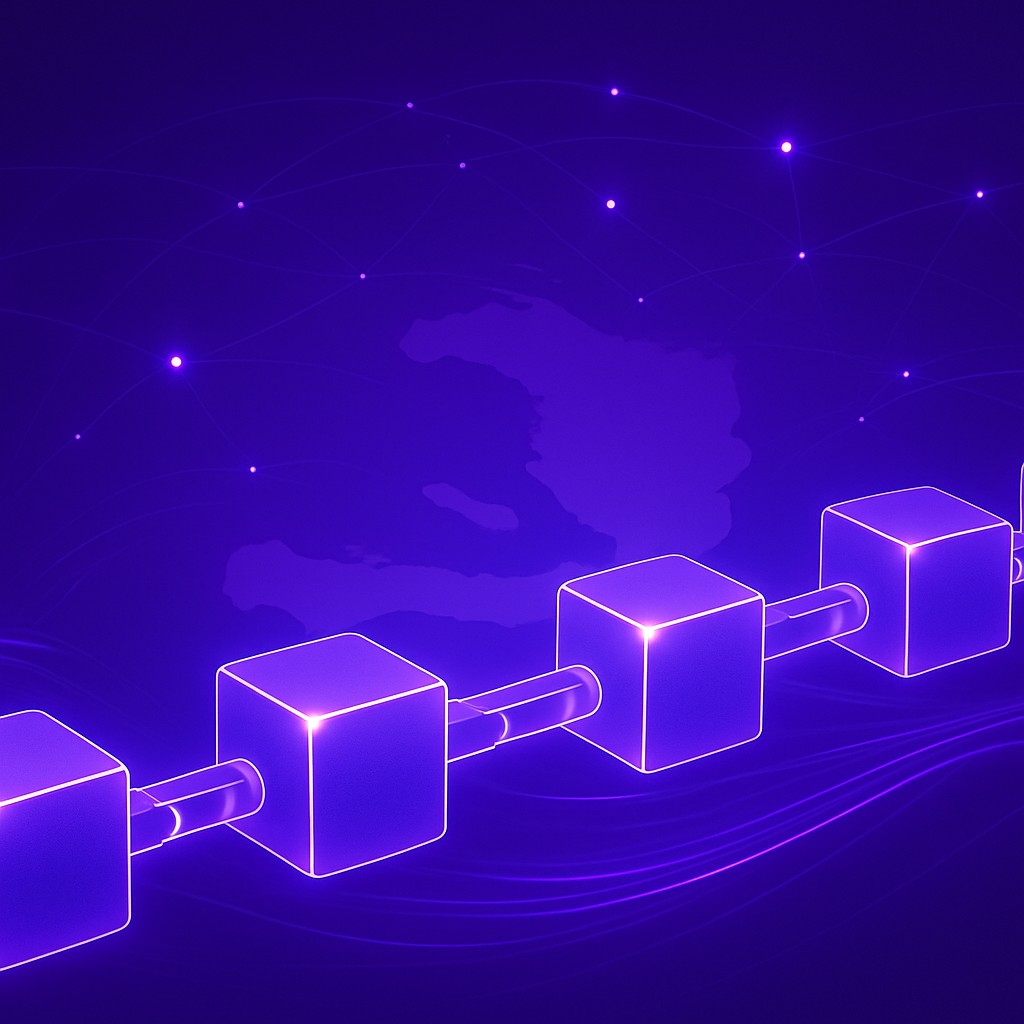
Blockchain's Promise for Haiti
Blockchain technology, the distributed ledger system behind cryptocurrencies and many digital trust applications, holds particular promise for Haiti. In a country where remittances form a major part of the economy and where transparency and trust are highly valued, blockchain offers compelling use cases. A small but growing community of companies and innovators is exploring how distributed ledgers can reduce costs, increase transparency, and expand access to financial services.
While blockchain adoption in Haiti is still in its early stages, interest is rising. Entrepreneurs see opportunities to improve remittance flows, create verifiable records, and build new financial products. Diaspora connections, which are central to Haiti's economy, make cross-border blockchain applications especially relevant.
Where Blockchain Can Make a Difference
Several use cases stand out for the Haitian context. Remittances are a natural fit, as blockchain-based transfers can potentially lower fees and speed up transactions for the millions of dollars sent home each year. Digital identity and record-keeping applications could improve transparency in areas such as land registration and credentials. Supply chain tracking can enhance trust in goods and trade. Cryptocurrency and stablecoin solutions offer alternative means of storing and transferring value in an environment where access to traditional banking is limited.
Companies and Innovators to Watch
The blockchain landscape in Haiti includes startups, developer collectives, and forward-looking technology firms. HaitiPay-style fintech innovators explore digital payment rails that may incorporate blockchain elements. KreyolCoin and similar community initiatives experiment with cryptocurrency education and adoption. Blockchain Ayiti works to raise awareness and build local expertise in distributed ledger technology.
Other contributors include Lakou Crypto, focused on remittance and payment solutions, and Open Konned, which develops custom software that can integrate blockchain components. Developer groups such as Chèn Lab and Distribiye Tech build prototypes and educate the community, while consultancies like Konfyans Chain advise organizations on how blockchain might fit their needs. Diaspora-led ventures also play a significant role, bringing capital and global experience to the local scene.
The Remittance Opportunity
Remittances are the most compelling near-term application of blockchain in Haiti. Traditional money transfers can be slow and costly, and blockchain-based alternatives promise faster, cheaper cross-border payments. By connecting the diaspora more efficiently with families at home, these solutions could deliver real economic benefits. Companies working in this space focus on usability, ensuring that recipients with basic mobile phones can access funds easily and securely.
Challenges to Address
Blockchain adoption in Haiti faces hurdles. Regulatory clarity is still developing, creating uncertainty for businesses. Public understanding of the technology remains limited, requiring education and trust-building. Connectivity and infrastructure constraints can complicate deployment. Volatility in cryptocurrencies raises concerns, which is why many initiatives explore stablecoins or focus on the underlying ledger technology rather than speculative assets. Addressing these challenges thoughtfully will be key to sustainable growth.
The Path Forward
For blockchain to fulfill its potential in Haiti, collaboration is essential. Innovators, regulators, financial institutions, and the diaspora must work together to build clear frameworks and practical applications. Education will play a central role, helping individuals and businesses understand both the opportunities and the risks. As awareness grows and use cases prove their value, blockchain could become an important tool for financial inclusion and transparency.
Blockchain and Financial Inclusion
A large share of Haiti's population remains underserved by traditional banking, relying instead on cash and mobile money. Blockchain technology offers a potential path to greater financial inclusion by enabling secure, low-cost digital transactions without requiring a conventional bank account. Stablecoins, which are designed to hold steady value, could allow people to store and transfer money safely even amid economic uncertainty. When paired with simple mobile interfaces, these tools could reach communities that formal financial institutions struggle to serve. Companies pursuing this vision focus on accessibility and trust, recognizing that inclusion depends on making the technology genuinely usable for ordinary people.
Education and Community Building
Because blockchain is unfamiliar to many, education is a vital part of its growth in Haiti. Community groups, developer collectives, and forward-thinking companies host workshops, share resources, and mentor newcomers to demystify the technology. These efforts build a base of knowledgeable developers and informed users who can responsibly evaluate blockchain solutions. By emphasizing practical understanding over hype, the Haitian blockchain community is working to ensure that adoption is grounded in real value. This patient, education-first approach helps protect consumers from scams while nurturing the talent and awareness needed for the sector to mature sustainably.
Conclusion
Blockchain technology offers Haiti a set of intriguing possibilities, from cheaper remittances to greater transparency and digital trust. The companies and innovators highlighted here are laying early groundwork in a market with significant potential. While challenges remain, the alignment of blockchain's strengths with Haiti's needs, especially around cross-border payments, makes this a space worth watching. For entrepreneurs and institutions willing to explore responsibly, blockchain represents a frontier of meaningful opportunity.