
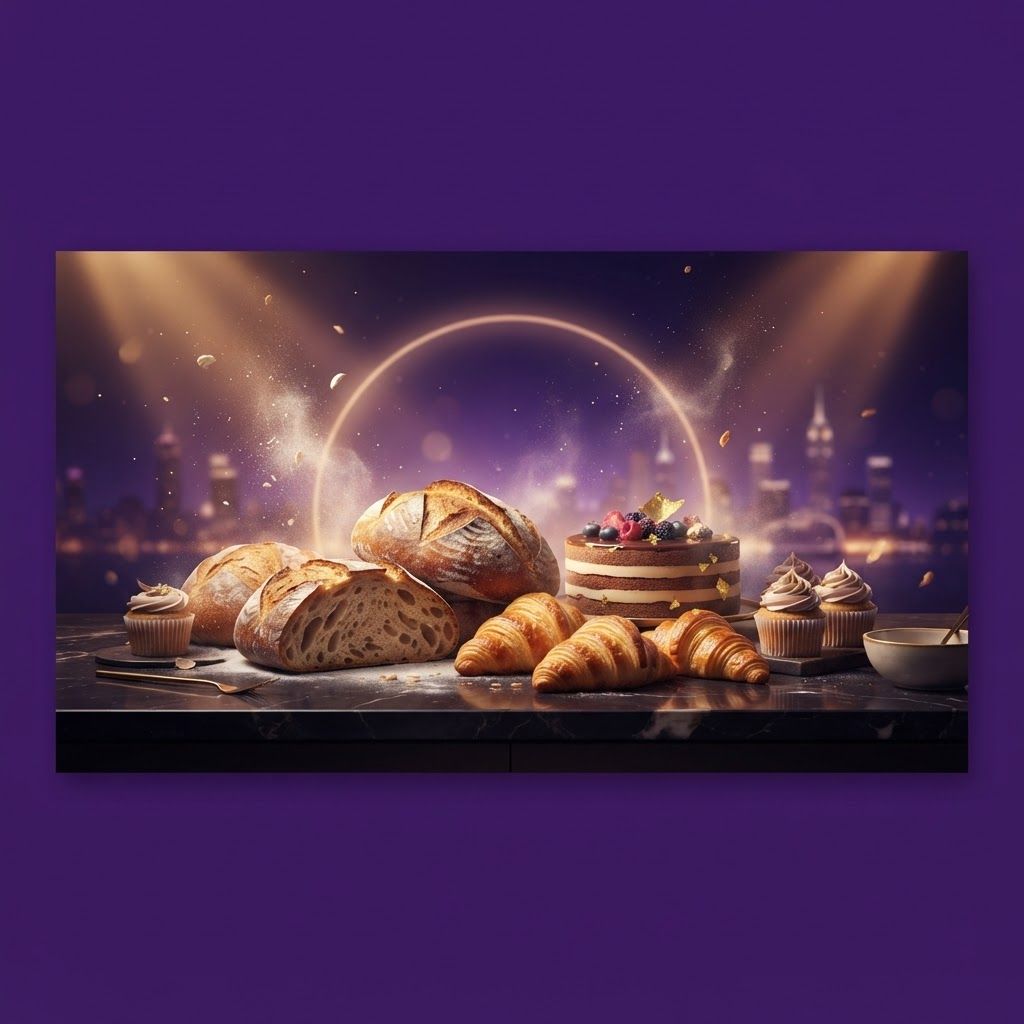
A City With Genuine Baking Heritage
Few American cities have a baking tradition as old or as distinctive as Winston-Salem's. The Moravian settlers who founded Salem in the eighteenth century brought Central European baking practice with them, and two of their creations remain regional institutions: the Moravian sugar cake, a yeasted, potato-based dough dimpled with pockets of butter and brown sugar, and the Moravian cookie, rolled so thin it snaps and spiced with ginger, cinnamon, cloves, and molasses.
These are not museum pieces. They are baked in commercial quantity, shipped nationally, and consumed heavily around the holidays by families who consider them non-negotiable. That continuity gives the city something rare: a genuinely local baked good with a documented three-century lineage.
Around that heritage a much broader scene has developed. Artisan bread bakeries, European-style patisseries, doughnut shops, cake studios, gluten-free and vegan specialists, and bakery cafes now operate across downtown, the Arts District, Reynolda Village, Ardmore, West End, and the growing corridors toward Clemmons and Kernersville.
Understanding the Categories
Artisan bread bakeries build their reputation on fermentation. Naturally leavened sourdough, baguettes, ciabatta, focaccia, rye, and seeded whole grain loaves depend on long fermentation, careful hydration, and steam-injected or hearth baking. The best operations mill or source flour thoughtfully and often work with regional grain, which has become a small but real movement in North Carolina.
Patisseries and pastry shops focus on laminated dough and confection: croissants, pain au chocolat, kouign-amann, éclairs, tarts, macarons, and entremets. Lamination is unforgiving, and the quality signal is visible in the cross-section of a croissant, where distinct open layers indicate proper butter distribution and proofing.
Cake and celebration bakeries handle weddings, birthdays, and events. The relevant skills are as much scheduling and structural engineering as flavor, and the best operations offer tastings, consultations, and dependable delivery.
Doughnut shops range from yeast-raised classics to cake doughnuts and elaborate topped varieties. Winston-Salem holds a particular place in this category as the birthplace of Krispy Kreme, founded in the city in 1937, whose original approach to hot glazed doughnuts became a national phenomenon.
Heritage and Moravian bakeries produce the sugar cake, thin cookies, and related items, often with recipes and techniques passed down through generations.
Dietary specialists serve gluten-free, vegan, and allergen-conscious customers. Dedicated facilities matter here, since shared equipment makes true gluten-free claims difficult to support.
Bakery cafes combine retail baking with coffee service and light food, functioning as neighborhood gathering places as much as bakeries.
How to Judge Quality
With bread, examine the crust and crumb. A well-baked hearth loaf has a crust with real color and structural crispness, and an interior with irregular open holes and a slightly translucent, glossy cell wall indicating proper fermentation. Uniform tight crumb and pale crust usually signal rushed proofing.
With laminated pastry, look for visible layers, a shattering exterior, and a honeycomb interior. Greasiness or a dense center indicates butter that warmed during lamination or insufficient proofing.
With cakes, texture and moisture matter more than decoration. Buttercream should taste of butter rather than shortening, and fillings should be identifiable rather than generically sweet.
Freshness practice tells you a great deal. Bakeries that sell out and bake daily are operating differently from those maintaining full cases at closing time.
Ingredient transparency is a reasonable expectation. Operations proud of their butter, flour, chocolate, and fruit sourcing usually say so.
Seasonality and Local Ingredients
North Carolina's growing calendar gives bakeries real material to work with. Strawberries arrive in spring, peaches and blueberries through summer, apples from the mountain counties in autumn, and sweet potatoes and pecans through the cold months. Bakeries that build seasonal menus around this produce noticeably better fruit desserts than those working from frozen concentrate year-round.
Holiday season transforms the local trade entirely. Moravian cookie and sugar cake production ramps up dramatically from late autumn, and lead times for custom orders extend considerably. Ordering early is practical advice rather than marketing.
Ordering for Events
For weddings and large events, begin conversations well in advance, since capable bakeries book months ahead in peak season. Expect a tasting, a discussion of servings and structure, and clarity about delivery, setup, and whether the venue provides refrigeration. Confirm how the bakery handles allergen requests and whether they can provide separate items for guests with restrictions.
For corporate and volume orders, ask about minimums, lead time, packaging, and whether delivery is available. Many bakeries handle standing weekly orders for offices and cafes.
What Makes the Scene Worth Exploring
Winston-Salem rewards a bakery crawl in a way many similarly sized cities do not, because the categories genuinely differ from one another. A morning that includes a Moravian sugar cake, a properly laminated croissant, and a naturally leavened country loaf covers three distinct baking traditions within a short drive.
The practical approach is to visit early, ask what came out of the oven most recently, and buy the thing the staff is enthusiastic about. Bakers are usually candid about what is best on a given day, and that recommendation is more reliable than any list.