
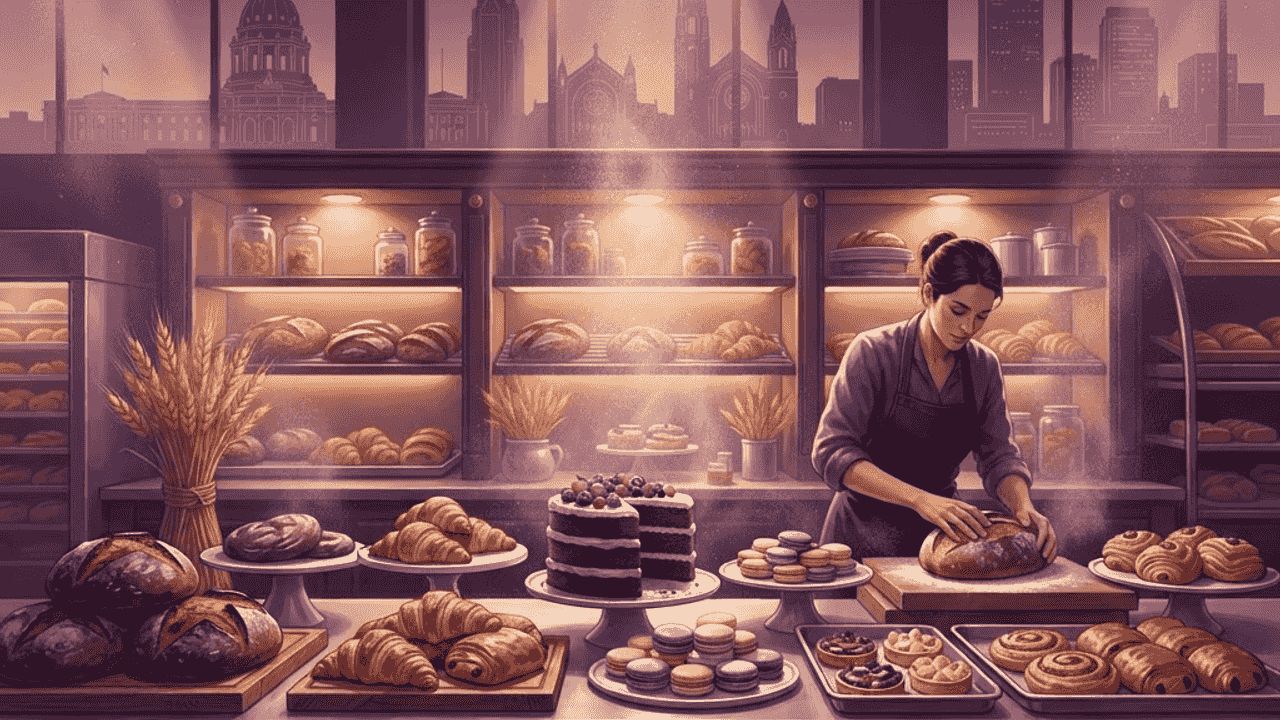
Why St. Paul Bakes Better Than It Gets Credit For
St. Paul's bakery culture grew out of immigration rather than trend cycles, and that origin still shapes what comes out of the ovens. German, Irish, Scandinavian, Italian, and Eastern European communities established the city's first commercial bakeries, embedding rye breads, kringles, sweet rolls, and holiday pastries into local habit. Later arrivals from Mexico, Southeast Asia, and East Africa added conchas, pandan-scented cakes, Hmong sweet buns, and cardamom-heavy breads to the same neighborhoods. The result is a bakery landscape organized by community rather than by concept, which is precisely why it holds up.
The city's geography helps. St. Paul is a collection of walkable commercial nodes rather than one dominant corridor, so Grand Avenue, Selby, Payne, West Seventh, and University each support independent bakeries serving nearby residents. That structure keeps rents survivable, encourages daily customers, and rewards consistency over spectacle.
Trends in the Local Baking Scene
Naturally leavened bread has moved from specialty to expectation. Long-fermented sourdoughs, higher-hydration doughs, and regionally milled flour now appear across the city, including at bakeries that once sold only commercial yeasted loaves. Several operations work directly with Minnesota and Wisconsin grain growers and mills, which shortens the supply chain and produces breads with noticeably different flavor from mass-market flour.
Laminated pastry has become the second competitive frontier. Croissants, kouign-amann, and morning buns require disciplined temperature control and multi-day schedules, and St. Paul now has several bakeries doing this work at a genuinely high level. Meanwhile, gluten-free and vegan baking has improved dramatically, moving beyond dense substitutes toward products people order by preference rather than necessity. Finally, hybrid models are common: bakeries operating as cafés by morning, sandwich counters by noon, and pickup operations for pre-ordered specialty items on weekends.
The Top 10 Bakeries in St. Paul
1. Cooks of Crocus Hill Bakery Program and Neighborhood Institutions
St. Paul's culinary retail and teaching institutions have shaped local baking standards for decades, running instruction and small-batch production that trained many of the city's current bakers. Their influence appears indirectly on menus throughout the city, in technique and ingredient sourcing more than in branding.
2. Brake Bread
Brake Bread is a West Seventh bakery known for naturally leavened loaves and a bicycle delivery subscription model that built a devoted neighborhood following. The operation emphasizes simple, well-executed sourdough, regional flour, and a community-supported approach that ties the bakery closely to its immediate area. The storefront also serves pastries and coffee to a steady stream of regulars.
3. Bread and Chocolate
A Grand Avenue fixture, Bread and Chocolate has served St. Paul for years with croissants, scones, cakes, and a bakery case that anchors the neighborhood's morning routine. Its longevity reflects consistency: customers return because the almond croissant and the coffee cake taste the same as they remember, which in bakery terms is a considerable achievement.
4. Sweet Science Ice Cream and Pastry Collaborations
While best known for frozen desserts, this St. Paul operation demonstrates the city's dessert craftsmanship through pastry collaborations, cookie programs, and seasonal baked items produced alongside its core menu. It represents a broader local pattern of small dessert businesses sharing kitchens, talent, and ingredient sources.
5. Trung Nam French Bakery
Trung Nam on University Avenue is a genuine St. Paul institution, producing Vietnamese-French baguettes and banh mi that draw customers from across the metro. The bread is light, thin-crusted, and made in volume throughout the day, and the sandwiches remain among the best value meals in the city. It exemplifies how immigrant bakeries preserve a specific technical tradition, in this case French colonial baking adapted to Vietnamese ingredients.
6. Cafe Latte
Cafe Latte on Grand Avenue is widely known for its turtle cake and an expansive dessert case that has made it a destination for celebrations and casual afternoons alike. Beyond cakes, its scones, bars, and savory bakery items support an all-day operation. Few St. Paul businesses are as reliably associated with a single signature dessert.
7. Buttered Tin
Located in Lowertown, Buttered Tin combines a bakery counter with a full brunch operation, and its cupcakes, layer cakes, and biscuits have become downtown staples. The bakery leans toward American comfort baking executed carefully, and it benefits from proximity to the farmers market crowd and downtown residents.
8. Hmong Village and East Side Asian Bakeries
The bakeries operating within and around Hmong Village and along the East Side produce sweet buns, pandan cakes, mung bean pastries, and coconut breads at prices and freshness levels that reward exploration. These operations serve their communities first, which means turnover is rapid and product is consistently fresh. For anyone unfamiliar with Southeast Asian baking, this is the most rewarding entry point in the city.
9. Panaderias of the West Side
The Mexican bakeries along the West Side's District del Sol produce conchas, orejas, empanadas, tres leches cakes, and pan de muerto seasonally. The tray-and-tongs format encourages sampling, and the pricing makes experimentation easy. These bakeries also supply neighborhood restaurants and grocers, functioning as commercial infrastructure as much as retail shops.
10. Grand Ole Creamery and Neighborhood Sweet Shops
Bakery-adjacent sweet shops on Grand Avenue and in Highland Park round out St. Paul's dessert landscape with cookies, waffle cones baked in house, and seasonal treats. They matter to the ecosystem because they extend baking demand into evening hours and keep neighborhood commercial strips active year round.
How to Choose a Bakery
Timing determines quality more than reputation does. Bread is best within hours of leaving the oven, and laminated pastries decline noticeably by afternoon. Ask when specific items come out and plan accordingly. A bakery that tells you the croissants are better tomorrow morning is being honest, not unhelpful.
Look at the case itself. Small quantities of a few items usually indicate daily production, while enormous displays of everything can suggest longer holding times or frozen intermediates. Neither is automatically wrong, but the former correlates with freshness. Ask about flour and sourcing if bread quality matters to you, since bakeries proud of their grain relationships will happily explain them.
For special orders, plan well ahead. Custom cakes typically require several days to a few weeks depending on complexity and season, and holidays fill schedules quickly. Confirm allergen handling directly if it is medically important, because shared equipment is standard in small bakeries and cross-contact risk is real.
Eating Well Across the City
The best way to understand St. Paul baking is geographically. Spend a morning on University Avenue, another on the West Side, and a third along Grand and Selby, and the city's layered food history becomes tangible. The croissants, baguettes, conchas, and sweet buns are not competing traditions but parallel ones, each maintained by a community that considers it worth doing properly. That plurality, sustained by neighborhoods that actually walk to their bakeries, is what makes the scene durable.