
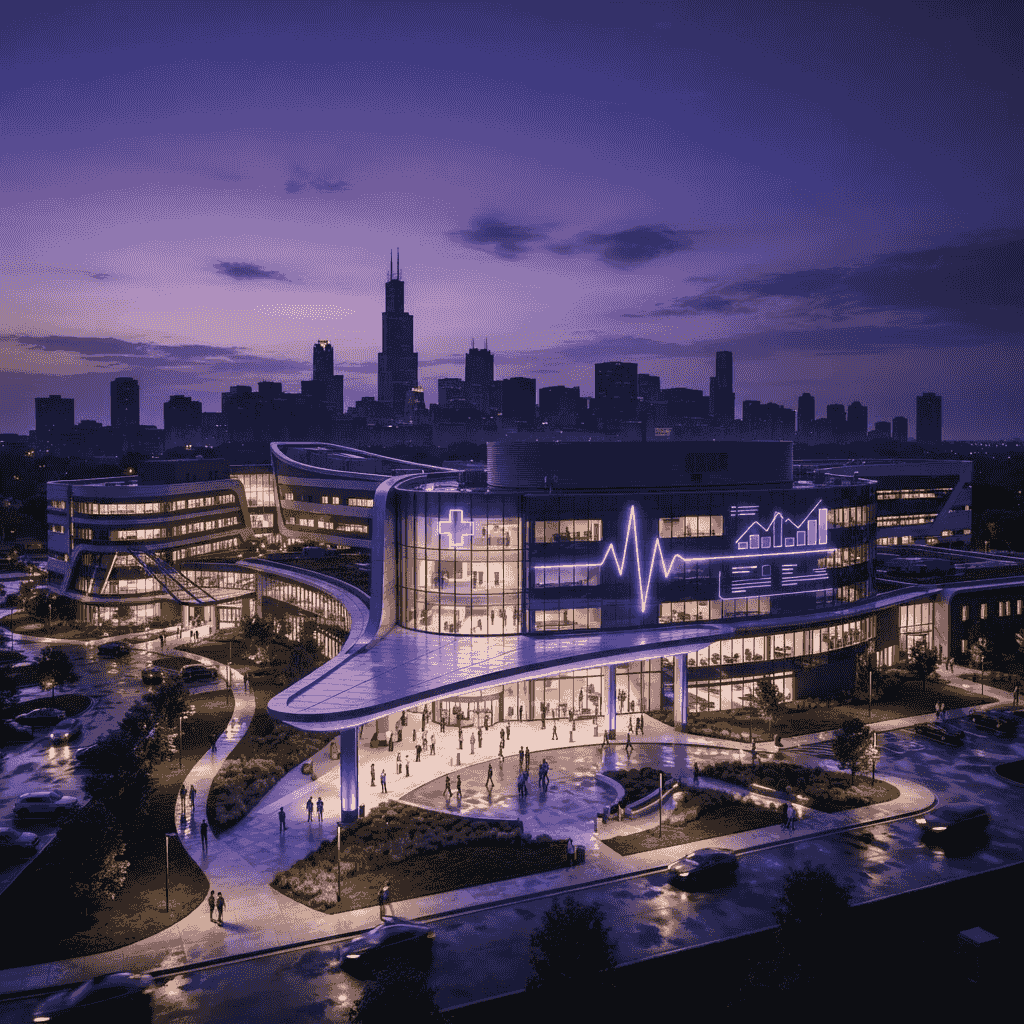
Fort Wayne as a Regional Medical Center
Fort Wayne functions as the healthcare anchor for a service area that extends well beyond Allen County into surrounding rural counties and across the Ohio and Michigan borders. That regional role has produced a hospital infrastructure considerably more advanced than the city's population alone would suggest, including verified trauma capability, open-heart surgery programs, comprehensive cancer centers, neonatal intensive care, and dedicated pediatric services.
For residents, this concentration means most complex care can be delivered locally rather than requiring travel to Indianapolis, Chicago, or Ann Arbor. It also means patients have genuine choice, and understanding the differences between systems and facilities helps in making decisions about where to seek both routine and specialized care.
How to Evaluate a Hospital
Clinical outcomes should lead any evaluation. Metrics worth examining include surgical complication rates, hospital-acquired infection rates, readmission rates, and mortality figures for common conditions such as heart attack, heart failure, stroke, and pneumonia. These are published measures, and hospitals that perform well tend to have invested in systematic quality programs rather than isolated improvements.
Specialty depth is the second consideration. A hospital with a dedicated stroke center, accredited chest pain center, or high-volume joint replacement program brings experience that measurably affects results, because procedural volume correlates strongly with outcomes. Nursing ratios and staffing stability matter as well, since they shape day-to-day safety and the patient experience more than almost any other operational factor.
Practical factors deserve weight too. Emergency department wait times, insurance network participation, proximity for follow-up appointments, and how well a facility coordinates with your primary care physician all influence the quality of care you actually receive. Finally, for serious diagnoses, teaching affiliation and clinical trial access can open treatment options unavailable elsewhere.
The Ten Leading Hospitals Serving Fort Wayne
1. Parkview Regional Medical Center is the flagship of the Parkview Health system and the largest hospital in northeast Indiana. It operates the region's highest level of verified trauma care, along with comprehensive cardiac surgery, neurosciences, oncology, and a large neonatal intensive care unit. For the most complex cases in the region, this is typically the referral destination.
2. Lutheran Hospital of Indiana is the other major tertiary center in the market and carries a particularly strong reputation in cardiac and vascular care, transplant services, and neurosurgery. Its long history in the community and depth of specialist coverage make it a primary choice for advanced surgical care.
3. Dupont Hospital serves the growing north side with a focus on women's health, obstetrics, orthopedics, and surgical services. Its smaller scale translates into shorter waits and a more personal environment while maintaining access to the broader network's specialist resources.
4. Parkview Hospital Randallia occupies a distinctive niche, concentrating on behavioral health, rehabilitation, and specialized inpatient programs. Its focus on mental health and recovery services fills a critical regional need that general hospitals often address only partially.
5. St. Joseph Hospital has served central Fort Wayne for well over a century and remains an important downtown resource. Its burn program, wound care, and rehabilitation services give it specialty relevance beyond general acute care.
6. Parkview Ortho Hospital is a dedicated orthopedic and spine facility. Concentrating exclusively on musculoskeletal care produces the kind of procedural volume and specialized recovery protocols that improve outcomes for joint replacement and spine surgery patients.
7. Lutheran Downtown Hospital provides acute care access in the urban core with an emphasis on emergency services and general medical admissions. Its location makes it a practical option for downtown workers and central-city residents.
8. Parkview Huntington Hospital extends full-service community hospital care to residents southwest of Fort Wayne, offering emergency care, surgery, imaging, and obstetrics locally while maintaining transfer pathways to the regional medical center for complex cases.
9. Parkview DeKalb Hospital plays the same role to the north, serving DeKalb County and surrounding communities with emergency, surgical, and diagnostic services close to home, reducing travel burden for routine and urgent care.
10. Kosciusko Community Hospital rounds out the regional network to the west, offering community-based acute care, emergency services, and outpatient programs for patients in the Warsaw area who look to Fort Wayne for tertiary referrals.
Understanding the Two-System Landscape
Fort Wayne healthcare is shaped substantially by the presence of two large competing systems. This has produced real benefits: duplicate investment in advanced technology, shorter waits than single-system markets typically experience, and continuous pressure to improve service. It also creates practical considerations for patients. Insurance networks may favor one system over the other, medical records do not always transfer seamlessly between them, and physician referral patterns tend to stay within a system.
The most useful step patients can take is to confirm early which system their primary care physician and preferred specialists practice within, and whether their insurance plan treats both as in-network. Making that determination before a health crisis avoids difficult decisions under pressure.
Emergency Versus Urgent Care Decisions
One of the most common and costly mistakes in any market is using an emergency department for conditions urgent care can handle. Emergency care is appropriate for chest pain, difficulty breathing, stroke symptoms, severe bleeding, major trauma, and any situation where a delay could be dangerous. Fort Wayne's stroke and cardiac programs are built for rapid response, and calling emergency services rather than driving activates that response earlier.
Urgent care and walk-in clinics are better suited to minor injuries, infections, sprains, rashes, and illnesses that need same-day attention but are not life threatening. Both major systems operate extensive urgent care networks across the city, and using them appropriately reduces both cost and emergency department congestion for patients who genuinely need it.
Trends in Fort Wayne Hospital Care
Several shifts are visible across the local market. Outpatient migration continues, with procedures once requiring inpatient stays, including many joint replacements and cardiac interventions, now performed in ambulatory settings with same-day discharge. Both systems have expanded freestanding outpatient and specialty facilities across the metro rather than centralizing everything at flagship campuses.
Telehealth has become permanently integrated rather than a temporary accommodation, particularly for follow-up visits, behavioral health, and chronic disease management, which matters considerably for rural patients in the surrounding counties. There is also increasing investment in behavioral health capacity, reflecting sustained regional demand, and in cancer care coordination through multidisciplinary tumor boards that bring surgeons, oncologists, and radiologists into shared treatment planning.
Preparing for a Hospital Visit
Patients get better care when they arrive prepared. Bring a current list of medications with doses, a summary of past surgeries and conditions, insurance information, and the contact details of your primary care physician. For planned procedures, ask about the surgeon's annual volume for that specific operation, expected recovery timeline, and what post-discharge support will be arranged. For any admission, identify a family member who can serve as your advocate and point of contact.
Final Thoughts
Fort Wayne offers hospital care that compares favorably with markets several times its size, from verified trauma and cardiac surgery to dedicated orthopedic and behavioral health facilities. The ten hospitals above cover the full spectrum from tertiary referral centers to community facilities in the surrounding counties. Choosing well means matching the facility's specialty strength to your specific need, confirming insurance alignment in advance, and building a relationship with a primary care physician who can guide referrals when something complex arises.