
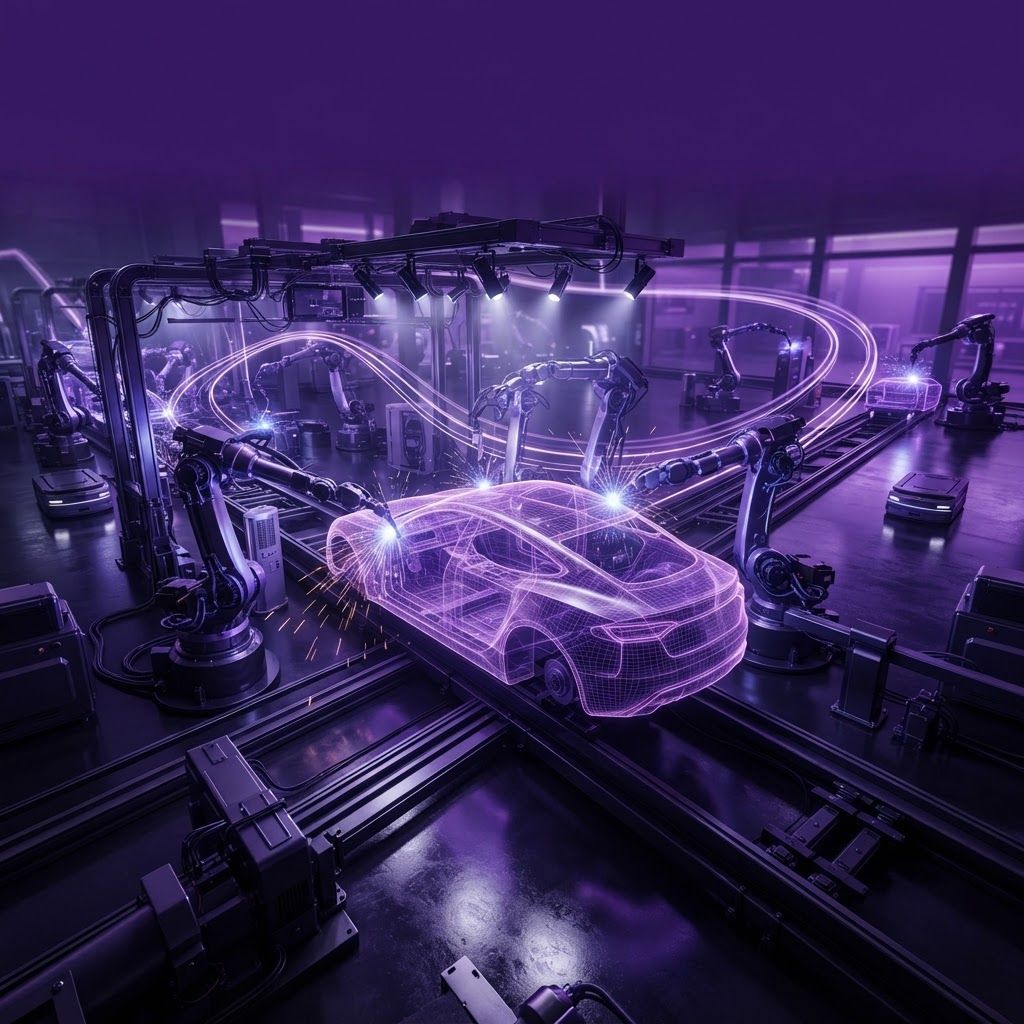
A generation ago, Huntsville's industrial identity was almost entirely aerospace and defense. Today the region is equally recognizable as an automotive manufacturing center. Engine production, complete vehicle assembly, powersports manufacturing, and a dense tier one and tier two supplier network have created tens of thousands of jobs across Madison and Limestone counties. The transformation reflected deliberate economic development strategy, favorable logistics along Interstate 65 and the Tennessee River corridor, and a workforce already accustomed to precision manufacturing and rigorous quality systems.
How North Alabama Became an Automotive Center
The region offered a combination that automakers value highly: available industrial land near interstate and rail infrastructure, a technical workforce, competitive utility rates through the Tennessee Valley system, and a state economic development apparatus experienced in large project recruitment. Once anchor plants located here, supplier clusters followed, because just in time delivery favors proximity. Seat assemblies, stampings, injection molded interior components, wiring harnesses, and logistics providers all established nearby operations, compounding the region's advantage.
For engineers, technicians, and suppliers, this means Huntsville now offers genuine career mobility across both aerospace and automotive sectors, and the cross pollination of practices between them has raised standards in both.
Top 10 Best Automotive Manufacturers in Huntsville
1. Mazda Toyota Manufacturing
The joint venture assembly plant in Huntsville represents one of the largest single industrial investments in Alabama history. It produces crossover vehicles for both brands using highly automated body, paint, and assembly operations, and it set a new benchmark for scale, automation, and supplier expectations in the region.
2. Toyota Motor Manufacturing Alabama
Toyota's Huntsville engine plant builds a range of engines for vehicles assembled across North America. The facility is known for continuous improvement culture, precision machining of blocks and heads, and consistent expansion over its operating history, making it a cornerstone employer for local machinists and technicians.
3. Polaris Industries Huntsville
Polaris manufactures off road vehicles and powersports products at its Huntsville facility. The operation combines welding, painting, and final assembly with a strong emphasis on model variety, which requires flexible manufacturing systems and disciplined material flow to manage high configuration complexity.
4. Navistar Huntsville
Navistar's regional operations support commercial vehicle powertrain and component manufacturing. Heavy duty applications demand different engineering priorities than passenger vehicles, particularly around durability, serviceability, and emissions system integration, and the plant contributes specialized capability to the local base.
5. LG Electronics Vehicle Solutions
LG's Huntsville investment in electric vehicle charging equipment production connects the region directly to transportation electrification. Charging infrastructure manufacturing bridges electronics and automotive disciplines, and it signals that the region's automotive future extends beyond internal combustion.
6. Tier One Seating and Interior Suppliers
Several major interior systems suppliers operate near the assembly plants, producing complete seats, door panels, instrument panel assemblies, and headliners. These operations run sequenced delivery, meaning components arrive in exact build order, which demands exceptional scheduling discipline and near zero defect performance.
7. Stamping and Metal Forming Suppliers
Regional stamping operations produce body panels, brackets, reinforcements, and structural components using progressive dies and transfer presses. Die maintenance capability, press tonnage availability, and welding automation determine which suppliers can win the most demanding structural work.
8. Injection Molding and Plastic Component Suppliers
Automotive plastics suppliers in North Alabama mold bumper fascias, trim, clips, ducting, and under hood components. Tooling quality, color matching, and cycle time optimization separate strong performers, and paint capability for exterior components is a significant competitive differentiator.
9. Wiring Harness and Electrical Component Suppliers
As vehicle electrical content grows, harness suppliers have become increasingly strategic. Regional operations build complex, variant heavy harnesses requiring careful configuration control, and their proximity reduces the inventory burden of high value, high variety assemblies.
10. Precision Machining and Tooling Job Shops
A broad network of independent machine shops and tool and die makers supports the automotive cluster with fixtures, gauges, replacement tooling, prototype parts, and emergency repair work. These shops are the flexible connective tissue that keeps large plants running when unplanned problems arise.
Trends Reshaping Automotive Manufacturing in Huntsville
Electrification is the dominant force. Battery systems, power electronics, and electric drive units require new supplier competencies while reducing demand for some traditional engine components, and regional suppliers are actively repositioning. Automation continues to expand, with collaborative robots handling repetitive assembly tasks alongside human operators. Data driven quality systems using vision inspection and torque monitoring are replacing sampling based approaches. Supply chain resilience has become a board level topic, favoring nearby suppliers with transparent sub tier visibility. Workforce development partnerships with community colleges and technical programs have become essential, because the skills gap in maintenance technicians and controls engineers is the most common growth constraint.
How to Evaluate an Automotive Manufacturing Partner or Employer
Suppliers seeking to enter this market should expect rigorous quality system audits, capacity verification, and financial review before nomination. Demonstrated statistical process control, documented problem solving methodology, and honest capacity data matter more than competitive pricing alone. Job seekers should evaluate shift structure, training investment, advancement pathways into maintenance and controls roles, and the plant's product lifecycle stage, since a facility launching new models offers different opportunities than one in steady state production.
Conclusion
Huntsville's automotive sector has matured from a recruitment success story into a genuine manufacturing ecosystem with assembly plants, engine production, powersports manufacturing, electrification investment, and a deep supplier and job shop network. The manufacturers profiled above show both the scale and the specialization now present in North Alabama. As electrification reshapes the industry, the region's blend of aerospace precision and automotive discipline positions it unusually well for the transition ahead.