
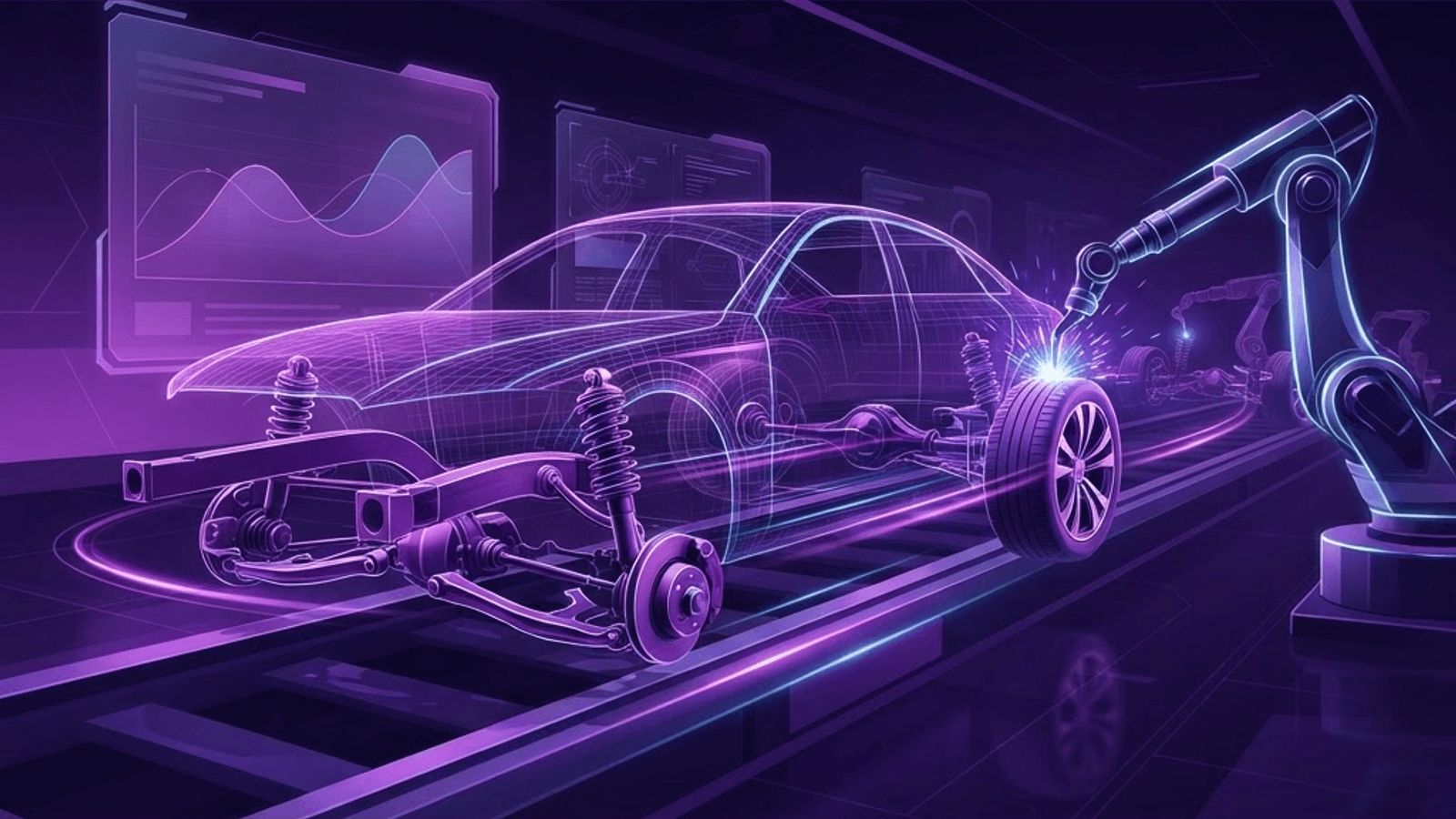
How Automotive Manufacturing Works in Garden Grove
Southern California is the global center of automotive aftermarket innovation, and Garden Grove participates through component manufacturing rather than vehicle assembly. The city's industrial buildings house machine shops producing suspension and drivetrain parts, fabricators building performance exhaust and intake systems, upfitters converting vans and trucks into work vehicles, and increasingly, companies developing electric drivetrain conversions and battery enclosures.
This structure reflects the region's strengths: a dense concentration of skilled fabricators, proximity to design studios and testing facilities, and a consumer culture that has driven aftermarket demand for generations. For buyers, it means access to manufacturers who can produce short runs, iterate quickly, and work directly with engineers rather than through distant sales channels.
The Top 10 Automotive Manufacturers in Garden Grove
1. Grove Performance Fabrication
Producing headers, exhaust systems, intercooler piping, and chassis bracing, Grove Performance combines CNC mandrel bending with TIG welding and fixture-based assembly. Consistency across production runs, historically a weakness in small-batch performance manufacturing, is the company's core selling point.
2. Meridian Driveline Components
Meridian machines axles, hubs, spindles, and differential components to tight tolerance with documented material certification. Their heat treatment partnerships and in-process inspection support customers who need traceable parts for warranty-backed products.
3. Harbor Commercial Upfitters
Harbor converts cargo vans and chassis cabs into service vehicles with shelving, power systems, ladder racks, lighting, and equipment mounting. Fleet customers value standardized build specifications that keep every vehicle in a fleet identical and serviceable.
4. Pacific EV Conversions
Focused on electric drivetrain retrofits for commercial vehicles and classic cars, Pacific EV designs battery enclosures, thermal management systems, and control integration. The company also handles compliance documentation for registered conversions.
5. Citrus Coast Suspension Works
Manufacturing coilovers, control arms, bushings, and lift components, Citrus Coast validates products through fatigue testing rather than field feedback alone. That engineering discipline separates durable suspension products from visually similar imports.
6. Anchor Automotive Plastics
Anchor produces injection-molded and vacuum-formed interior panels, trim, ducting, and protective components. Tooling is designed and maintained in house, allowing design revisions without long overseas lead times.
7. Summit Cooling Systems
Summit builds radiators, oil coolers, and heat exchangers for performance, off-road, and industrial vehicle applications. Custom core sizing lets customers fit thermal capacity into unusual packaging constraints.
8. Westgate Wheel and Brake
Westgate manufactures brake components and performs precision machining on hubs and rotors. Load testing and metallurgical verification support the safety-critical nature of the product category.
9. Redwood Trailer and Chassis
Redwood fabricates utility trailers, equipment carriers, and custom chassis extensions, handling structural welding, axle integration, and lighting to meet road-legal requirements.
10. Vista Motorsport Engineering
Vista supports racing teams and prototype programs with roll cage fabrication, data acquisition installation, and one-off component manufacturing. Their rapid iteration capability makes them a common partner for development programs.
Trends Driving the Local Automotive Sector
Electrification is the defining shift. Commercial fleets face increasingly strict emissions expectations, and conversion specialists have emerged to extend the life of existing chassis rather than replacing entire fleets. That creates demand for battery enclosures, thermal systems, and high-voltage wiring expertise that traditional fabricators are actively acquiring.
Lightweighting continues across the industry, pushing manufacturers toward aluminum, advanced high-strength steel, and composites. Additive manufacturing has become practical for tooling, fixtures, and low-volume production parts, compressing development cycles significantly. Meanwhile, supply chain disruption has made domestic sourcing more attractive even at a cost premium, benefiting local producers.
What to Look For in an Automotive Manufacturer
Begin with engineering capability. A manufacturer who can review your design for manufacturability, suggest material changes, and model stress conditions adds far more value than one who simply cuts to print. Ask about quality documentation, including material certifications, dimensional inspection reports, and testing protocols for safety-relevant components.
Tooling ownership should be settled contractually. Clarify who pays for tooling, who owns it, and what happens if the relationship ends. For regulated products, confirm the manufacturer understands applicable standards and can support certification requirements.
Finally, evaluate capacity honestly against your growth plans. A shop that fits perfectly at a thousand units annually may become a bottleneck at ten thousand, and transitioning suppliers mid-growth is disruptive and expensive.
Testing, Validation, and Compliance
Automotive components live in a demanding environment of vibration, thermal cycling, road salt, and impact loading, and products that skip validation tend to fail in the field rather than on the bench. Ask prospective manufacturers what testing they perform or coordinate. Fatigue cycling on suspension and chassis parts, salt spray exposure on coated components, pressure and thermal cycling on cooling products, and dimensional verification across a production run are all reasonable expectations for parts sold with a warranty.
Regulatory considerations vary by product category. Emissions-related components sold in California face specific requirements, lighting must meet federal standards, and vehicle conversions require documentation for registration. Manufacturers experienced in these areas will raise the relevant issues early rather than after the product is already tooled and in inventory, which is when corrections become expensive.
Final Thoughts
Garden Grove's automotive manufacturers occupy a valuable niche between prototype shops and mass production. They offer engineering involvement, short lead times, and the flexibility to iterate, which matters most for specialty products, fleet applications, and emerging electrification programs. Choosing a partner with genuine technical depth rather than the lowest quote consistently produces better products and fewer warranty problems.