
Automotive Manufacturing and North Texas
Texas ranks among the largest automotive manufacturing states in the country, with vehicle assembly, truck production, components, and commercial upfitting spread across the state. Frisco does not host a vehicle assembly plant, but the city intersects the industry in meaningful ways: corporate and sales offices, fleet operations, dealership groups, commercial vehicle upfitters, and a rapidly growing base of electric vehicle owners and charging infrastructure.
For local businesses, the industry matters most through fleet procurement, service and upfitting relationships, and supply chain participation. Understanding which manufacturers and suppliers operate in or serve the region helps companies make better decisions about vehicle acquisition and maintenance partnerships.
Ten Automotive Manufacturers and Suppliers Connected to the Region
General Motors Arlington Assembly produces full-size sport utility vehicles in North Texas, making it the region's most significant vehicle manufacturing operation and a major driver of local supplier activity.
Toyota Motor North America maintains its North American headquarters in the Dallas area, coordinating sales, engineering support, and supply chain functions for the continent.
Peterbilt Motors manufactures heavy-duty trucks in Denton, supplying commercial fleets and supporting a dense network of North Texas suppliers.
PACCAR Parts supports truck fleets with distribution and aftermarket components, with significant regional operations tied to commercial vehicle uptime.
Navistar serves commercial truck and bus markets with vehicles and parts distribution relevant to municipal and private fleets in the metroplex.
Alcon Automotive-style component suppliers in North Texas produce braking, machining, and precision components feeding regional assembly operations.
Caterpillar operates engine and machine facilities in Texas producing powertrain and heavy equipment components used across construction and transport.
Tesla influences the local market strongly through direct sales, service centers, and charging infrastructure serving the large North Texas electric vehicle population.
Knapheide and comparable upfitters serving Dallas-Fort Worth convert chassis into service bodies, utility trucks, and specialized work vehicles for contractors.
Holt Cat and similar dealer-manufacturer partners complete the list, providing equipment configuration, parts, and service programs to commercial customers.
Electrification and Its Local Effects
Electric vehicle adoption in North Texas has grown steadily, supported by low electricity costs relative to fuel and expanding public charging. For manufacturers, electrification changes the supply base dramatically: fewer engine and transmission components, far more battery cells, power electronics, thermal management systems, and software.
For Frisco businesses operating fleets, the calculation involves more than sticker price. Total cost of ownership depends on duty cycle, depot charging infrastructure, electricity demand charges, maintenance savings from fewer moving parts, and residual value uncertainty. Fleets with predictable daily mileage and overnight depot access typically see the strongest results, while long-haul and irregular-route operations remain challenging.
Charging infrastructure planning is often underestimated. Electrical service capacity, panel upgrades, permitting, and load management software all require lead time, and installing chargers usually takes longer than acquiring vehicles.
Manufacturing Trends
Software has become a defining product attribute. Over-the-air updates, advanced driver assistance systems, and connected services mean vehicles evolve after sale, which changes warranty, cybersecurity, and data privacy obligations for manufacturers.
Supply chain regionalization continues following semiconductor shortages that idled plants industry-wide. Manufacturers now hold more inventory of critical chips, qualify secondary sources, and in some cases design around constrained components.
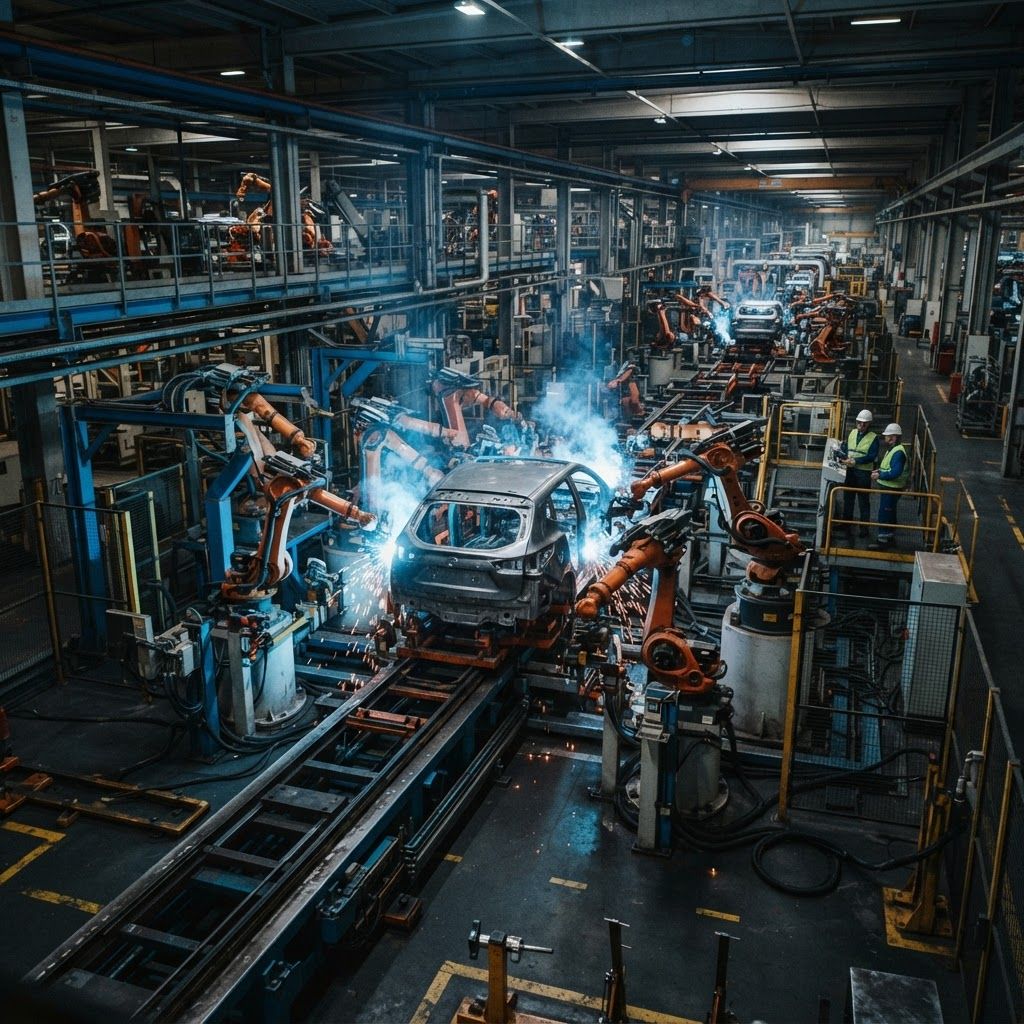
Automation in assembly has advanced through collaborative robots, machine vision inspection, and digital twin simulation of production lines. These tools shorten launch timelines and improve first-pass quality.
Guidance for Fleet Buyers
Start with a duty cycle analysis rather than a vehicle preference. Document daily mileage distribution, payload, terrain, idle time, and dwell locations. That data determines whether internal combustion, hybrid, or battery electric fits each route.
Negotiate service and parts availability alongside vehicle price. Uptime, not acquisition cost, usually dominates total expense for commercial fleets. Confirm local service capacity and typical turnaround for the specific model, and evaluate telematics options that provide diagnostic warning before failures occur.
Consider upfitting requirements early, since body installation can add substantial lead time and must be coordinated with chassis delivery.
Careers and Supplier Opportunities
The regional automotive sector employs engineers, quality specialists, supply chain analysts, technicians, and skilled trades. Suppliers seeking entry should expect rigorous qualification, including quality system audits, production part approval processes, and capacity verification. Smaller machine shops and fabricators frequently enter through tier two and tier three relationships rather than direct supply.
Final Thoughts
Automotive manufacturing remains a pillar of the Texas economy, and Frisco participates through headquarters functions, fleet operations, upfitting, and a substantial electric vehicle community. Businesses making vehicle decisions benefit most from rigorous duty cycle analysis, realistic infrastructure planning, and service relationships evaluated on uptime performance rather than purchase price alone.