
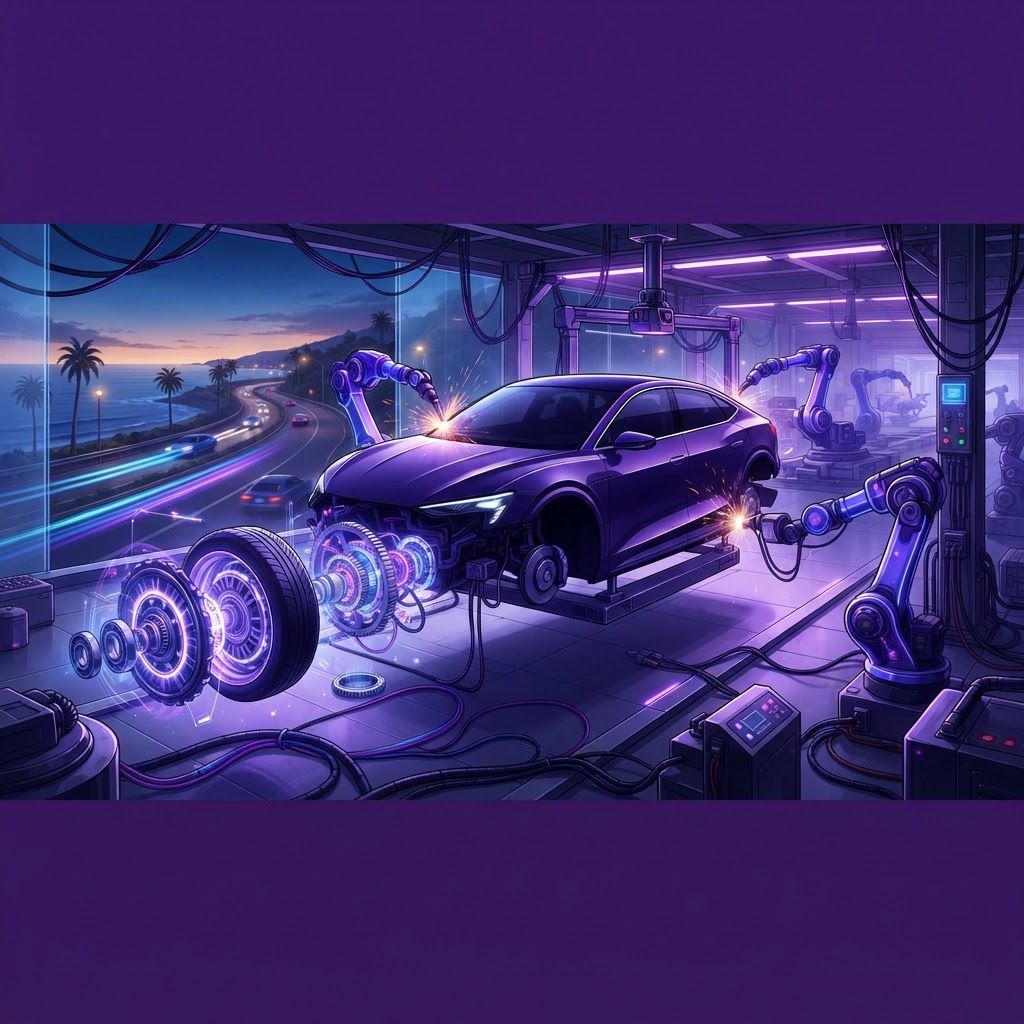
A Specialty Automotive Manufacturing Sector
Cape Coral does not host large assembly plants, and understanding that is essential to understanding its automotive manufacturing sector. What the city supports instead is a network of specialty manufacturers and upfitters: boat trailer builders, utility and equipment trailer fabricators, low-speed electric vehicle producers, golf cart and neighborhood vehicle customizers, commercial van upfitters, performance and restoration shops, and component fabricators serving the wider automotive aftermarket.
This is genuine manufacturing, involving welded structures, powder coating, wiring harnesses, upholstery, hydraulic and electrical systems, and compliance with safety and lighting requirements. It thrives here because demand is local and specific. A city built around boating needs trailers. A city of long, flat residential grids and gated communities needs low-speed vehicles. A construction and service economy needs upfitted work trucks and vans.
Top 10 Automotive Manufacturers and Fabricators in Cape Coral
1. Caloosa Trailer Manufacturing builds boat, utility and equipment trailers with galvanized and aluminum frames engineered for saltwater immersion.
2. Gulf Coast Electric Vehicles produces and customizes low-speed electric vehicles and neighborhood transport, including lithium conversions and street-legal packages.
3. Coral Coast Commercial Upfitters converts vans and trucks into service vehicles with shelving, power systems, lighting and equipment mounting.
4. Bimini Custom Fabrication manufactures bumpers, racks, hitches, ladder systems and structural accessories from aluminum and stainless steel.
5. Del Prado Automotive Components machines and assembles brackets, bushings, pulleys and small mechanical components for aftermarket suppliers.
6. Matlacha Marine Transport Systems specializes in heavy boat trailers, hydraulic tilt systems and custom cradles for large vessels.
7. Harbour Point Restoration Works performs classic vehicle restoration and body fabrication, including panel forming and corrosion repair.
8. Pelican Performance Engineering builds performance and cooling upgrades, custom exhaust and suspension components for warm-climate driving.
9. Southwest Florida Mobility Conversions manufactures accessibility conversions including ramps, lifts and secure seating systems.
10. Yacht Club Custom Coachworks completes the list with luxury interior fabrication, bespoke trim and premium finish work for high-end vehicles and carts.
Engineering for the Coastal Environment
Corrosion is the defining engineering challenge. Salt water immersion during boat launching is uniquely destructive to trailers, which is why serious builders use hot-dip galvanized steel or marine-grade aluminum, sealed wiring with heat-shrink connections, oil-bath or sealed hub systems, and stainless fasteners. Cutting corners on any of those items produces a trailer that looks fine for a season and fails in three.
Heat is the second challenge. Sustained high ambient temperatures stress cooling systems, batteries, wiring insulation, adhesives and interior materials. Electric vehicle builders pay particular attention to battery thermal management, because heat accelerates capacity loss. Interior fabricators select UV-stable materials, since dashboards and seating in Florida endure extreme solar loading.
Manufacturing Capabilities
Local shops typically combine welding, sheet metal forming, CNC machining or cutting, powder coating or marine-grade painting, wiring harness assembly and upholstery under one roof. That vertical integration allows fast iteration on custom orders, which is where these businesses compete most effectively against national suppliers.
Quality practice matters as much as equipment. Weld inspection, torque documentation, load testing, lighting and brake verification, and serial number traceability all distinguish professional manufacturers from casual fabricators, especially for products that carry heavy loads on public roads.
Compliance and Safety
Trailer and vehicle manufacturing carries regulatory obligations covering lighting, braking, weight ratings, identification numbers and, for conversions, adherence to federal safety standards. Reputable manufacturers document capacity ratings honestly and provide clear guidance on tow vehicle requirements. For mobility conversions, compliance with accessibility and occupant securement standards is non-negotiable.
Industry Trends
Electrification is the strongest current. Lithium battery systems have transformed low-speed vehicles, offering longer range, faster charging and reduced maintenance compared with lead acid. Demand for street-legal neighborhood vehicles continues to grow in planned communities and waterfront districts.
Aluminum adoption is expanding across trailers and accessories, driven by corrosion resistance and weight savings that improve towing efficiency. Digital design and CNC cutting have shortened lead times for custom work, and customers increasingly expect visual proofs before fabrication begins.
Fleet electrification and telematics are reshaping commercial upfitting, with service vehicles now specified around auxiliary power, inverters, charging and equipment monitoring rather than shelving alone.
How to Choose a Manufacturer
Inspect finished products closely. Look at weld quality, galvanizing coverage, wiring routing and protection, fastener material and hardware finish. Ask about load ratings and how they were determined, warranty coverage, and availability of replacement parts years after purchase.
For custom projects, request a detailed written scope covering materials, finishes, timelines and change order handling. Shops that document thoroughly before starting tend to deliver closer to expectation.
Final Thoughts
Automotive manufacturing in Cape Coral is specialized, practical and closely tied to how residents actually live and work. Trailers that survive salt water, electric vehicles suited to neighborhood travel, and work trucks configured for local trades all reflect that alignment. The manufacturers highlighted above have earned recognition by engineering for the environment, documenting their work honestly and standing behind products built to endure.