
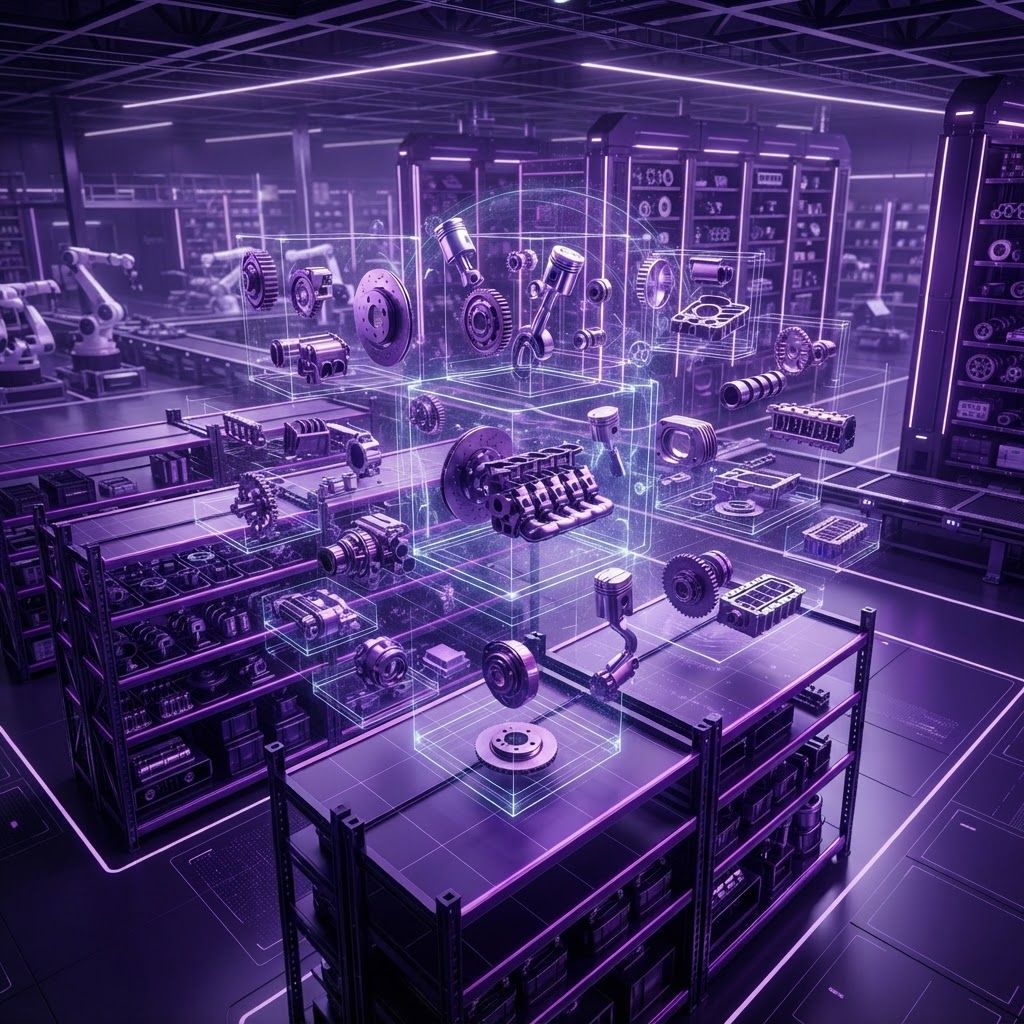
Why Hialeah Became a Parts Distribution Hub
Hialeah geographic position gives it an unusual advantage in the automotive supply chain. It sits within easy reach of the Port of Miami and Miami International Airport, connects directly to major highways, and offers a large inventory of industrial and warehouse space at costs below coastal Miami. The result is a concentration of parts warehouses, distributors, and export operations that serve not only local repair shops but also buyers across the Caribbean and Latin America.
For the everyday consumer, this density delivers real benefits. Same-day availability on common components is the norm rather than the exception, competition keeps pricing sharp, and hard-to-find parts for older vehicles are far easier to locate here than in most American cities. Understanding the different categories of supplier is the key to buying efficiently.
1. National Retail Parts Chains
Large retail chains anchor the consumer end of the market with multiple Hialeah locations, extended hours, and standardized inventory. Their strength is convenience and service add-ons: free battery and alternator testing, code reading for check engine lights, tool loan programs, and hassle-free returns. Pricing on maintenance items is competitive, warranty administration is straightforward, and staff can look up applications quickly by vehicle identification number. For brake pads, filters, batteries, wipers, fluids, and sensors, these stores are usually the fastest solution.
2. Professional Wholesale Distributors
Wholesale distributors serve repair shops rather than walk-in retail customers, operating from warehouses with deep inventory and multiple daily delivery routes. They stock a broader range of quality tiers and less common applications, and they maintain the technical resources shops need, including catalog access, torque specifications, and cross-reference data. Some accept retail customers, and for owners tackling ambitious repairs the parts quality and depth of stock justify the extra effort of dealing with a trade-focused supplier.
3. Original Equipment Dealership Parts Departments
Dealership parts counters supply genuine manufacturer components with guaranteed fitment, which matters most for body panels, trim, electronic modules, sensors, and anything requiring precise calibration. Prices are higher, but there is no ambiguity about specification, and many parts arrive with a manufacturer warranty. For vehicles under warranty, for lease returns, or for repairs where exact fit determines success, this is the safest source.
4. Import and Performance Specialists
Specialist suppliers focus on particular vehicle origins or performance categories. In Hialeah these include shops dedicated to European brands, Japanese performance platforms, and truck accessories. Their value lies in knowledge as much as inventory. Staff typically understand which aftermarket brands actually hold up in humid coastal conditions, which suspension components suit local road surfaces, and how modifications interact with emissions requirements and insurance coverage.
5. Used and Recycled Parts Yards
Salvage and recycling yards are a critical resource for older vehicles and for large components where new pricing is prohibitive. Modern operations maintain computerized inventory systems, allowing a search across networked yards, and they typically offer limited warranties on tested parts. Body panels, doors, glass, seats, wheels, engines, and transmissions are common purchases. For anyone maintaining a high-mileage vehicle economically, these yards frequently make the difference between repairing and scrapping a car.
6. Remanufactured Component Suppliers
Remanufacturers rebuild alternators, starters, steering racks, brake calipers, air conditioning compressors, and transmissions to defined specifications, replacing wear items and testing to functional standards. The proposition is compelling: significant savings against new original equipment with warranty coverage that often exceeds cheap aftermarket alternatives. Hialeah hosts several remanufacturing operations, and their core exchange programs keep costs down while reducing waste.
7. Heavy-Duty and Commercial Truck Parts Suppliers
The city logistics and construction sectors sustain a robust market for heavy-duty parts. These suppliers stock air brake components, diesel filtration, turbochargers, injectors, heavy-duty batteries, suspension air bags, and emissions aftertreatment parts. Because commercial downtime is expensive, they compete on delivery speed and inventory depth, and many operate early morning hours to align with fleet schedules.
8. Tire and Wheel Distributors
Dedicated tire and wheel suppliers carry a far wider range of sizes, load ratings, and compounds than general retailers, along with commercial and trailer tires. In a region defined by sudden heavy rainfall, expertise in wet traction and tread design has practical safety value. Wheel specialists also handle refinishing, straightening, and tire pressure sensor programming, which extends the life of expensive alloy wheels damaged by potholes.
9. Body Panel and Collision Parts Suppliers
Collision parts suppliers serve the local body shop industry with bumpers, fenders, hoods, lighting assemblies, radiator supports, and mirrors. Quality tiers matter enormously in this category, and reputable suppliers clearly identify certified aftermarket parts that meet independent fitment and corrosion standards. Because paint and fitment labor often exceed part cost, buying a properly certified panel is almost always cheaper overall than saving money on an unverified one.
10. Online and Export-Oriented Suppliers
Several Hialeah businesses operate primarily through digital channels and export logistics, shipping across the region while offering local pickup. Their catalogs can be enormous, and pricing on less common items is often the best available. The trade-off is that returns take longer and technical support varies, so this route works best when the exact part number is already known.
How to Verify Part Quality
Counterfeit and substandard components are a genuine concern in any high-volume market. Protect yourself by buying from established businesses with physical addresses and verifiable histories, and be skeptical of pricing dramatically below market on safety-critical items such as brake components, steering parts, airbag modules, and filtration. Genuine packaging is typically consistent, well printed, and includes traceable part numbers, while counterfeits often show poor print quality and inconsistent branding.
Warranty documentation is the clearest signal of supplier confidence. A limited lifetime warranty on a chassis component or a multi-year warranty on an electrical part indicates that the manufacturer expects it to last. Keep receipts, note the installation date and mileage, and understand whether the warranty covers labor or parts only, because a cheap part with a parts-only warranty can become expensive if it fails and must be replaced twice.
Trends Reshaping the Parts Market
Three shifts are changing how Hialeah buyers shop. First, electrification is expanding demand for high-voltage cables, battery cooling components, inverters, and specialized service tooling, and suppliers that invest early are winning fleet business. Second, electronic parts cataloging tied to vehicle identification numbers has dramatically reduced wrong-part errors, saving both shops and consumers time. Third, sustainability pressure has raised the profile of remanufactured and recycled components, which now compete on quality rather than merely on price.
Final Thoughts
Hialeah offers one of the deepest and most competitive auto parts markets in the southeastern United States, but that abundance rewards informed buyers. Use retail chains for speed and convenience, wholesale distributors and dealership counters when specification precision matters, salvage yards and remanufacturers to control cost on major components, and specialists when technical guidance is worth more than the last few dollars of savings. Verify authenticity, compare warranty terms rather than just prices, and keep documentation, and you will get parts that fit correctly the first time and last as long as they should.