
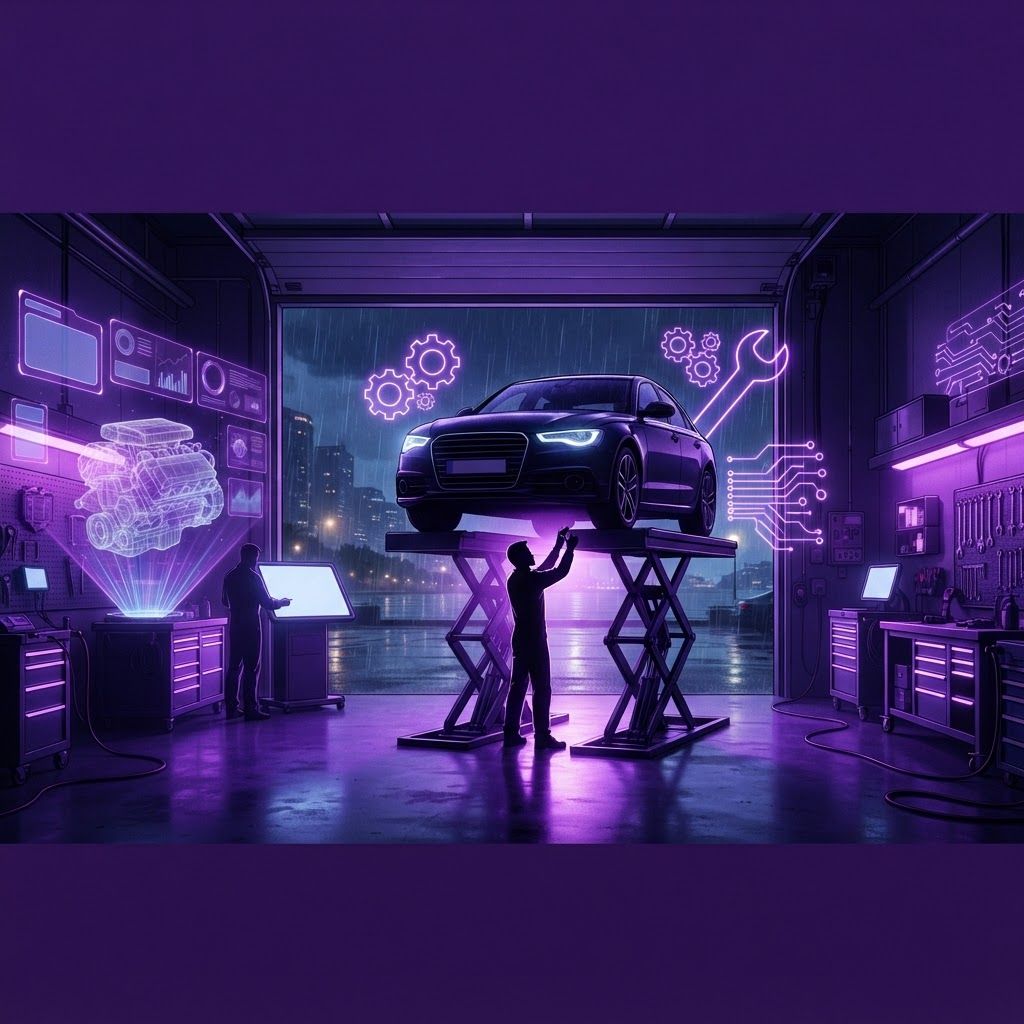
Why Repair Shop Choice Matters More Than People Realise
Vehicle repair is one of the few purchases where most customers cannot evaluate the product they are buying. You cannot inspect the quality of a brake job the way you can inspect a meal or a haircut. This information asymmetry is precisely why finding a shop with genuine integrity is so valuable, and why the difference between a good mechanic and a poor one compounds over years of ownership.
Vancouver adds specific technical demands. Constant moisture accelerates corrosion on brake components, suspension fasteners, and electrical connectors. Mountain driving places heavy demand on brakes and cooling systems. Stop-and-go urban traffic wears transmissions and clutches. And the region's exceptionally high electric vehicle population means diagnostic and repair capability for high-voltage systems has become a meaningful differentiator rather than a novelty.
Types of Repair Facilities
Dealership service departments offer manufacturer-trained technicians, factory diagnostic equipment, access to technical service bulletins, and warranty-authorised work. They are typically the most expensive option but are the correct choice for warranty repairs, recalls, and complex issues specific to a model.
Independent general repair shops handle routine maintenance and most mechanical work at lower labour rates, and the better ones develop long-term relationships with customers built on transparent recommendations.
Brand or system specialists focus on particular manufacturers or specific systems such as transmissions, electrical diagnostics, or air conditioning, and their concentrated experience often produces faster and more accurate diagnosis than generalists.
Electric and hybrid vehicle specialists have emerged as a distinct category, with high-voltage safety certification, battery diagnostic capability, and familiarity with the regenerative braking and thermal management systems that conventional shops may not fully understand.
Tyre and quick service outlets handle high-volume routine items efficiently, though they are generally not the right choice for diagnostic work.
Leading Auto Repair Options in Vancouver
Minit-Tune and Brake Auto Centres operate multiple locations across the region with a long-established local presence, handling routine maintenance, brakes, and general repair with the convenience of accessible neighbourhood locations.
Kal Tire is widely respected for tyre sales and service alongside mechanical work, with a reputation for straightforward recommendations and a strong warranty structure that appeals to customers wary of upselling.
Integra Tire and Auto Centre locations combine tyre expertise with general mechanical repair, serving as a practical single-stop option for routine ownership needs.
Pacific Automotive and comparable independent shops represent the backbone of the local repair market, building customer bases over decades through consistent workmanship and honest diagnosis rather than marketing.
Nelson Automotive Repair and similar established independents are known for thorough diagnostic work on complex intermittent faults, the category of problem that most frustrates owners and where genuine expertise shows most clearly.
German auto specialists across the city serve the substantial population of European vehicles with brand-specific diagnostic equipment and technicians experienced in the particular failure patterns of those platforms, typically at labour rates below dealership levels.
Japanese vehicle specialists similarly concentrate expertise on the most common vehicle brands in the region, offering deep familiarity with hybrid systems that many general shops still approach cautiously.
Electric vehicle service specialists have become genuinely important given provincial adoption rates, providing high-voltage system diagnostics, battery health assessment, and repairs outside dealership networks, which improves both cost and wait times for owners.
Transmission and drivetrain specialists handle rebuilds and complex drivetrain diagnosis, work that general shops frequently subcontract anyway, so going direct often saves both cost and time.
Mobile mechanic services have expanded considerably, performing routine maintenance, brake work, and diagnostics at a customer's home or workplace, which suits people for whom leaving a vehicle at a shop is impractical.
Trends in Vehicle Service
Diagnostic complexity has increased dramatically. Modern vehicles contain dozens of networked control modules, and diagnosis increasingly requires manufacturer-level software access and structured electrical testing rather than mechanical intuition. Shops investing in current diagnostic tooling and ongoing technician training have pulled away from those that have not.
Advanced driver assistance systems now require calibration after common repairs including windshield replacement and suspension work. Shops without calibration capability must subcontract, adding time and cost, so asking about this before authorising work is worthwhile.
Electric vehicle maintenance profiles differ substantially from combustion vehicles. There are no oil changes, exhaust systems, or timing components, but brake fluid, coolant for battery thermal management, cabin filters, tyres, and suspension still require attention. Owners sometimes neglect these on the assumption that electric vehicles need nothing.
Transparency practices have improved under competitive pressure, with digital inspection reports including photographs and videos of identified issues becoming common. This addresses the core trust problem directly by letting customers see what the technician sees.
How to Identify a Trustworthy Shop
Look for certification and ongoing training. Recognised technician certification and manufacturer-specific training indicate professional commitment, and shops usually display these credentials openly.
Insist on written estimates before work begins, and expect to be contacted for authorisation if the scope changes. Shops that proceed beyond authorised work without contact are demonstrating how they will behave in future.
Ask about warranty on parts and labour. Reputable shops back their work for a defined period and distance, and the terms tell you how confident they are in their own workmanship.
Test with something small. Start with routine maintenance rather than a major repair. How a shop handles an oil change and inspection reveals a great deal about its communication, cleanliness, and honesty about what does and does not need attention.
Be wary of scare tactics and of shops that find urgent problems on every visit. Equally, be wary of quotes dramatically below others, which frequently indicate lower-grade parts or omitted labour steps.
Final Thoughts
A good relationship with a repair shop in Vancouver saves money, time, and considerable stress over the life of a vehicle. The region offers dealership departments with factory capability, established independents with decades of local reputation, brand specialists with concentrated expertise, and a growing group of electric vehicle specialists serving the province's substantial zero-emission fleet. Finding the right one is worth deliberate effort, and once found, worth keeping.