
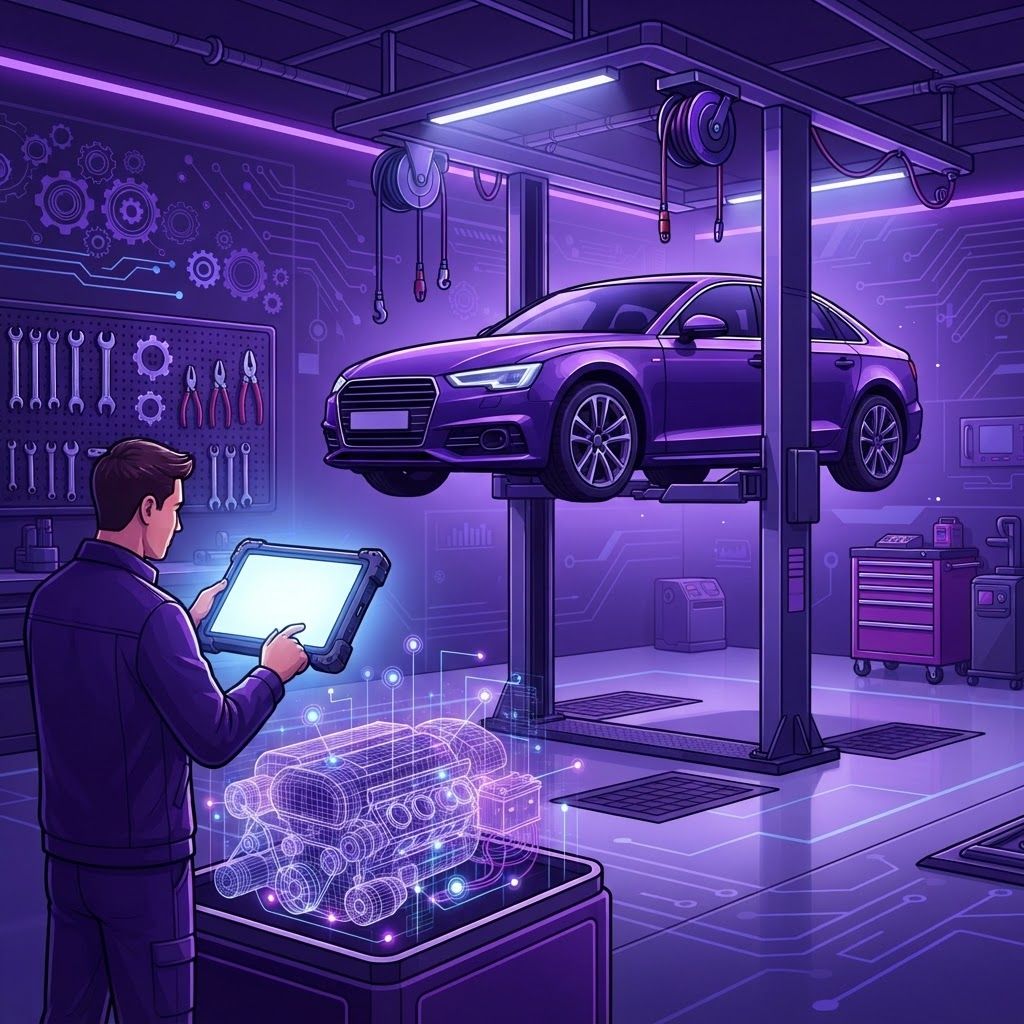
Why Choosing the Right Repair Shop Matters
Vehicle repair is an information-asymmetric transaction. The shop knows what is wrong and what it costs to fix; the customer usually does not. That imbalance is why reputation matters more in this industry than in almost any other consumer service, and why the best shops invest heavily in transparency to overcome justified customer skepticism.
The financial stakes are substantial. Deferred maintenance turns inexpensive service into major repair, a misdiagnosed problem generates repeated visits without resolution, and unnecessary work inflates cost without benefit. Conversely, a shop that catches a developing issue early, explains priorities honestly, and distinguishes urgent from deferrable work saves owners real money over a vehicle's life.
Understanding Repair Shop Categories
Dealership service departments employ brand-trained technicians with factory diagnostic equipment and access to technical service bulletins and recall information. They are the strongest option for warranty work, complex electronic diagnosis, and newer vehicles, typically at higher labor rates.
Independent general repair shops handle maintenance and most mechanical work across many brands, usually at lower rates with more direct customer relationships. Quality varies widely, making certification and reputation critical selection criteria.
Specialty shops concentrate on single systems, including transmissions, engine performance and diagnostics, electrical work, air conditioning, brakes, and suspension. For a difficult problem within their specialty, they frequently diagnose faster and more accurately than generalists. Collision repair centers handle structural and body work and coordinate with insurers. Tire and quick-service chains handle routine maintenance efficiently but generally do not tackle complex repair.
Ten Leading Auto Repair Shops in Fayetteville
1. Cape Fear Automotive Service. A full-service independent shop with certified technicians, Cape Fear Automotive Service handles diagnostics, brakes, suspension, engine work, and scheduled maintenance across most makes. Customers consistently highlight detailed written estimates, photographic documentation of worn components, and a practice of separating urgent repairs from items that can reasonably wait, which builds unusual trust.
2. Sandhills Transmission Specialists. Transmission work is among the most expensive and most frequently misdiagnosed repairs, and dedicated specialists offer a real advantage. Shops in this category perform proper diagnostic road testing and fluid analysis before recommending rebuild or replacement, and their rebuild warranties reflect genuine confidence in workmanship.
3. Liberty Diesel and Truck Repair. Diesel engines require different diagnostic knowledge, tooling, and emissions system expertise than gasoline engines. Specialists serve owners of heavy-duty pickups, work trucks, and fleet vehicles, addressing fuel system, turbocharger, and after-treatment issues that general shops often decline.
4. All American Collision Center. Collision repair demands frame measurement equipment, refinishing capability, and knowledge of manufacturer repair procedures, particularly on vehicles with advanced driver assistance systems that require recalibration after body work. Quality centers document procedures thoroughly and advocate for correct repair rather than the least expensive approach an insurer may prefer.
5. Precision Auto Electric and Diagnostics. Modern vehicles contain dozens of networked control modules, and electrical faults are frequently intermittent and difficult to trace. Diagnostic specialists invest in oscilloscopes, factory scan tools, and wiring diagram subscriptions, and they charge for diagnostic time honestly rather than guessing with parts replacement.
6. Tar Heel Brake and Suspension. Brakes and suspension are safety-critical and among the most common repair needs. Specialists in this area perform thorough inspection of rotors, calipers, hoses, bushings, shocks, and alignment geometry, and they can identify the worn component actually causing a noise rather than replacing everything nearby.
7. Riverfront Import Auto Service. European and Asian import specialists maintain brand-specific tooling and diagnostic software along with familiarity with common failure patterns for particular models. For owners of German vehicles especially, this expertise prevents the expensive trial-and-error that generalist shops sometimes resort to.
8. Carolina Air Conditioning and Cooling Systems. In a climate with long, hot summers, air conditioning and cooling system reliability is not a comfort issue but a practical necessity, and overheating causes catastrophic engine damage. Specialists handle refrigerant recovery and recharging to environmental standards, leak detection, compressor service, and radiator and water pump work.
9. Bragg Boulevard Tire and Alignment. Tire and alignment specialists address the components that most directly affect handling, braking distance, and tire life. Proper alignment after suspension work or curb impact prevents rapid uneven wear that can destroy a set of tires in a few thousand miles.
10. Fayetteville Fleet Maintenance Group. Rounding out the list, fleet service providers support businesses operating multiple vehicles with scheduled preventive maintenance programs, consolidated billing, and priority scheduling to minimize downtime. Their systematic approach to maintenance intervals often benefits individual customers as well.
Trends in Auto Repair
Diagnostic complexity continues to rise. Advanced driver assistance systems require camera and radar recalibration after windshield replacement, alignment, or body repair, and shops without calibration equipment cannot complete these repairs correctly, which has real safety implications.
Transparency technology has improved the customer experience substantially. Digital inspection reports with photographs and video of worn parts, sent directly to a customer's phone, have largely replaced verbal explanations and make approval decisions far more informed.
Electric and hybrid service capability is expanding as these vehicles age into out-of-warranty repair. High-voltage work requires specific training and safety equipment, and shops investing in this capability now are positioning for a growing segment.
How to Evaluate a Shop
Look for technician certification, which indicates tested competence in specific systems, and ask whether the shop has specialists for your vehicle type. Confirm the warranty on parts and labor, since reputable shops typically stand behind repairs for a defined period and mileage.
Insist on a written estimate before work begins and require authorization for any additional work discovered during repair. A shop that performs unauthorized work and presents a larger bill afterward has told you everything you need to know.
Ask how diagnostics are charged. Honest shops charge for diagnostic time because accurate diagnosis requires skilled labor, and a shop offering free diagnosis may be recovering that cost through unnecessary parts. Request the old parts back when practical, which is a reasonable request and a useful integrity check.
Start the relationship with routine maintenance rather than a major repair. An oil service and inspection lets you evaluate communication, pricing, and thoroughness at low stakes, so you already have a trusted shop when something significant fails.
Final Thoughts
Fayetteville offers strong options across general repair, transmission, diesel, collision, electrical diagnostics, imports, climate systems, and fleet service. The most valuable thing an owner can do is establish a relationship with a certified, transparent shop before an emergency, then follow the manufacturer maintenance schedule, which prevents far more expensive failures than any repair discount could offset.