
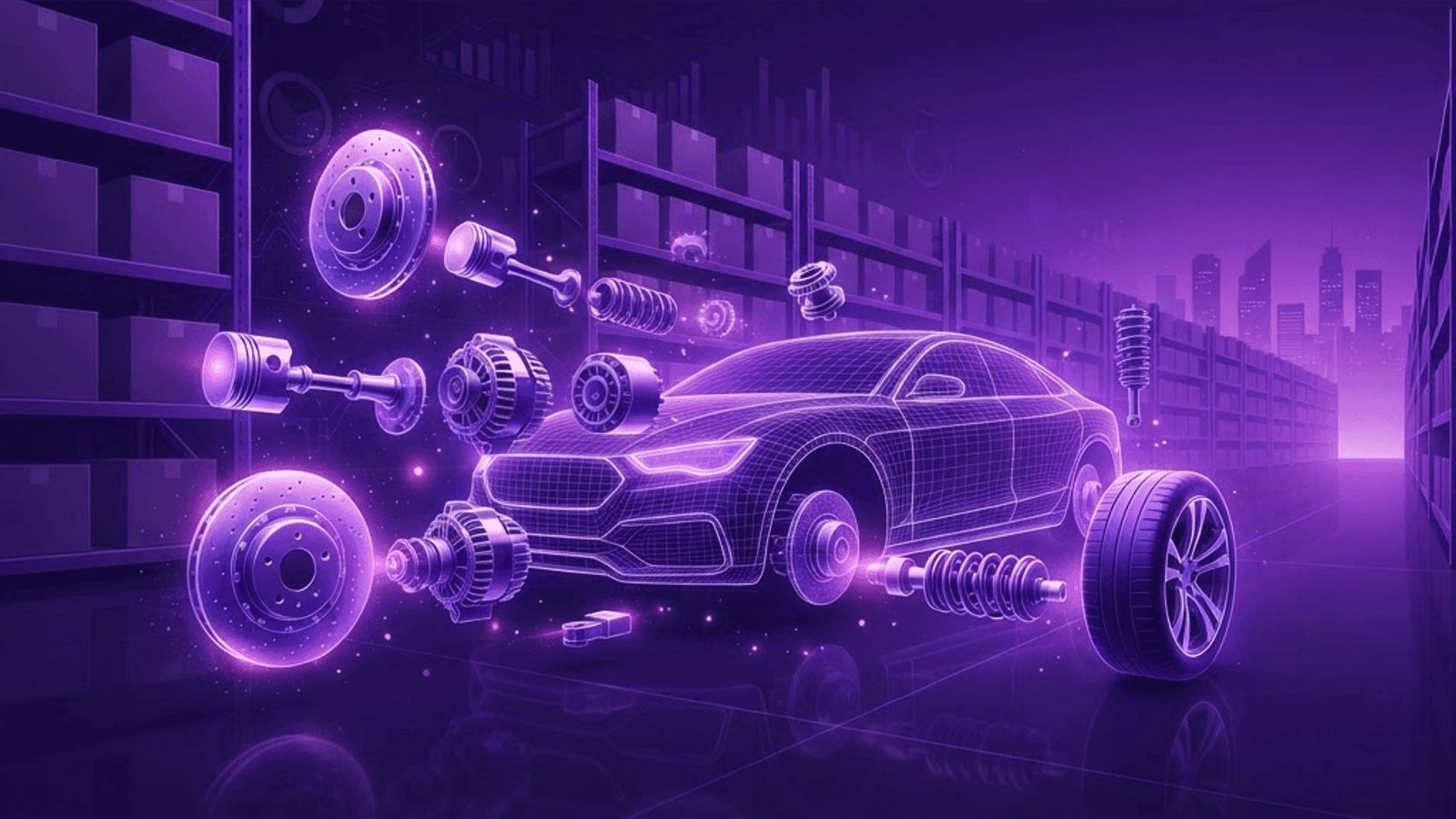
Parts Availability Decides Repair Shop Profitability
Every repair shop owner understands the arithmetic. A vehicle on a lift waiting for a part occupies a bay that generates nothing. Technicians paid by flat rate lose income. Customers without their vehicle lose patience. In practice, the difference between a shop running at healthy utilization and one that struggles often comes down to how quickly and accurately its parts suppliers perform.
Paradise has a substantial vehicle population and a correspondingly developed parts distribution network. Multiple daily delivery cycles, large local inventories and specialist distributors covering collision, performance, heavy duty and electric vehicles give local shops options that smaller markets lack. Knowing which supplier to call for which job is a practical skill worth developing.
How to Evaluate a Parts Supplier
First-call fill rate is the headline metric. What percentage of orders can a distributor supply immediately from local stock? A supplier with a high fill rate on the platforms you service most often is worth more than one with a broader catalog and slower access.
Catalog accuracy matters just as much. Incorrect application data produces wrong parts, wasted labor and return friction. Distributors with well-maintained electronic catalogs and VIN-based lookup reduce this problem dramatically.
Return policy and core handling affect cash flow directly. Understand restocking fees, return windows, core credit timelines and how electrical parts are treated, since those are frequently excluded.
Finally, evaluate quality tiering. Reputable wholesalers are clear about whether a part is original equipment, original equipment supplier, premium aftermarket or economy grade, and they help you match the tier to the vehicle, the customer and the warranty you intend to offer.
The Ten Leading Auto Parts Wholesalers in Paradise
1. Paradise Auto Parts Distribution. The broadest local wholesaler, stocking maintenance, brake, suspension, engine and electrical components across domestic and import applications with multiple daily delivery routes to shops across the city.
2. Meridian OEM Supply. Meridian focuses on genuine manufacturer parts sourced through dealer networks, serving shops that specialize in specific marques or handle warranty-adjacent work where original components are required.
3. Summit Collision Parts. Summit supplies body panels, bumpers, lighting, glass and refinishing materials to collision centers, with photographic verification and careful packaging that reduce the damage and mismatch issues endemic to the category.
4. Ironclad Heavy Duty Parts. Ironclad serves commercial trucks, trailers and equipment with drivetrain, brake, suspension and electrical components, plus air system and hydraulic parts that passenger car distributors do not carry.
5. Volt EV Components. A specialist in electric and hybrid vehicle parts, Volt supplies high-voltage cables, thermal management components, charging hardware and diagnostic tooling, along with safety training that the category genuinely requires.
6. Apex Performance Wholesale. Apex covers performance and modification parts: suspension, exhaust, forced induction, cooling and tuning hardware for enthusiast shops and motorsport customers.
7. Northgate Tire & Wheel Distribution. Northgate distributes tires, wheels, sensors and balancing supplies with strong inventory across common fitments and rapid access to specialty sizes through regional networks.
8. Beacon Electrical & Diagnostics. Beacon specializes in starters, alternators, sensors, modules and wiring components, and supports customers with diagnostic guidance that reduces unnecessary parts replacement.
9. Riverstone Remanufactured Parts. Riverstone supplies remanufactured engines, transmissions, steering components and calipers with documented rebuild standards and warranties, offering a cost-effective middle path between new and used.
10. Vertex Shop Supplies & Equipment. Vertex covers the consumables and tooling side of the business: fluids, fasteners, abrasives, lifting equipment, diagnostic scanners and shop safety supplies.
Trends Reshaping the Parts Business
Vehicle complexity is the dominant force. Advanced driver assistance systems mean that replacing a windshield or a bumper cover now often requires sensor calibration, and distributors are responding by bundling calibration support and documentation with the parts themselves.
Electrification is expanding steadily. Battery thermal components, high-voltage service parts and specialized tooling represent a growing category, and shops that establish supplier relationships early are better positioned as the local fleet mix shifts.
Data integration has become standard. Direct connections between shop management systems and distributor catalogs allow ordering from within the repair order, reducing keystroke errors and speeding quoting substantially.
Sustainability is also entering the conversation through remanufacturing, core recovery and responsible fluid and battery disposal, which increasingly appear in fleet procurement requirements.
Practical Advice for Shops and Fleets
Track your own fill rates by supplier rather than relying on impressions. A simple log over a month usually reveals clear patterns and gives you leverage in pricing conversations.
Standardize on quality tiers by job type and communicate them to customers. Shops that explain why a premium brake component costs more experience far fewer price objections than those that simply present a total.
Maintain a small inventory of genuinely fast-moving items. Filters, common brake pads, bulbs and fluids tie up minimal capital and eliminate a surprising number of delivery waits. For fleets, work with a distributor on a stocking program matched to your specific vehicle mix and duty cycle.
Final Thoughts
Paradise offers a deep and specialized auto parts wholesale market covering everything from routine maintenance components to electric vehicle systems and heavy duty equipment. Build primary relationships based on fill rate and catalog accuracy, keep specialists on hand for collision, performance, heavy duty and EV work, and treat your parts suppliers as partners in shop throughput rather than as interchangeable vendors.