
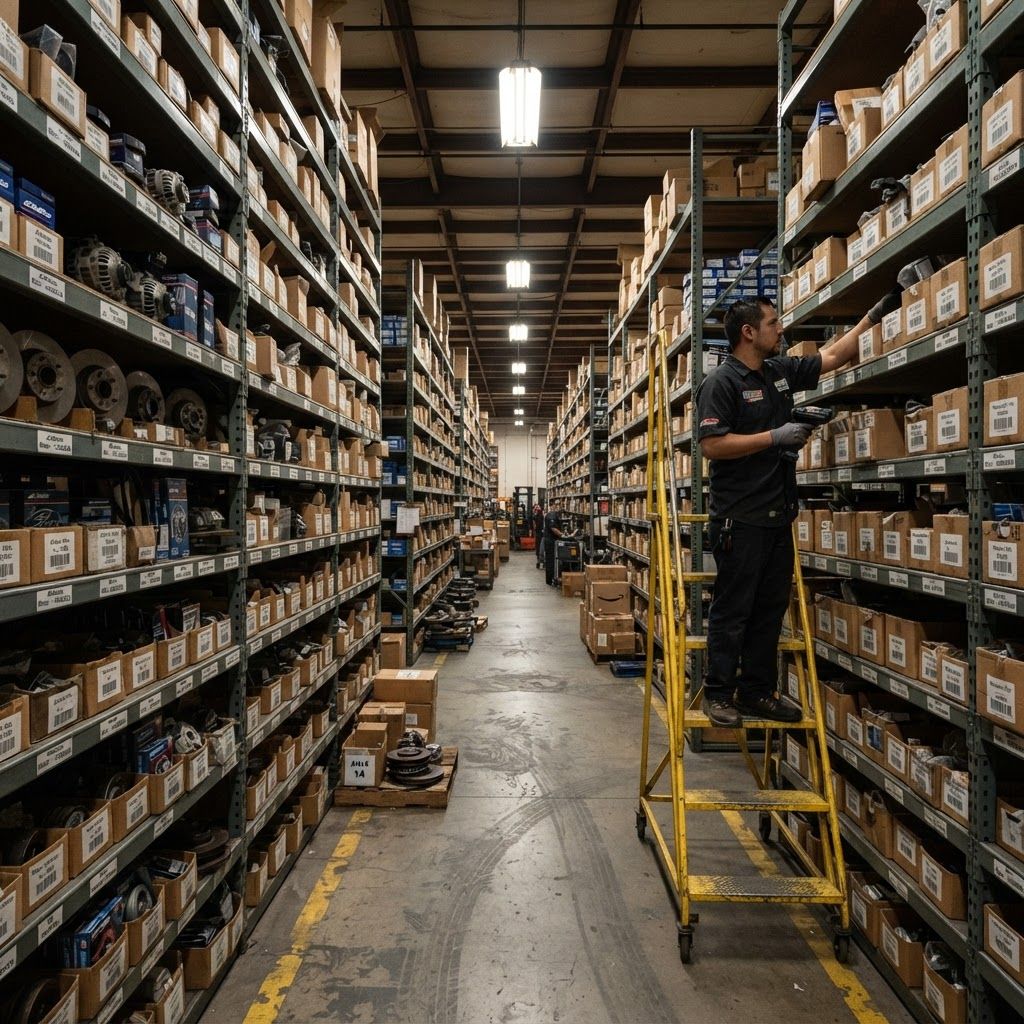
Few cities test vehicles the way Buffalo does. Lake-effect snow, aggressive road salting, freeze-thaw cycles and potholed spring streets accelerate wear on brakes, suspension, exhaust systems and body panels. The practical consequence is a repair economy that runs hot most of the year, and a wholesale parts network built for speed. For shop owners, the difference between a supplier that delivers in ninety minutes and one that delivers tomorrow is measured directly in bay utilization and customer retention.
What Makes the Buffalo Parts Market Distinct
Corrosion drives the local mix. Distributors here stock deeper in brake lines, rotors, calipers, wheel bearings, exhaust components, control arms and fuel and hydraulic fittings than comparable markets in milder climates. Rust-related labor also means more broken fasteners and seized hardware, so hardware kits, penetrants and specialty extraction tools move at unusual volume.
The vehicle population matters too. Buffalo sees a high proportion of domestic trucks and SUVs, an aging fleet with substantial mileage, and a meaningful number of commercial vans serving trades and delivery. Wholesalers that understand that profile carry the right rotating electrical, cooling and drivetrain coverage rather than a generic catalog.
The Top 10 Auto Parts Wholesalers in Buffalo
1. Queen City Auto Parts Warehouse
A broad-line distributor with strong hot-shot delivery coverage across Erie County. Multiple daily runs, accurate cataloging by VIN and a well-stocked local warehouse make it a default first call for independent repair shops managing same-day promises.
2. Niagara Frontier Truck and Fleet Supply
Built for medium and heavy-duty applications: air brake components, suspension, lighting, filtration and hydraulics. Fleet customers value the account-level purchase history and standardized part programs that keep maintenance consistent across dozens of trucks.
3. Lakeshore Import Parts Specialists
Concentrates on European and Asian nameplates where fitment errors are costly. Deep knowledge of platform variations, OE-equivalent quality tiers and access to genuine parts when required makes them the go-to for shops handling premium imports.
4. Erie Basin Rotating Electrical and Starters
A remanufacturing-focused supplier for alternators, starters, power steering pumps and steering racks. Testing every unit before it ships and offering core credit with straightforward paperwork substantially reduces comeback risk on electrical repairs.
5. Buffalo Brake and Chassis Distributors
Category specialists in the components that fail fastest locally: pads, rotors, calipers, hoses, hubs, tie rods, ball joints and coil springs. Multiple quality tiers per application let shops match parts to a customer's budget and vehicle expectations honestly.
6. Southtowns Collision Parts Supply
Serves body shops with sheet metal, bumpers, lamps, mirrors, radiator supports and certified aftermarket panels. Insurance-friendly documentation and photo verification of part condition before delivery help shops avoid supplement delays on claims.
7. Great Lakes Performance and Off-Road
Targets enthusiasts and upfitters with lift kits, exhaust systems, tuning hardware, wheels, tires and recovery gear. Technical staff who actually build vehicles help customers avoid mismatched combinations that create driveline or geometry problems later.
8. Cheektowaga Salvage and Recycled Parts Network
Provides quality-graded used assemblies — engines, transmissions, doors, seats and modules — with interchange verification and warranty coverage. For older vehicles where new parts exceed the car's value, this is often the only economically viable repair path.
9. Allentown Shop Supplies and Consumables
Not parts in the strict sense, but essential: chemicals, adhesives, abrasives, welding consumables, shop rags, gloves, lifts and diagnostic equipment. Predictable restocking of high-burn items keeps technicians productive instead of improvising.
10. Buffalo Battery and Electrical Wholesale
Focused on batteries, terminals, cabling, charging systems and cold-weather starting aids. In a market where winter starting failures spike sharply, reliable battery inventory across group sizes and cold cranking ratings is a genuine competitive advantage for shops.
How to Evaluate an Auto Parts Wholesaler
Fill rate outranks price. A part quoted five dollars cheaper is worthless if it arrives incomplete or wrong and your technician sits idle. Track first-time-right delivery percentage per supplier for a quarter and the picture becomes obvious quickly.
Understand quality tiers rather than treating aftermarket as one category. Economy, mid-grade and premium lines differ materially in friction material, bearing tolerances and coating quality, and the right choice depends on the vehicle and customer. A good distributor explains those differences instead of defaulting to whichever line carries the best margin.
Scrutinize warranty administration. Ask who covers labor on a failed part, how long claims take, and whether credits are issued automatically or require chasing. Confirm core return handling and delivery cutoffs, and verify that catalog data is VIN-accurate rather than year-make-model only, since submodel variation causes most fitment errors.
Trends Reshaping Parts Distribution
Electrification is beginning to change demand mix, with hybrid battery service, high-voltage safety equipment and thermal management components entering catalogs. Advanced driver assistance systems have made calibration a routine part of glass, bumper and suspension work, and suppliers who provide targets and procedural guidance are gaining share. Telematics-driven predictive maintenance is shifting some fleet buying from emergency to scheduled. Meanwhile digital catalog quality has become a real differentiator, because the fastest delivery cannot rescue an incorrect lookup.
Final Thoughts
The most resilient Buffalo shops maintain a primary broad-line wholesaler for coverage and speed, one or two category specialists for accuracy in high-failure areas, and a salvage relationship for older vehicles. That structure protects throughput during winter demand spikes when everyone is competing for the same inventory. Measure your suppliers on fill rate, warranty responsiveness and catalog accuracy, and be willing to shift volume toward whoever keeps your bays turning.