
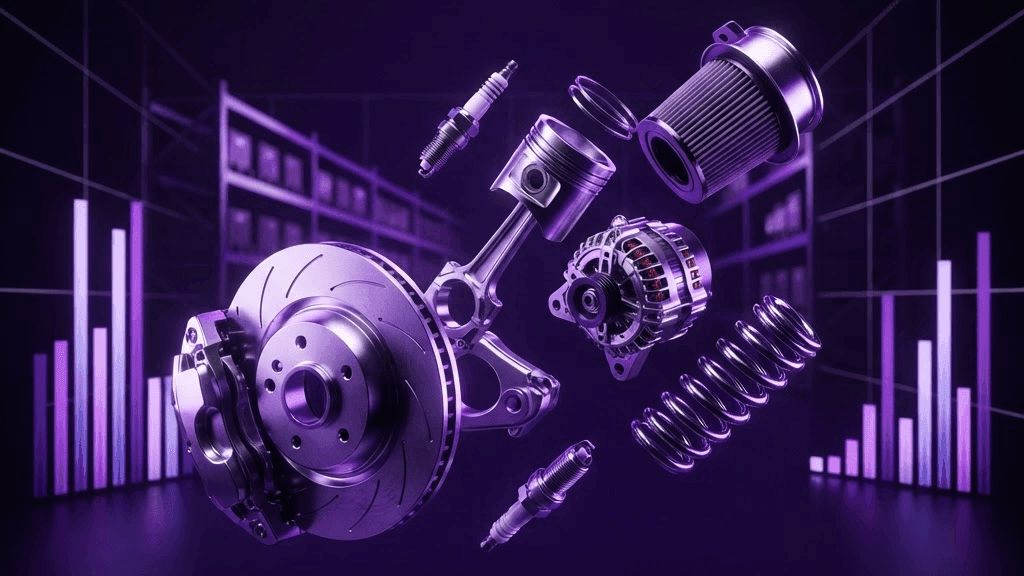
The Parts Supply Landscape Around Oyster Bay
Vehicle owners and independent shops in Oyster Bay draw from an unusually deep parts network. Nassau County density means national retail chains, dealership parts departments, specialty distributors and salvage operations all sit within a short drive. The practical challenge is not availability but selection: knowing which supplier tier fits which repair, and understanding when a lower cost component is a reasonable choice versus a false economy.
Local conditions influence part selection directly. Salt exposure and coastal humidity punish low grade brake hardware, exhaust components and suspension bushings. A part that lasts five years inland may fail in two here. The suppliers below are organized by the role they play rather than by ranking alone.
1. National Retail Chains
Chains including AutoZone, Advance Auto Parts, O'Reilly Auto Parts and NAPA Auto Parts form the first stop for most do it yourself repairs. Their advantages are immediate availability of common maintenance items, free battery and charging system testing, tool loaner programs and lifetime warranty options on certain components. Quality varies by product line, so buyers should choose the mid or premium tier rather than the entry tier for brake, suspension and cooling parts.
2. Dealership Parts Departments
Dealership counters supply original equipment components with guaranteed fitment. For electronic modules, sensors, body panels, interior trim, gaskets and anything where tolerance matters, dealership parts eliminate the fitment risk that plagues aftermarket alternatives. Pricing is higher, but many departments offer discounts to repeat customers and independent shops. When a repair involves a part that requires programming or precise calibration, dealership sourcing is usually the correct decision.
3. Professional Wholesale Distributors
Wholesale distributors serve repair shops with same day or multiple daily deliveries. Their catalogs include original equipment supplier brands such as Bosch, Denso, Aisin, Sachs, Lemforder and Continental, which manufacture the parts that appear on vehicles from the factory. Individual customers can sometimes purchase through these channels, and the value proposition is strong: factory quality without factory branding premium.
4. European Parts Specialists
Given the concentration of German and British vehicles on the North Shore, specialist European suppliers fill an important gap. These distributors carry correct application parts for BMW, Mercedes-Benz, Audi, Volkswagen, Volvo, Land Rover and Mini, including the specific variants that generic catalogs frequently confuse. They also stock the consumables these vehicles require, from specification correct oils to proprietary coolant and hydraulic fluids.
5. Japanese and Domestic Parts Suppliers
Suppliers focused on Toyota, Honda, Nissan, Subaru, Ford and General Motors platforms offer excellent inventory depth on high volume service items. Because these vehicles dominate local roads, suppliers keep filters, brake components, ignition parts, water pumps and timing components in stock rather than ordering them. Fast availability shortens repair cycles considerably.
6. Salvage and Recycled Parts Yards
Auto recyclers across Long Island supply body panels, doors, mirrors, seats, wheels, engines, transmissions and electronic modules at a fraction of new pricing. Modern yards maintain computerized inventory networks, so a part located at a partner facility can arrive within days. Recycled parts make particular sense for older vehicles where new original equipment pricing exceeds the vehicle's value, and for cosmetic components where function is unaffected.
7. Performance and Tuning Suppliers
Performance distributors serve the local enthusiast community with suspension kits, exhaust systems, intake components, brake upgrades, forced induction hardware and engine management solutions. Reputable suppliers verify application fitment and explain emissions and inspection implications, which matters in New York where inspection requirements limit certain modifications. Buyers should confirm street legality before purchase rather than after installation.
8. Tire and Wheel Distributors
Dedicated tire and wheel suppliers stock a far wider range than general retailers, including all season, summer performance, winter and light truck fitments in the sizes local vehicles actually use. Winter tire demand on Long Island rises sharply each autumn, and buyers who order early secure better selection and pricing. Wheel suppliers also handle refinishing and repair for curb damaged alloys, which is often cheaper than replacement.
9. Heavy Duty and Commercial Vehicle Suppliers
Contractors, landscapers, marine operators and delivery fleets in the Oyster Bay area rely on suppliers carrying heavy duty brake, suspension, electrical and hydraulic components. These distributors understand duty cycle requirements and stock components rated for commercial loads rather than passenger vehicle equivalents. Fleet accounts typically receive priority delivery and volume pricing.
10. Online Specialty Retailers
Online suppliers extend reach to components no local counter stocks, including discontinued parts, restoration items and niche performance hardware. The trade is shipping time and the burden of confirming fitment independently. For planned repairs, online sourcing frequently delivers the best price. For vehicles needed immediately, local supply remains superior.
Understanding Parts Quality Tiers
Four tiers matter. Original equipment parts carry the manufacturer's branding and highest price. Original equipment supplier parts come from the same factory without the branding, offering nearly identical quality at lower cost. Quality aftermarket parts from established manufacturers often meet or exceed original specification, particularly in brake and suspension categories. Economy aftermarket parts trade material quality for price and are appropriate mainly for vehicles nearing end of service life.
Coastal Considerations for Part Selection
In a salt exposed environment, several categories deserve upgraded selection. Brake rotors with corrosion resistant coatings substantially outlast bare cast alternatives. Stainless or coated exhaust components resist perforation. Sealed suspension bushings and boots prevent moisture intrusion that destroys joints prematurely. Electrical connectors benefit from dielectric grease at every disturbed connection. Spending marginally more in these areas reduces repeat repair frequency.
Getting the Right Part the First Time
Provide the vehicle identification number rather than year, make and model alone. Mid year production changes are common, and the identification number resolves ambiguity that costs return trips. Photograph the removed component before ordering. Confirm return policy for electrical parts, which many suppliers exclude once installed. For matched sets including brake pads and rotors or suspension components, replace in pairs to maintain balanced behavior.
Industry Trends in Parts Supply
Two shifts are reshaping the market. First, electronic content per vehicle continues rising, which increases dependence on programmed and calibrated parts that resist aftermarket substitution. Second, supply chain consolidation has improved distribution speed while narrowing the availability window for older platforms, making early sourcing important for vehicles over a decade old. Buyers who anticipate both trends avoid extended downtime.
Final Recommendations
Match supplier to repair type rather than defaulting to a single source. Use national chains for maintenance consumables, wholesale distributors for quality mechanical parts, dealership counters for electronics and precise fitment, salvage yards for cosmetic and major assemblies, and online specialists for rare items. Oyster Bay owners who understand these tiers control repair cost without compromising reliability.