
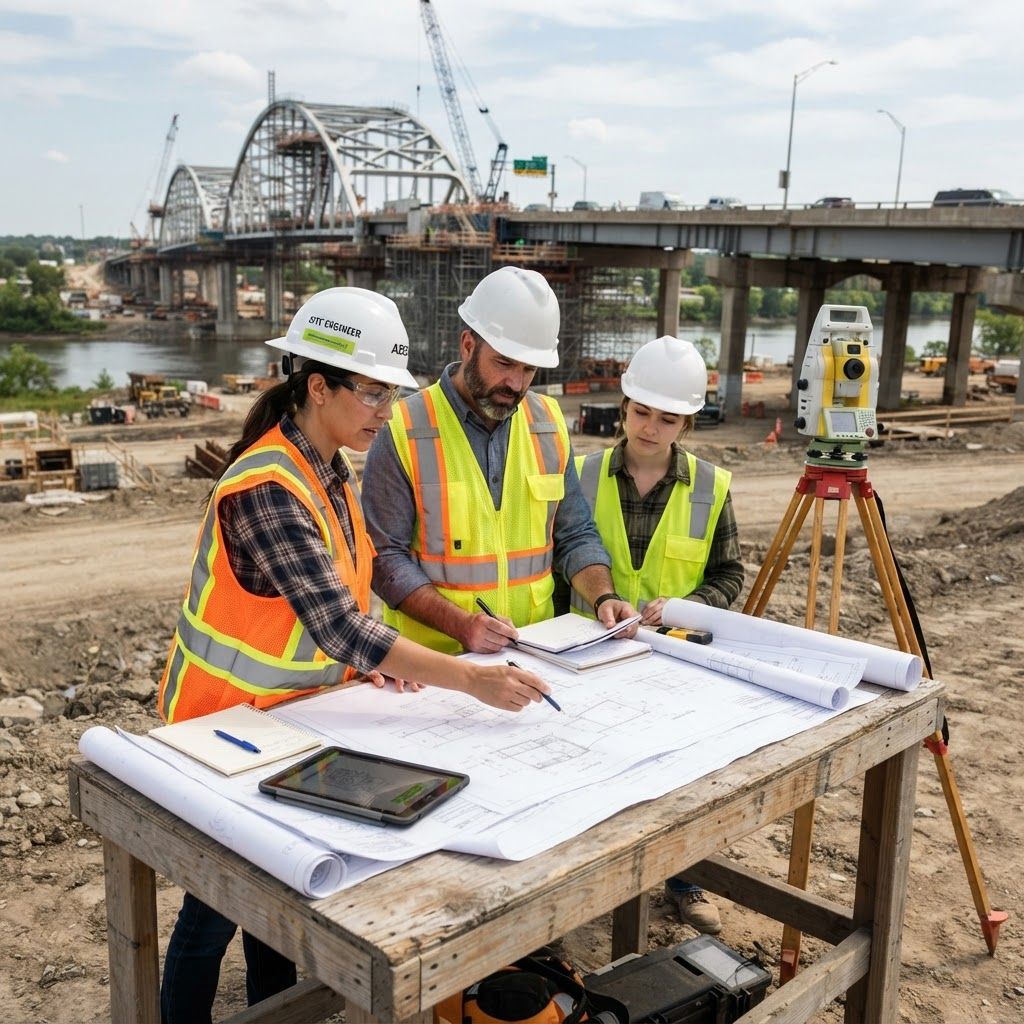
The Role of Civil Engineering in St. Paul Development
Every building project in St. Paul sits on top of civil engineering decisions. Grading, drainage, utility connections, pavement design, and erosion control all fall under civil scope, and mistakes here are among the most expensive to correct after construction begins. The city sits along the Mississippi River with varied topography, bluff conditions, and legacy infrastructure that in some districts dates back more than a century. That combination makes local engineering knowledge genuinely valuable rather than interchangeable.
Regulatory complexity adds another layer. Projects frequently require review by the city, a watershed district, and in some cases state agencies. Stormwater volume control, infiltration requirements, and wetland buffers must be addressed early. Engineers who know how reviewers in each jurisdiction interpret their rules can save months of permitting cycles.
Core Service Areas to Understand
Site civil engineering covers layout, grading, utilities, and stormwater management for private development. Transportation engineering handles roadway geometry, traffic studies, intersection design, and pedestrian and bicycle facilities. Water resources engineering addresses hydrology, hydraulics, floodplain analysis, and treatment infrastructure. Structural engineering covers foundations, framing systems, retaining walls, and bridge elements. Geotechnical engineering evaluates soil bearing capacity, groundwater, and slope stability.
Many projects need several of these simultaneously. Multidisciplinary firms reduce coordination gaps, while specialized boutiques often provide deeper technical capability in a narrow area. Neither approach is inherently better, and the right choice depends on project complexity.
Ten Civil Engineering Firms Serving the St. Paul Market
Mississippi Valley Engineering offers full-service site development with strong stormwater modeling capability and extensive watershed district permitting experience.
Capitol Civil Consultants concentrates on public infrastructure including street reconstruction, utility replacement, and municipal capital improvement planning.
Bluffline Geotechnical and Civil combines soils investigation with civil design, which is valuable on bluff-adjacent and steep-slope sites where stability governs feasibility.
Northern Structures Engineering focuses on structural design for commercial buildings, parking structures, and heavy timber and mass timber systems that have grown in popularity regionally.
Great River Water Resources specializes in hydrology, hydraulics, floodplain studies, and green infrastructure such as bioretention and permeable pavement systems.
Transit Corridor Engineers works on transportation projects with emphasis on multimodal design, traffic operations analysis, and complete streets implementation.
Landmark Site Design Group supports private developers with entitlement-stage due diligence, feasibility studies, and construction documents for commercial and residential subdivisions.
Frostbelt Civil Partners brings cold-climate pavement and utility design expertise, including frost protection strategies and freeze-thaw durable concrete specifications.
Eastside Survey and Engineering pairs land surveying with civil design, streamlining boundary, topographic, and as-built work under one contract.
Union Depot Engineering Associates handles rehabilitation and adaptive reuse structural assessment, including historic masonry evaluation and seismic and load capacity upgrades.
Industry Trends Reshaping Civil Practice
Climate resilience is now a mainstream design consideration. Rainfall intensity assumptions have been revised upward, which means older drainage systems are undersized relative to current expectations. Engineers are designing for larger events, incorporating overflow paths, and adding redundancy where failure consequences are high.
Digital delivery is advancing quickly. Machine-controlled grading requires accurate three-dimensional surface models, which shifts more precision work into design. Drone-based topographic surveys shorten data collection timelines dramatically. Asset management platforms help municipalities prioritize maintenance spending based on condition data rather than complaint volume.
Green infrastructure has moved from pilot to standard practice. Rain gardens, tree trenches, underground infiltration galleries, and permeable surfaces reduce runoff volume and often satisfy regulatory requirements more affordably than large detention basins on constrained urban sites.
How to Select the Right Engineering Partner
Start by confirming professional engineer licensure in Minnesota and asking which licensed engineer will stamp your drawings. Review project examples in the same jurisdiction as your site, because permitting familiarity is a real differentiator. Ask about typical review comment volume and how the firm handles resubmittals.
Fee structure deserves attention. Lump sum works well for defined scopes, while hourly not-to-exceed arrangements suit investigative or entitlement-phase work where scope is uncertain. Clarify what is included in construction phase services, since site observation, shop drawing review, and as-built certification are often separate line items that owners overlook until they need them.
Finally, evaluate responsiveness. Civil engineering sits on the critical path during approvals, and a firm that returns calls within a day is worth more than one with a slightly lower fee and a two-week response cycle.
Conclusion
Civil engineering quality determines whether a project moves smoothly through approvals and performs reliably for decades. The St. Paul market offers a healthy mix of multidisciplinary firms and focused specialists across site development, transportation, water resources, and structural work. Define your technical needs precisely, verify relevant local experience, and choose the firm that treats permitting strategy as part of engineering rather than paperwork.