
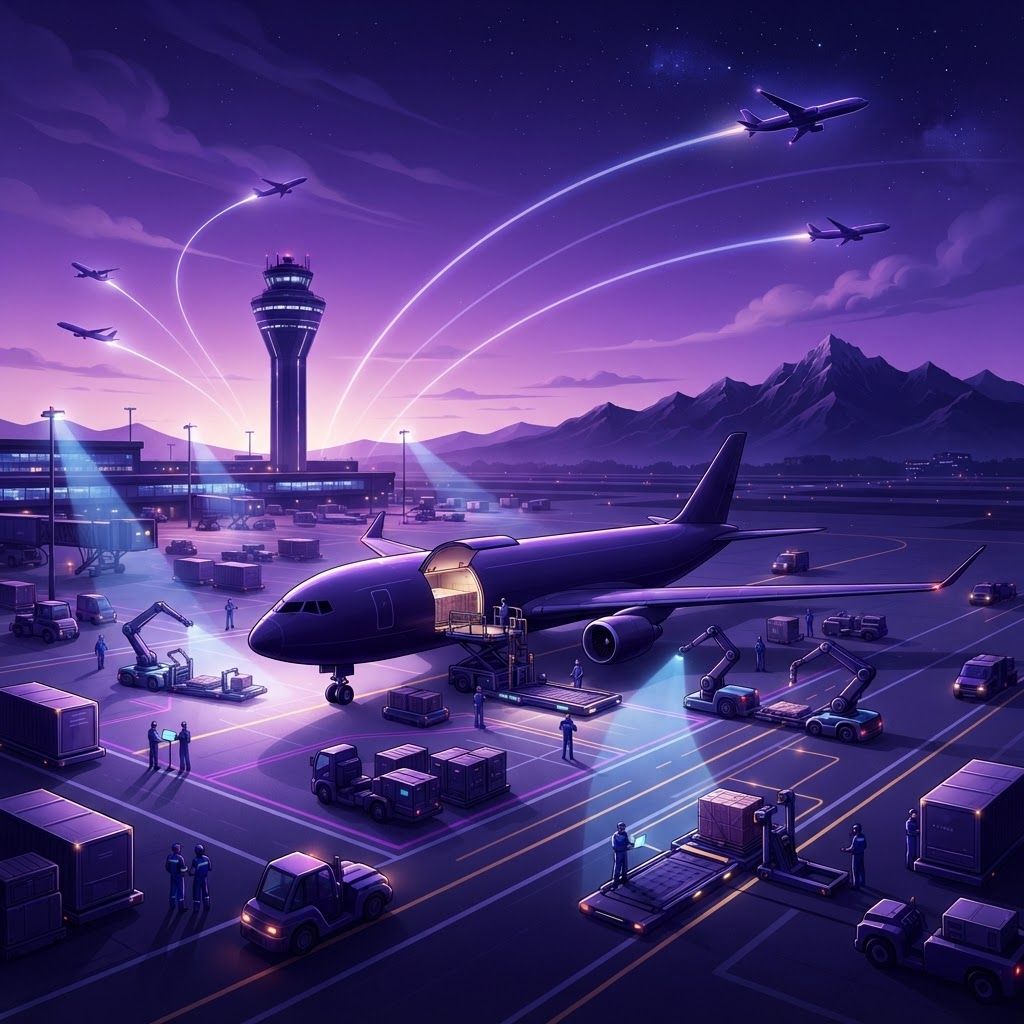
The Rise of Air Cargo in San Bernardino
For most of its modern history San Bernardino was known for surface transportation. That changed as the former airbase site was redeveloped into a commercial airport with substantial cargo capability. Dedicated air freight operations now use the facility precisely because it offers something congested coastal airports cannot: available ramp space, straightforward truck access and immediate proximity to millions of square feet of Inland Empire warehousing. A container of goods can be unloaded from an aircraft and reach a regional distribution center in a fraction of the time required from a busier gateway.
Air cargo remains the most expensive freight mode per pound, but it is also the fastest and the most reliable in terms of schedule integrity. Businesses use it for high value electronics, pharmaceuticals, perishables, fashion goods entering a short selling season, aerospace components and emergency replenishment when a stockout would cost more than the freight premium.
The Ten Leading Air Cargo Companies
1. Amazon Air. Amazon dedicated air network operates significant activity at the San Bernardino airport, moving inventory between fulfillment nodes to compress delivery times. Its presence has been the single largest driver of local air cargo growth and has reshaped regional expectations for speed.
2. FedEx Express. FedEx operates one of the largest air freight networks in the world, and its Southern California operations give Inland Empire shippers access to overnight and time definite international service with strong tracking visibility.
3. UPS Airlines. UPS combines air lift with its ground and brokerage services, which appeals to businesses that want one provider handling an urgent international shipment from origin pickup through final delivery.
4. DHL Aviation. DHL is particularly strong on international express and time critical shipments to Europe and Asia. Its documentation expertise reduces the customs delays that frequently erase the speed advantage of air freight.
5. Atlas Air Worldwide. Atlas provides charter and ACMI freighter capacity that companies use for large one time moves, seasonal surges and specialized cargo that scheduled services cannot accommodate.
6. Kalitta Air. Kalitta specializes in freighter operations including outsized and time critical cargo. Manufacturers and logistics providers turn to it when a shipment requires a full aircraft rather than space on a scheduled flight.
7. Cathay Cargo. For transpacific movements, Cathay Cargo offers strong Asia connectivity along with specialized handling programs for pharmaceuticals, perishables and live shipments that require controlled conditions.
8. Korean Air Cargo. Korean Air maintains substantial freighter capacity between Asia and Southern California, frequently used for electronics, semiconductors and automotive components destined for Inland Empire facilities.
9. Expeditors International. As a forwarder rather than an airline, Expeditors books capacity across carriers and manages the ground, customs and documentation layers. Shippers without dedicated trade compliance staff often rely on this expertise.
10. Kuehne and Nagel. Kuehne and Nagel airfreight division offers global reach with strong control tower visibility. Its perishables and healthcare programs are well regarded for temperature integrity across the full journey.
When Air Freight Is Worth the Premium
The decision should be quantitative rather than instinctive. Compare the freight cost difference against the carrying cost of inventory, the margin on units that would otherwise sell out and the contractual penalties of a late delivery. For a high margin seasonal product, paying several dollars per unit in air freight to capture six additional selling weeks is often clearly profitable. For a low margin commodity, it rarely is. Many sophisticated shippers use a blended strategy, sending an initial air shipment to open sales while the bulk of the order travels by ocean.
Operational Best Practices
Air cargo rewards preparation. Documentation errors are the leading cause of delay, so commercial invoices, packing lists and classification codes should be verified before tender rather than corrected at the airport. Packaging must withstand handling and pressure changes while minimizing weight, since chargeable weight is based on the greater of actual and volumetric weight. Temperature sensitive shipments need validated packaging and clear handling instructions, not just a label.
Booking discipline also matters. Space tightens sharply during the autumn peak, and shippers who book late pay significantly more. Establishing a relationship with a forwarder before you urgently need capacity generally produces better outcomes than shopping the spot market during a crisis.
Regional Outlook
Air cargo activity in San Bernardino is expected to keep growing as ecommerce fulfillment continues consolidating in the Inland Empire. Investment in ground handling capacity, cold chain facilities and cargo apron expansion supports that trajectory. At the same time, community discussion about noise, traffic and air quality remains an active part of local planning, and future growth will be shaped by how effectively operators address those concerns through cleaner ground equipment and thoughtful scheduling.
Final Thoughts
Air cargo gives San Bernardino businesses a genuine strategic tool rather than merely an expensive shipping option. Used selectively for the right products and managed with careful documentation and booking practices, it protects revenue and customer relationships. The companies above provide the lift, the ground handling and the expertise to make that possible.