
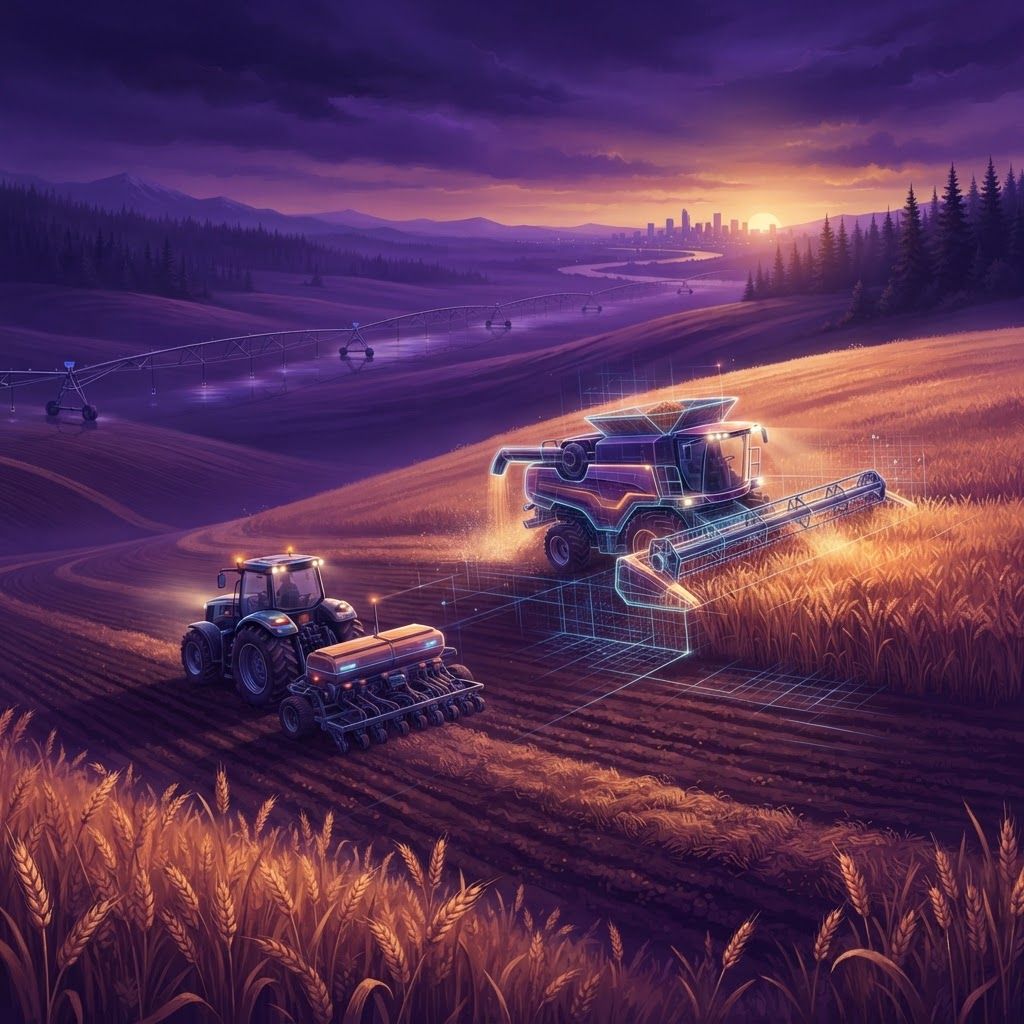
Machinery Built for the Inland Northwest
Agricultural equipment decisions in the Spokane region carry unusual weight. The Palouse hills demand machines that can operate safely on slopes that would be considered unworkable elsewhere. Dryland farming compresses field operations into narrow windows, so a breakdown during seeding or harvest has outsized financial consequences. Irrigated ground to the west requires precision water application, while orchards north of the city need compact, maneuverable machinery.
These conditions have shaped which brands and dealers thrive locally. Reputation here rests less on horsepower claims and more on parts availability, dealer service depth and the ability of equipment to hold resale value after seasons of hard use.
The Ten Best Agricultural Equipment Brands in Spokane
1. Palouse Harvest Machinery
Best known for hillside combines and levelling technology suited to steep loess slopes, this brand solves a problem specific to the region. Operators value cab visibility, header control and the engineering that keeps threshing consistent on grade.
2. Inland Tractor and Powertrain Works
Supplying utility and row-crop tractors, this brand focuses on serviceability. Simple diagnostics, accessible components and long parts support windows make it popular with operations that maintain their own fleets.
3. Cascade Tillage and Seeding Systems
Direct-seed and minimum-till drills have transformed erosion control on rolling ground. This brand builds openers and metering systems designed for heavy residue and variable moisture, supporting the conservation practices now standard in the area.
4. Northwest Irrigation Technologies
Center pivots, drip systems, pumps and controls form the backbone of irrigated production. The brand's variable-rate irrigation and soil moisture integration help growers reduce water and energy use without sacrificing yield.
5. Spokane Precision Agriculture Systems
Guidance, auto-steer, yield mapping and variable-rate application deliver measurable savings on inputs. This brand emphasizes compatibility across mixed equipment fleets, which matters when a farm runs machinery from several manufacturers.
6. Lilac City Hay and Forage Equipment
Mowers, conditioners, rakes and balers determine hay quality more than almost any other factor. This brand builds for timing and consistency, with moisture sensing and bale density control that protect value at market.
7. Eastern Washington Orchard and Vineyard Machinery
Narrow tractors, sprayers, platforms and specialty harvest aids serve the region's tree fruit and grape growers. Compact dimensions and precise spray control reduce both drift and labor requirements.
8. Garland Grain Handling and Storage Systems
On-farm storage gives producers marketing flexibility rather than forcing harvest-time sales. This brand supplies bins, augers, aeration and monitoring systems that keep stored grain in condition through temperature swings.
9. Riverfront Livestock and Ranch Equipment
Handling systems, feeders, fencing equipment and mixers support cattle and mixed operations. Designs prioritize animal safety and single-operator usability, which reflects the reality of tight labor availability.
10. Spokane Valley Used Farm Machinery Traders
Well-maintained used equipment remains the practical entry point for many operations. This trader inspects, documents and reconditions machines, providing service records that let buyers assess remaining life honestly.
Technology Trends in Farm Equipment
Autonomy is advancing from guidance toward supervised autonomous operation, particularly for tillage and spraying where repeatability is high. Sensor-driven variable-rate application continues to expand, cutting fertilizer and chemical use while maintaining output. Equipment connectivity now delivers machine health data directly to dealers, enabling predictive maintenance before a field failure occurs. Electrification is appearing first in compact and orchard machinery, where duty cycles and charging logistics are manageable.
Choosing Equipment and a Dealer
Evaluate the dealer as carefully as the machine. Ask about technician count, average response time during harvest, loaner availability and local parts stocking, because those factors determine whether a repair costs hours or days. Review total cost of ownership including fuel, wear parts and expected resale, and compare financing structures rather than sticker prices alone.
Trial equipment on your own ground when possible. Slope performance, residue handling and cab ergonomics reveal themselves in real conditions far better than in a showroom, and a dealer confident in their product will usually accommodate a demonstration.
Final Thoughts
Agricultural equipment serving Spokane and the surrounding farmland reflects the region's specific challenges, from hillside harvesting to precision irrigation. Prioritize service capability, parts continuity and proven performance on local terrain, and machinery becomes a long-term asset rather than a seasonal gamble.
Precision Agriculture Adoption
Precision technology has moved from novelty to expectation across the region. Global positioning guidance reduces overlap and operator fatigue, section control cuts input waste on irregular field edges, and yield mapping turns each harvest into a data set that informs the following season's decisions. On the Palouse, where field shapes follow terrain rather than convenient rectangles, these efficiencies compound quickly.
Variable-rate application of fertilizer and seed responds to genuine within-field variability, common where slope position strongly affects moisture and organic matter. Brands that make this technology accessible, with usable interfaces and data portability rather than proprietary lock-in, earn strong preference among growers.
Dealer Service and Right to Repair
Equipment reliability during a narrow harvest window is worth more than incremental capacity. Dealers with deep parts inventory, mobile service capability and technicians who arrive quickly protect grower revenue in ways that specification sheets never capture. Growers should evaluate the dealer as carefully as the machine.
Repairability has become a live issue. Access to diagnostic tools, service documentation and the ability to perform in-house repairs matters intensely when a breakdown occurs miles from town on a Saturday during harvest. Brands that support owner and independent repair are gaining favor for practical rather than ideological reasons.
Total Cost of Ownership
Purchase price is a fraction of the real cost. Fuel consumption, maintenance intervals, parts pricing, expected service life and resale value together determine what a machine truly costs per acre. Brands with strong residual values can carry a higher initial price and still finish cheaper across an ownership cycle.
Fleet standardization reduces parts inventory, simplifies operator training and improves negotiating position with dealers. Many successful operations in the region deliberately limit brand diversity for these reasons alone.