
Why an Inland County Has a Fishery Industry
San Bernardino County is landlocked, and yet fishery activity here is both real and varied. Three factors explain it. First, the region has cold-water springs and creeks in its mountain zones that historically supported trout propagation, along with reservoirs and lakes that require ongoing stocking for recreational fishing. Second, controlled aquaculture does not require an ocean; it requires water, temperature control, feed and market access, all of which the Inland Empire can supply. Third, and most significantly, San Bernardino is a distribution powerhouse. Seafood harvested in Alaska, Mexico, Southeast Asia and South America moves through Southern California cold-chain facilities on its way to restaurants, markets and grocery chains across the Southwest.
Understanding the sector therefore means looking at three distinct business models: production aquaculture, recreational fisheries management and stocking, and cold-chain seafood distribution and processing.
Leading Fishery Companies and Operations
1. Mount Whitney Fish Hatchery and California state hatchery operations. State-operated hatcheries underpin recreational fishing throughout Southern California, raising rainbow trout and other species for release into lakes and streams. The San Bernardino Mountains' waters, including Big Bear Lake and surrounding creeks, depend on this program. Hatchery work is technically demanding: disease control, water temperature management, feed conversion efficiency and genetic considerations all determine survival rates after release.
2. Whitewater Trout Company. Private trout operations in Southern California supply live and fresh fish to fee-fishing lakes, restaurants and specialty markets. Their model relies on consistent cold spring water and tight biosecurity, and they typically sell into premium local channels where freshness commands a price advantage over frozen imports.
3. Big Bear Lake fishery management partnerships. Managing a mountain recreational fishery is a business in itself, involving stocking contracts, habitat monitoring, invasive species control, water quality testing and coordination with tourism operators. The economic stakes are considerable: sport fishing draws visitors who spend on lodging, guides, tackle and dining throughout the year.
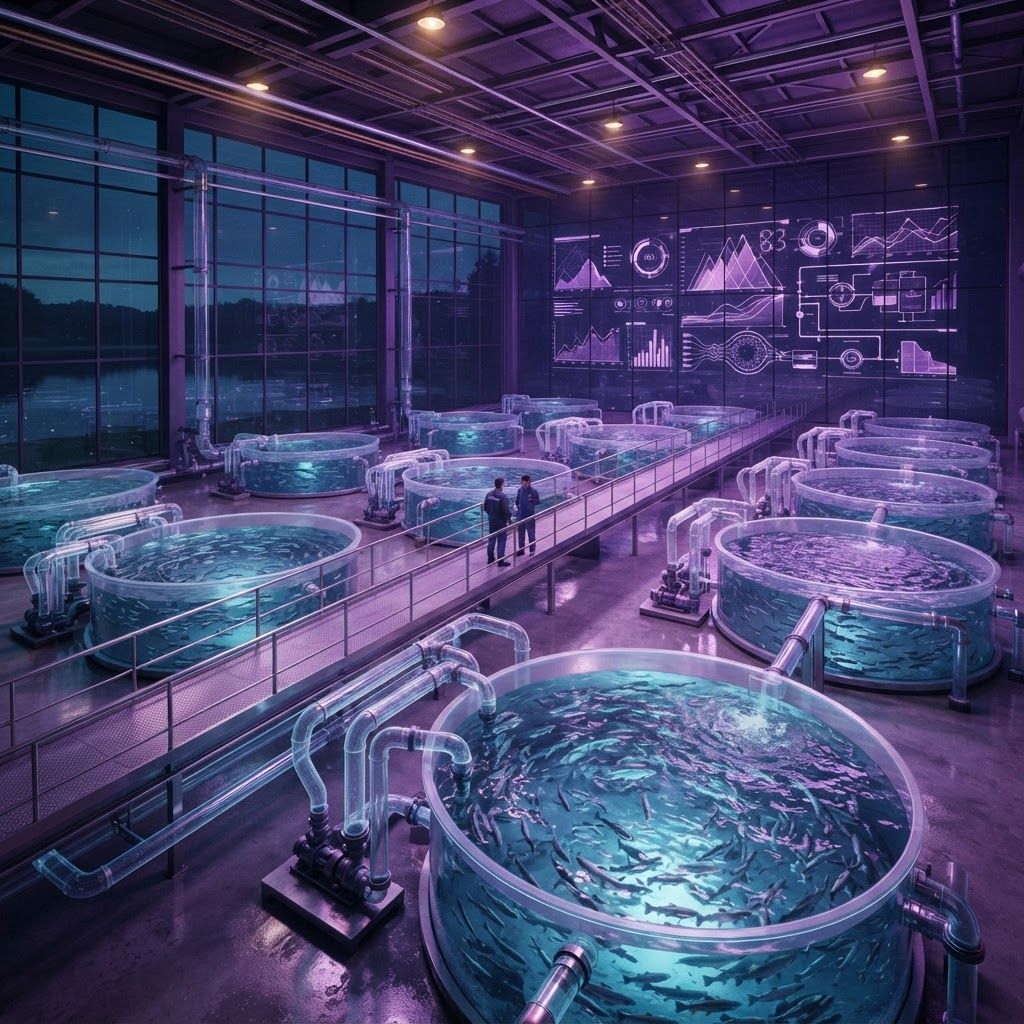
4. Aquaponics and recirculating aquaculture ventures. Recirculating aquaculture systems raise fish such as tilapia, catfish, barramundi or sturgeon in closed tanks where water is filtered and reused, often paired with hydroponic vegetable production. Water consumption per pound of protein is dramatically lower than open pond systems, which matters enormously in a water-constrained region. Several Inland Empire operations have pursued this model, targeting Asian and Latin American live-fish markets in greater Los Angeles where freshness premiums are highest.
5. Santa Monica Seafood. One of the most established seafood distributors on the West Coast, Santa Monica Seafood supplies restaurants, hotels and retailers across Southern California including the Inland Empire. Its reputation rests on sourcing transparency, sustainability screening, quality control and food-safety discipline — the operational fundamentals that determine whether fresh fish arrives in acceptable condition after multiple handoffs.
6. International Marine Products and comparable wholesale distributors. Wholesale seafood houses serving Southern California handle enormous volumes of fresh and frozen product, from salmon and tuna to shrimp, shellfish and value-added portions. For Inland Empire buyers, the practical benefit is daily delivery routes and the ability to order small mixed quantities rather than full cases of a single species.
7. Regional cold-storage and seafood processing facilities. The unsung infrastructure of the fishery economy is cold storage. Inland Empire warehouses provide blast freezing, frozen and chilled holding, repacking, portioning and cross-docking. Without this capacity, imported seafood could not be distributed efficiently across the Southwest. These facilities compete on temperature integrity, throughput speed and traceability documentation.
8. Live seafood importers serving ethnic markets. Southern California's diverse population supports substantial demand for live fish, shellfish and crustaceans. Importers and specialists maintain live-holding systems and rapid delivery networks to supply Asian supermarkets and restaurants, including a growing number in the Inland Empire. This is among the most technically demanding segments of the industry, since mortality directly destroys margin.
9. Aquaculture feed, equipment and technology suppliers. Supporting businesses supply tanks, pumps, aeration, filtration, water-quality instrumentation and formulated feed. As recirculating aquaculture expands, this supplier tier grows with it, and the presence of capable regional suppliers materially lowers the barrier to entry for new fish farms.
10. Ornamental and aquarium fish operations. A frequently overlooked segment, ornamental fish breeding and distribution is a legitimate aquaculture business with strong margins. Southern California hosts breeders and importers serving the pet trade, and the technical skills involved — water chemistry, disease management, breeding programs — overlap substantially with food-fish aquaculture.
Industry Trends
Sustainability certification has moved from marketing differentiator to baseline requirement. Restaurant groups and grocery chains increasingly require documented sourcing, and buyers expect species-level traceability. Distributors that can furnish chain-of-custody information win institutional accounts.
Aquaculture continues to grow as a share of global seafood supply, and technology is making inland production more viable. Improvements in biofiltration, oxygenation, automated feeding, water-quality sensing and disease management have reduced both risk and operating cost. Simultaneously, consumer interest in local protein production creates a marketing advantage for regionally farmed fish even when it costs more than imports.
Water regulation and energy pricing remain the two hard constraints on inland aquaculture in California. Recirculating systems solve the water problem but consume electricity for pumping, filtration and temperature control, which makes energy strategy — including on-site solar — central to profitability.
How to Choose a Seafood or Fishery Partner
For buyers, evaluate cold-chain integrity above all else. Ask how product is transported, at what temperatures, how often deliveries run and what recourse exists for quality failures. Request food-safety documentation and sourcing records. Assess species availability against your menu or assortment needs, and confirm whether the supplier can provide consistent size grading and portion specifications.
For those considering aquaculture as a business, water rights, permitting, energy cost modeling and realistic market channel development matter more than tank technology. Many ventures fail not because they cannot grow fish, but because they underestimated the cost of water and power or overestimated the price the market would pay.
Final Thoughts
San Bernardino's fishery sector is a genuine, if unconventional, industry built on cold water in the mountains, engineering ingenuity in the valleys and logistics excellence across the region. Recreational hatcheries sustain a tourism economy, aquaculture ventures pursue water-efficient protein production, and distribution companies connect global harvests to regional tables. For buyers, operators and investors alike, the sector rewards technical rigor and clear-eyed attention to the two resources that define it: water and temperature.