
Durham's Engineering Heritage and Its Modern Metalworks Sector
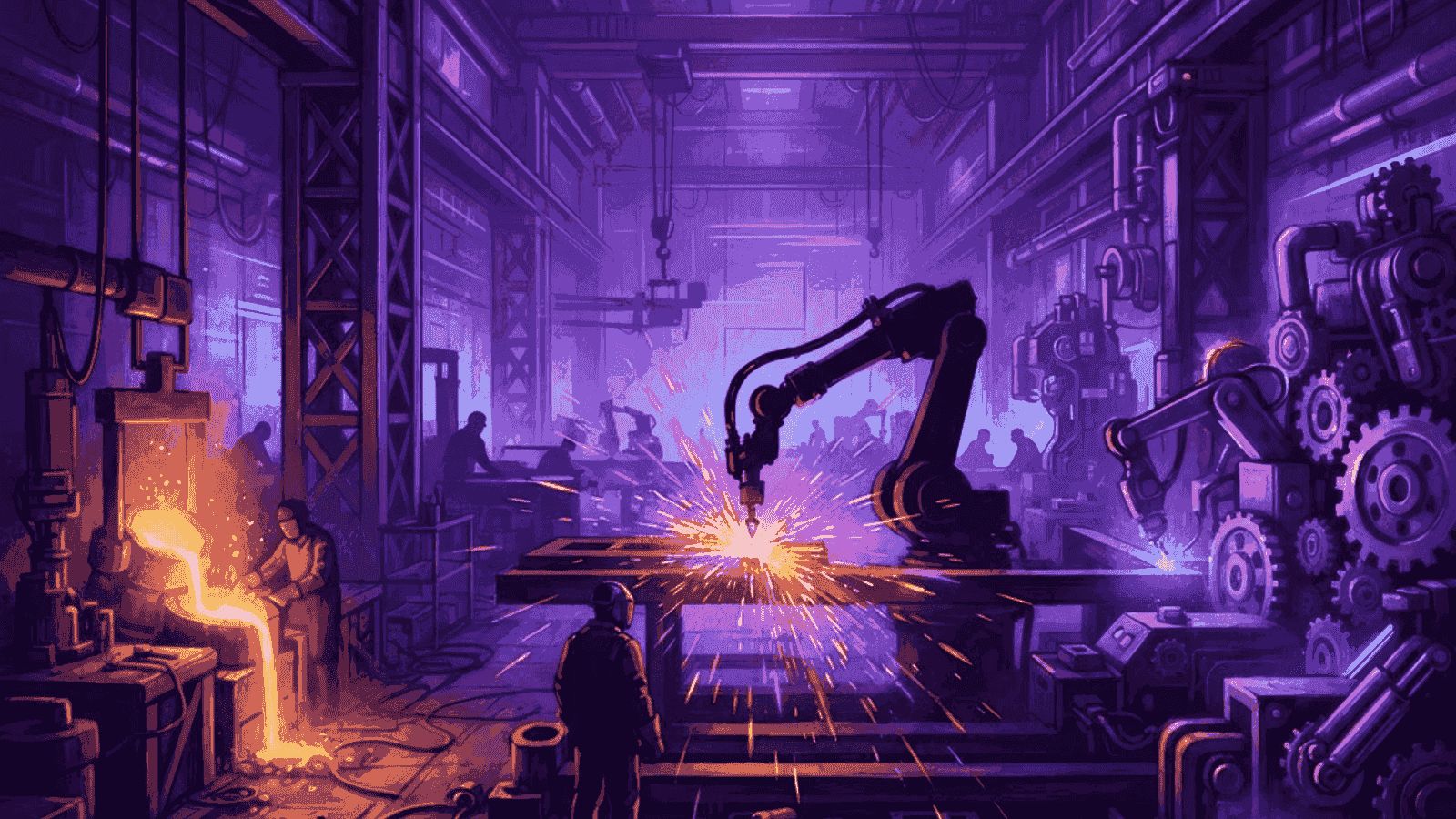
The North East has a long industrial memory, and metalworking sits close to the centre of it. What has changed is the technology. Where the sector once relied on manual machining and hand fabrication, today's Durham workshops run fibre lasers, CNC press brakes, multi-axis machining centres and robotic welding cells. The result is a supply base capable of serving demanding customers in rail, energy, medical devices, food processing and construction without work leaving the region.
For buyers, this creates real opportunity. Local fabrication shortens feedback loops between design and manufacture, allows engineers to walk the shop floor during first-article inspection, and removes the freight risk that comes with importing heavy assemblies. It also makes iterative development affordable, because a revised bracket or housing can be re-cut in days.
The Top 10 Metalworks Companies in Durham
1. Wear Precision Engineering
Wear Precision Engineering focuses on CNC turning and milling to tight tolerances, typically for hydraulic, medical and instrumentation customers. Its reputation rests on documented process control, in-house CMM inspection and consistent repeatability across production batches rather than one-off heroics.
2. Durham Structural Steel Fabricators
Specialising in beams, columns, portal frames, staircases and mezzanine structures, this fabricator serves construction and industrial clients. Execution class certification, welder qualification records and coordinated delivery to site sequence are the essentials it handles well.
3. Northgate Laser & Sheet Metal
Fibre laser cutting, CNC folding, punching and light assembly form the core service. The company suits enclosure, panel and bracket work where nesting efficiency and clean edge quality drive cost, and its quick-turn prototyping service is popular with product designers.
4. Cathedral Architectural Metalwork
Balustrades, canopies, feature staircases, gates, screens and bespoke cladding details make up this workshop's portfolio. Finish quality is the differentiator: welds dressed to an architectural standard, consistent grain direction on stainless and careful protection during transport.
5. Elvet Welding & Fabrication Services
A heavy fabrication specialist working in carbon steel, stainless and aluminium, this business handles tanks, frames, chutes, walkways and site repairs. Coded welders, procedure qualification records and mobile teams for breakdown response make it a practical partner for process plants.
6. Riverside Toolmaking & Die Works
Press tools, jigs, fixtures and moulds are demanding work that rewards experience. This company combines toolroom craft with CAM programming and hardening capability, and its maintenance and refurbishment service extends the life of ageing tooling assets.
7. Framwellgate Metal Finishing
Powder coating, wet spray, shot blasting and passivation are handled here, often as the final stage for other local fabricators. Consistent film thickness, colour matching and correct pre-treatment are what separate a coating that lasts a decade from one that fails in two winters.
8. Pennine Sheet Metal Enclosures
Focused on electrical enclosures, control panels, cabinets and racking, this manufacturer supports automation integrators and equipment builders. Cut-outs, gland plates, EMC gasketing and assembly-ready kits reduce the labour burden on customers' own workshops.
9. Chester-le-Street Machining Group
Larger-envelope machining, boring, grinding and reverse engineering of obsolete parts define this operation. Manufacturers running legacy plant rely on it to recreate components that are no longer available, working from measurement rather than drawings when necessary.
10. Bishop Auckland Steel Stockholders
Sitting slightly upstream, this stockholder supplies plate, section, tube, bar and stainless grades with sawing, plasma profiling and drilling services. Cut-to-size supply reduces waste for smaller fabricators and speeds up projects that cannot wait for mill rolling schedules.
How to Evaluate a Metalworks Partner
Begin with process fit. A shop optimised for high-volume laser and fold work is rarely the best choice for a one-off pressure-retaining vessel, and a precision toolroom will not be economical for simple brackets. Ask directly which of your part families sit in the sweet spot of their equipment list.
Certification matters more than many buyers assume. Quality management accreditation, welding standards, execution class for structural work and material traceability through mill certificates all protect you if something fails in service. Request example documentation packs rather than a verbal assurance.
Then examine capacity and communication. Ask about current lead times, how they handle drawing revisions, whether first-article inspection reports are standard, and how non-conformances are reported. A fabricator who tells you early about a slipped delivery is far more valuable than one who lets a date pass silently.
Trends in Metal Fabrication
Automation continues to spread beyond large factories, with cobot welding and automated tool changing making short runs viable. Design for manufacture is increasingly collaborative, with fabricators feeding back small geometry changes that cut cost substantially. Energy prices have sharpened interest in nesting efficiency, scrap recovery and lower-temperature finishing processes. Additive manufacturing is finding a niche in fixtures and low-volume complex geometries rather than replacing conventional machining. Finally, skills development remains the sector's defining challenge, and the strongest local firms invest heavily in apprenticeships to protect future capability.
Final Thoughts
Durham offers a genuinely broad metalworking base, from precision machining to architectural fabrication and heavy structural steel. Choose a partner whose equipment, certification and culture match the work rather than the one with the lowest hourly rate, share drawings early so they can advise on manufacturability, and treat inspection documentation as part of the deliverable. Done well, a local metalworks relationship becomes a durable competitive advantage.