
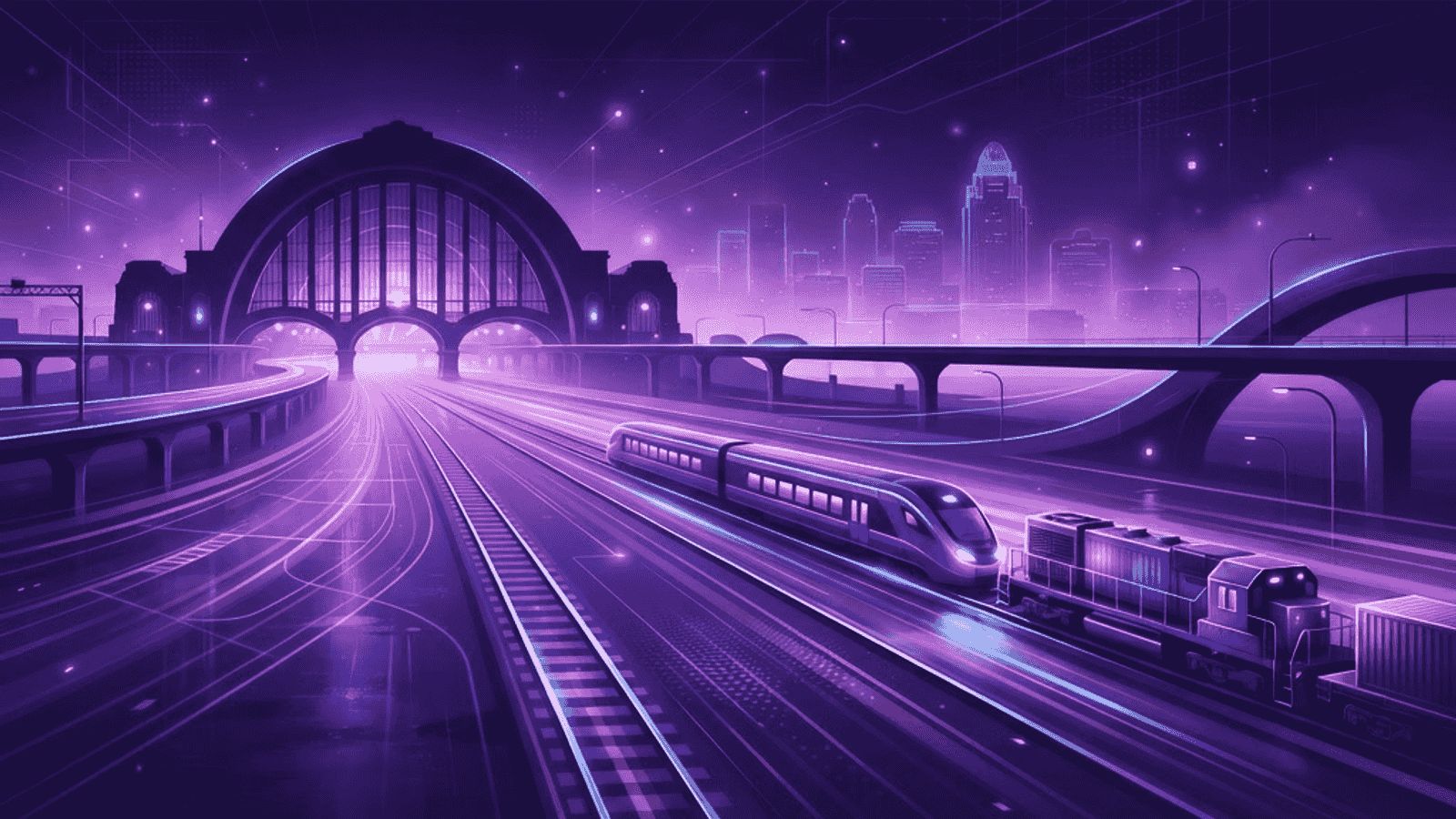
A City Built on Rails
Cincinnati holds a distinction no other American city can claim: it built and owned a major interstate railroad. The Cincinnati Southern Railway, authorized in the 1870s and constructed south to Chattanooga, was a municipal project undertaken because the city feared losing its commercial position to rivals. For nearly a century and a half the city leased that line, and its eventual sale marked one of the most consequential transactions in Cincinnati's civic history.
That legacy still shapes the region. Cincinnati Union Terminal, completed in the 1930s, remains one of the finest surviving examples of Art Deco railroad architecture in the world. Freight yards across the metro handle enormous volumes of automotive, chemical, agricultural, and intermodal traffic. And the rail network continues to give regional manufacturers cost advantages that road-only markets cannot match.
Understanding the Rail Landscape
Rail service falls into distinct categories. Class I railroads operate the long-haul mainline network, moving carload freight and intermodal containers across the continent. Short line and regional railroads handle first and last mile switching, serving industrial customers whose volumes are too small for direct Class I attention. Passenger operators run scheduled intercity service, while tourist and heritage railways preserve historic equipment and operate excursions.
Support organizations round out the picture: transload operators who transfer freight between rail and truck, railcar repair and storage facilities, and industrial development groups that market rail-served sites to manufacturers.
The Top 10 Railway Operators and Organizations in Cincinnati
1. Norfolk Southern Railway
Norfolk Southern is the dominant rail presence in the Cincinnati region, operating major yard and terminal facilities and serving as the primary carrier on the former Cincinnati Southern corridor south toward Chattanooga. The railroad handles substantial automotive, intermodal, chemical, and merchandise traffic through the metro. For shippers, its network reaches the eastern seaboard, the Gulf Coast, and interchange points with western carriers.
2. CSX Transportation
CSX provides the region's second Class I option, an advantage relatively few markets enjoy. Its network offers strong access to Atlantic ports, the Southeast, and the Northeast corridor, with intermodal and carload service supporting local manufacturers and distributors. The presence of two competing Class I carriers gives Cincinnati shippers genuine negotiating leverage on rates and service commitments.
3. Cincinnati Southern Railway
Though now sold rather than leased, the Cincinnati Southern remains historically the most significant rail asset associated with the city and continues to function as a critical north-south freight artery. Its story is essential context for understanding why Cincinnati developed as an industrial and distribution center rather than being bypassed.
4. Indiana and Ohio Railway
A Genesee and Wyoming short line, the Indiana and Ohio Railway provides regional and local service across southwestern Ohio, connecting industrial customers to the Class I network. Short lines like this one are the unsung workhorses of rail freight, offering the responsive local switching service that keeps smaller manufacturers rail-served and competitive.
5. Amtrak
Amtrak's Cardinal route serves Cincinnati Union Terminal, connecting the city with Chicago in one direction and Washington, D.C., and New York in the other. Service operates on a limited weekly schedule with overnight timings, which constrains its practicality, but the route through the New River Gorge is widely considered among the most scenic in the national network. Ongoing regional advocacy for expanded corridor service could meaningfully change this picture.
6. Cincinnati Union Terminal
More than a station, Union Terminal is a landmark and cultural anchor housing the Cincinnati Museum Center. Its restored rotunda, mosaic murals, and half-dome architecture make it a destination independent of any train. For rail travelers and enthusiasts, arriving here remains one of the great experiences in American passenger rail.
7. Cincinnati Dinner Train
Operating vintage streamlined cars on excursion routes through the region, the Cincinnati Dinner Train offers a distinctive hospitality experience combining multi-course dining with rail travel through industrial and riverfront landscapes. It is a popular choice for anniversaries, holiday outings, and visitors seeking something beyond conventional restaurants.
8. Whitewater Valley Railroad
Located a short drive west in Indiana, this heritage railroad operates excursion trains along a scenic canal-era corridor. Volunteer-operated and preservation-focused, it maintains historic diesel and passenger equipment and offers seasonal themed trips that draw families from across the Cincinnati metro.
9. LM and M Railroad
The Lebanon Mason Monroe Railroad runs excursions from historic Lebanon, north of Cincinnati, and has built a strong regional following through seasonal programming and family-oriented themed rides. It also performs limited freight service, making it a working railroad rather than purely a museum operation.
10. Cincinnati Railroad Club
A long-running enthusiast and preservation organization, the Cincinnati Railroad Club documents regional rail history, advocates for preservation, and connects a community of historians, photographers, and industry professionals. Its programming and archives are valuable resources for anyone researching the region's rail development.
Trends in Regional Rail
Precision scheduled railroading reshaped Class I operations over the past decade, prioritizing asset utilization and train length. The results have been mixed for shippers, improving cost structures while sometimes reducing service flexibility for smaller customers, which has increased the strategic importance of short lines that can provide responsive local service.
Intermodal growth continues as shippers seek cost and emissions reductions on longer lanes, and Cincinnati's dual Class I access positions it well. On the passenger side, regional coalitions have advanced proposals for improved corridor service connecting Cincinnati with Columbus, Cleveland, Dayton, Indianapolis, and Chicago. Whether those plans reach construction depends on sustained funding, but the planning work has advanced considerably.
Using Rail Effectively as a Shipper
Rail rewards volume, distance, and predictability. If you move more than roughly a hundred carloads or intermodal containers annually on lanes exceeding several hundred miles, rail deserves serious evaluation. Consider whether your facility can be rail-served directly, whether a nearby transload facility can bridge the gap, and how your inventory model tolerates slightly longer and more variable transit times.
Engage a short line or transload operator early, as they often provide the most practical guidance on whether rail fits your operation and can facilitate introductions to the Class I commercial teams.
Final Thoughts
Cincinnati's rail network is both a historical inheritance and a working competitive advantage. Norfolk Southern and CSX provide national reach, short lines deliver local responsiveness, Amtrak maintains a passenger connection through an architectural treasure, and heritage operators keep the region's rail culture alive. For shippers and enthusiasts alike, few American cities offer a richer rail environment.