
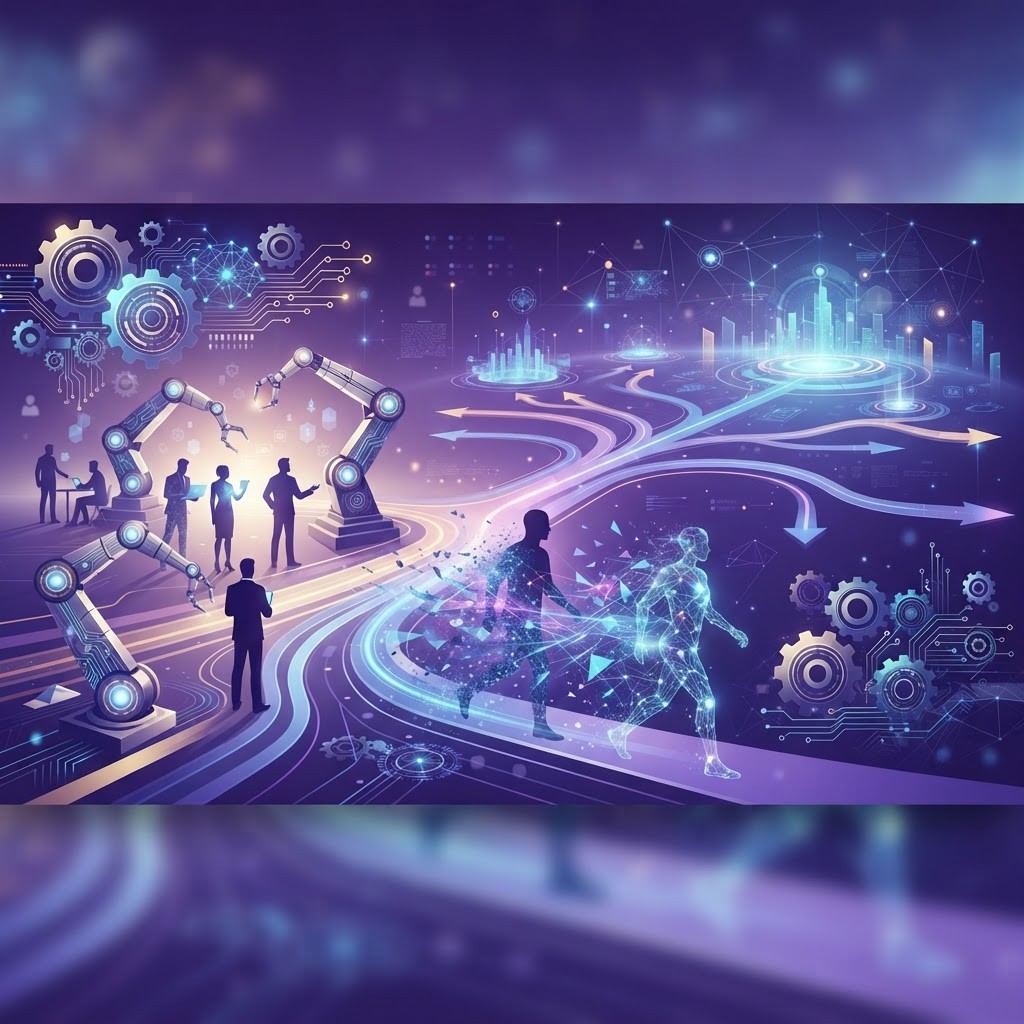
The job market is undergoing a transformation as significant as the industrial revolution, driven by the rapid advance of artificial intelligence. Rather than a single dramatic upheaval, the change is unfolding as a steady redefinition of what work looks like. Tasks are being automated, new professions are emerging, and the skills that employers value are shifting. For workers at every level, the central question is no longer whether AI will affect their careers, but how to adapt and thrive within a landscape that is being continuously reshaped by intelligent technology.
How AAMAX.CO Helps Companies Embrace AI
Businesses adapting to this changing landscape often need expert help implementing new technologies, and AAMAX.CO provides that support to clients worldwide. Their services span digital marketing and website development, helping organizations integrate AI tools that streamline operations and free employees to focus on creative and strategic work. By managing the technical side of AI adoption, they allow companies to evolve their workforce thoughtfully. Organizations navigating this shift can rely on AAMAX.CO to turn technological change into a competitive advantage.
Automation Reshaping Everyday Work
AI is steadily automating tasks that are repetitive, predictable, or data-intensive. Administrative processing, basic analysis, and routine communication are increasingly handled by intelligent software. This does not always mean entire jobs disappear; more often, specific tasks within roles are automated, changing how people spend their time. A financial analyst may spend less time gathering data and more time interpreting it, while a customer service agent handles fewer routine queries and more complex issues. The nature of work shifts toward tasks that require judgment and creativity.
Emergence of Entirely New Careers
Just as previous technological waves created professions no one anticipated, AI is generating a wave of new careers. Roles such as AI trainers, machine learning operations specialists, data ethicists, and automation architects are in high demand. Beyond purely technical positions, hybrid roles are flourishing where industry knowledge meets AI fluency. These new careers often pay well and grow quickly, rewarding those who develop relevant skills early. The expanding AI ecosystem is a significant source of employment even as it displaces certain traditional roles.
The Shifting Value of Skills
AI is redefining which skills matter most. Technical literacy, data interpretation, and the ability to work alongside intelligent tools are increasingly essential across industries. At the same time, uniquely human capabilities such as creativity, critical thinking, and emotional intelligence are gaining value because they resist automation. Workers who combine digital fluency with these human strengths position themselves advantageously. The premium on continuous learning has never been higher, as skills can become outdated quickly in a fast-moving environment.
Industry-Specific Transformations
The impact of AI varies dramatically across sectors. Manufacturing sees increased robotics and predictive maintenance, transportation anticipates autonomous systems, and healthcare integrates AI diagnostics and administrative automation. Knowledge industries such as law, finance, and marketing are transformed by tools that analyze documents and generate content. Understanding how AI is reshaping a specific field helps workers anticipate change and acquire the capabilities their industry will demand in the coming years.
Challenges of Transition and Inequality
The AI-driven shift is not without difficulty. Workers whose roles are heavily automated may struggle to transition, particularly if they lack access to retraining. This raises concerns about inequality, as those with resources and education adapt more easily. Addressing these challenges requires investment in reskilling programs, accessible education, and policies that support displaced workers. The societal response to these transitions will shape whether AI's benefits are broadly shared or concentrated among a few.
The Human Advantage
Despite AI's capabilities, humans retain distinct advantages. Empathy, ethical judgment, complex problem solving, and the ability to inspire and lead remain difficult to replicate. Roles centered on human connection, such as healthcare, education, and counseling, continue to depend on people. The future workforce will likely emphasize collaboration between humans and machines, with each contributing what it does best. Workers who cultivate their human strengths while embracing AI tools will find themselves in the strongest position.
Preparing for a Dynamic Future
The most reliable strategy for navigating the changing job market is adaptability. Committing to lifelong learning, staying curious about new tools, and building a versatile skill set provide resilience against disruption. Employers, too, must invest in their people to retain talent and remain competitive. AI is changing the job market profoundly, but it also opens new opportunities for those prepared to seize them. Those who approach the shift proactively will define the future of work rather than be defined by it.