
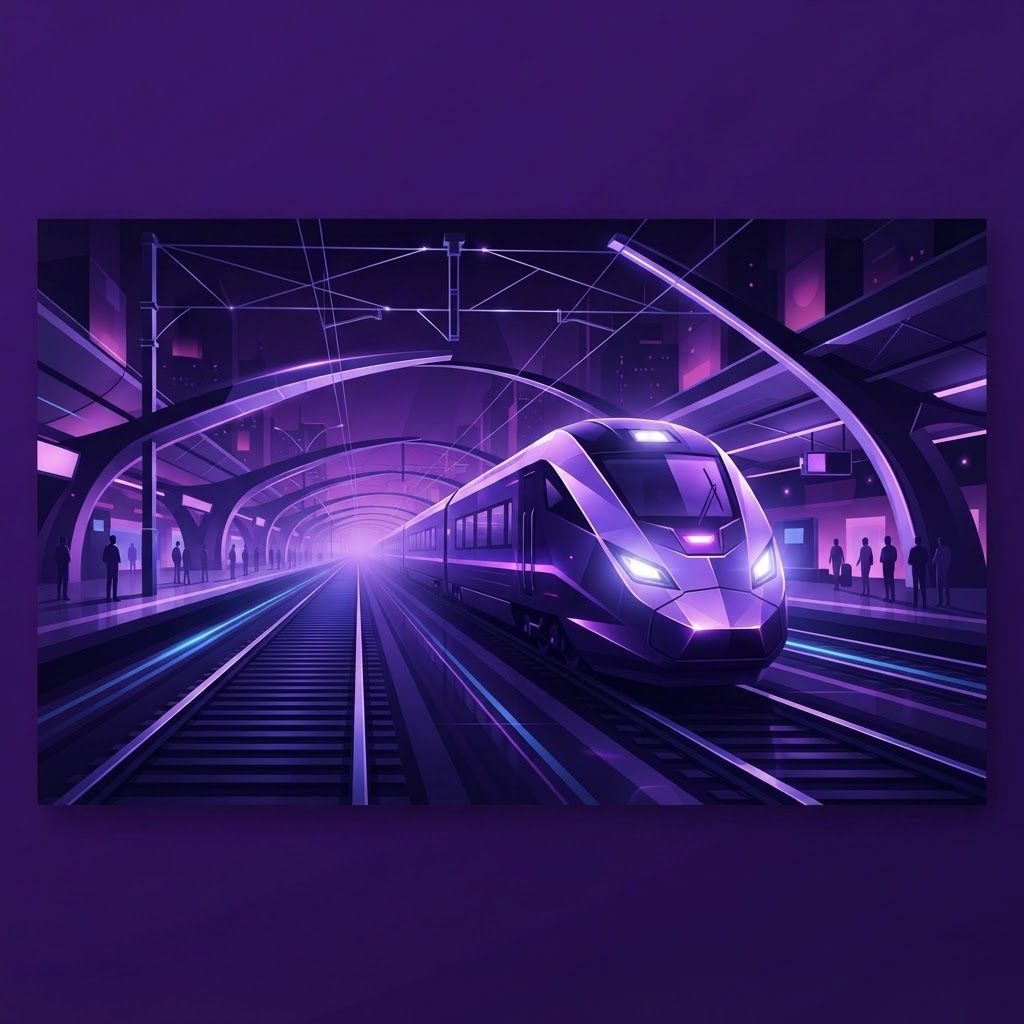
Rail's Role in Garland
Rail is the least visible and most economically significant transportation mode in Garland. Freight rail lines running through northeast Dallas County serve industrial districts where manufacturers, plastics processors, building material suppliers and bulk commodity handlers rely on rail cars to move volumes that would require dozens of trucks. For those shippers, rail is not a preference; it is the only economical way to receive resin, aggregate, steel, chemicals or grain.
On the passenger side, Garland is served by regional rail transit connecting the city to downtown Dallas and the wider metroplex, which supports commuters and reduces highway congestion. Together, freight and passenger rail make the mode relevant to both businesses and residents, even though most people never think about the tracks they cross daily.
Understanding Rail Freight Services
Rail freight involves several distinct types of provider. Class I railroads operate the long-haul national network and handle interline movements across the country. Short line and switching railroads serve local industrial spurs, moving cars the final few miles between mainline interchanges and customer facilities. Transload operators bridge rail and truck, unloading rail cars into trucks or containers for customers without their own rail siding. Intermodal service providers move containers and trailers on flat cars, combining rail economics with truck flexibility.
Rail makes economic sense for heavy, dense, non-urgent freight moving more than roughly 500 miles. A single rail car carries several truckloads, and rail typically uses far less fuel per ton-mile than highway transport. The tradeoffs are longer and less precise transit times, the need for rail-served facilities or transload access, and less granular tracking than trucking.
Top 10 Best Railway Operators and Rail Service Providers in Garland
1. Garland Rail Services. A local rail logistics provider coordinating car spotting, switching and industrial siding service for area manufacturers.
2. Lone Star Short Line Railway. A regional short line operator known for responsive local switching and dependable interchange with mainline carriers.
3. Trinity Industrial Rail Company. Serves heavy industry with bulk commodity handling, rail car storage and specialized loading equipment.
4. Northeast Dallas Transload Terminal. A transload specialist converting rail shipments to truck delivery for customers without direct rail access.
5. Texas Star Intermodal Services. Focuses on container-on-flatcar movement and drayage coordination for long-haul shippers seeking lower cost than over-the-road trucking.
6. Firewheel Rail Logistics. Provides rail freight brokerage, rate negotiation and shipment planning for mid-sized manufacturers.
7. Duck Creek Rail Car Services. Offers rail car cleaning, inspection, minor repair and storage services for fleet owners and lessees.
8. Garland Bulk Commodity Terminal. Handles aggregates, plastics resin, grain and other bulk products with silo, hopper and bagging capabilities.
9. Metroplex Regional Rail Partners. Coordinates industrial development and rail-served site logistics across the northeast Dallas corridor.
10. Lake Ray Hubbard Rail & Freight Group. A general rail service provider combining transload, warehousing and last-mile trucking for regional distribution.
Trends Shaping Rail
Precision scheduled railroading reshaped Class I operations over the past decade, improving asset utilization but reducing flexibility for smaller shippers. That shift increased the importance of short lines and transload operators, which now provide much of the customer-facing responsiveness that shippers need.
Intermodal growth continues, driven by truck driver shortages and fuel costs, and it has been reinforced by nearshoring, which has increased north-south freight volumes from Mexico through Texas. Sustainability is a genuine driver as well, since rail's lower emissions per ton-mile helps corporate shippers meet reduction targets, and several railroads are piloting alternative-fuel and battery-electric switching locomotives. Technology adoption, including automated inspection, digital car tracking and improved shipment visibility platforms, has narrowed the information gap between rail and trucking.
Practical Guidance for Shippers
Start by determining whether your facility can be rail-served. If a siding is not feasible, evaluate transload options, which often deliver most of the cost benefit without capital investment. Model total landed cost including transload handling, drayage, storage and demurrage rather than comparing line-haul rates alone.
Plan for transit variability by holding slightly more inventory than truck-based planning requires. Understand demurrage and detention rules, because charges for holding cars beyond free time can erase savings quickly. Build relationships with your local switching carrier; its dispatchers control the details that determine whether cars arrive when you need them.
For Residents Using Passenger Rail
Regional rail service gives Garland commuters an alternative to congested highways, particularly for trips into central Dallas. Riders benefit from checking schedules in advance, noting weekend and holiday frequency differences, and planning connections to bus routes for the final leg. Park-and-ride access makes the system practical even in a car-dependent city.
Final Thoughts
Rail rewards planning. For heavy, dense, long-haul freight, it remains the most cost-effective and lowest-emission option available, and Garland's industrial rail access is a genuine asset for local manufacturers. The operators and service providers above cover switching, transload, bulk handling, intermodal and rail car services. Evaluate total landed cost, understand demurrage, and rail becomes a durable cost advantage rather than an operational puzzle.