
Equipment Supply in a Working City
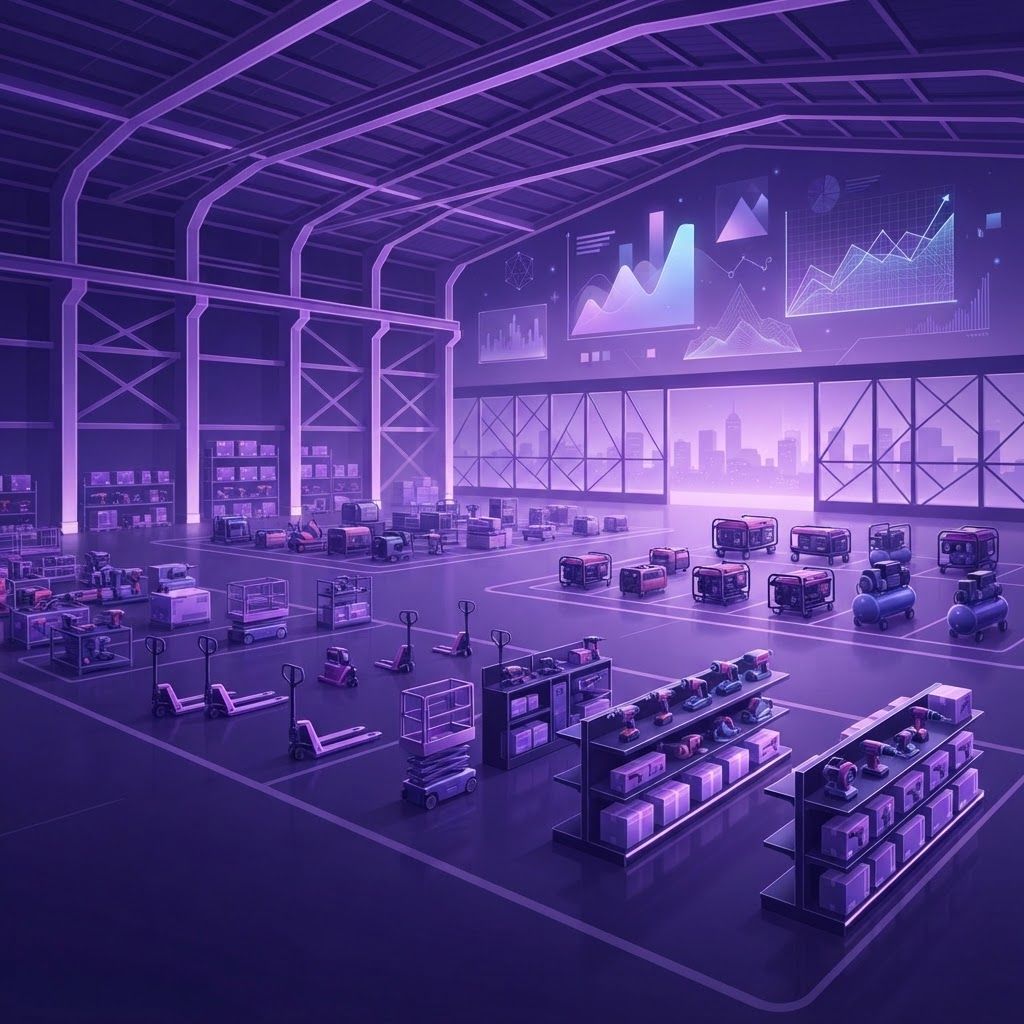
Fremont's economy runs on equipment. Construction crews need compaction, concrete, and lifting machinery. Manufacturers require compressors, welding systems, and precision tooling. Warehouses depend on forklifts, conveyors, and racking. Facility teams maintain buildings with generators, pressure washers, and diagnostic instruments. The city's equipment wholesalers serve all of these markets, and their concentration in accessible industrial districts makes sourcing straightforward.
The real value of a local equipment wholesaler goes well beyond the transaction. Equipment breaks, and downtime is expensive. A supplier with local parts inventory, factory-trained service technicians, and loaner availability can restore operations in hours. One that must order parts from another state may leave a crew idle for a week. Experienced buyers weigh this support capability heavily, sometimes more heavily than purchase price.
Buying, Renting, or Leasing
The right acquisition method depends on utilisation. Equipment used most days generally justifies purchase, since ownership cost per hour falls steadily with use and the asset retains resale value. Equipment needed occasionally is almost always cheaper to rent, and renting also transfers maintenance, storage, and obsolescence risk to the supplier. Leasing sits between the two, preserving capital while providing consistent access and often bundling maintenance.
Calculate honestly rather than intuitively. Include acquisition cost, financing, maintenance, consumables, fuel or power, storage, insurance, operator training, and expected resale value. Many buyers discover that a machine they assumed should be purchased is used only forty days a year, making rental clearly superior. Others find that recurring rental on a frequently used item has quietly exceeded purchase cost several times over.
Top 10 Best Equipment Wholesalers in Fremont
1. Bayside Industrial Equipment
Distributes compressors, generators, pumps, and industrial machinery with in-house service capability. Local parts inventory and trained technicians keep downtime short when equipment fails.
2. Fremont Material Handling Supply
Supplies forklifts, pallet jacks, conveyors, and racking systems for warehouse operations. Layout planning support and operator training help facilities improve throughput as well as capacity.
3. Warm Springs Construction Equipment
Carries compaction equipment, concrete tools, saws, and site machinery for contractors. Rental and purchase options alongside jobsite delivery suit the variable demands of construction schedules.
4. Mission Peak Welding and Cutting Systems
Provides welding machines, plasma cutters, consumables, and fume extraction equipment. Process guidance and consumable selection advice improve weld quality and operator safety together.
5. Ohlone Facility Maintenance Equipment
Supplies floor care machines, pressure washers, and janitorial equipment for property and facility teams. Service contracts and consumable programmes simplify ongoing building maintenance.
6. Silicon Valley Laboratory Equipment
Distributes laboratory instruments, fume hoods, incubators, and cleanroom equipment. Installation, validation, and calibration support serve research and life science customers directly.
7. Ardenwood Power Tool Wholesale
Carries professional power tools, batteries, and accessories across major categories. Volume pricing, repair services, and battery platform guidance make it a practical partner for trade businesses.
8. Niles Food Service Equipment
Supplies commercial kitchen equipment including refrigeration, cooking lines, and dishwashing systems. Kitchen layout advice and service response are critical for restaurants that cannot afford closures.
9. Central Fremont Lifting and Rigging
Provides hoists, cranes, slings, and rigging hardware with inspection and certification services. Safety compliance support and documented inspections protect customers on load-critical operations.
10. Fremont Refurbished Equipment Exchange
Sells inspected and reconditioned industrial equipment at significant savings against new pricing. Transparent condition reporting and limited warranties make used equipment a defensible choice for budget-conscious buyers.
Evaluating Service and Support
Ask specific questions rather than accepting general assurances. What is the typical response time for a service call? Are technicians factory-trained on the brands you are buying? What parts are held locally versus ordered? Is loaner equipment available during extended repairs? What does a preventive maintenance agreement cost and cover?
Also confirm operator training and documentation. Equipment injuries frequently trace back to untrained operators or missing guarding, and a supplier who provides thorough training and clear manuals reduces both risk and liability. For regulated equipment such as lifting gear, forklifts, and pressure systems, verify that inspection and certification services are available and properly documented.
Total Cost of Ownership Thinking
Purchase price is typically a minority of lifetime equipment cost. Energy consumption over years of operation, consumable costs, maintenance intervals, and downtime losses usually dominate. An efficient compressor with a higher purchase price may pay back the difference in electricity within two years of continuous duty. A cheaper machine with poor parts availability may cost far more in lost production.
Residual value matters too. Well-known brands with strong local service networks hold value better and sell faster when replaced. Documenting maintenance history throughout ownership preserves that value and makes eventual resale straightforward.
Trends in Equipment Supply
Electrification is spreading from vehicles into equipment, with battery-powered compaction, lifting, and site tools gaining acceptance for lower noise, zero local emissions, and simpler maintenance. Telematics and connected monitoring are becoming standard, letting owners track utilisation, schedule maintenance by actual hours, and diagnose faults remotely. Rental penetration continues to grow as businesses prioritise flexibility over ownership, and refurbished equipment markets are maturing with better inspection standards and warranty support.
Conclusion
Fremont's equipment wholesalers offer breadth across construction, industrial, warehouse, laboratory, and food service categories, backed increasingly by genuine service capability. Decide between buying and renting using real utilisation data, weigh service response as heavily as price, and evaluate total cost of ownership rather than the initial invoice. That discipline keeps equipment an asset rather than a liability.